High-Tech Geopolitics Programme
The High-Technology Geopolitics Programme explores the geopolitics of technology from an Indian national interest perspective.
About the Programme
Nations are vying for dominance in several critical and emerging technologies, such as artificial intelligence (AI), quantum computing, semiconductors, telecommunications, and cybersecurity, to gain a strategic advantage. Rivalries between major powers are intensifying as they invest in research and development, IP protection, and industrial policies.
Developing countries like India are also striving to enhance their capabilities. The HTG Programme works on navigating these issues while balancing growth, security, ethics, and international cooperation as crucial factors responsible for shaping the future of emerging technologies and the geopolitics associated with them.
Our work on formulating a Techno-Strategic Doctrine for India lays out imperatives, objectives, and approaches to thinking about technology and strategy.
Our Areas of Focus
Artificial Intelligence
Our research analyses the AI value chain, spanning data, compute, models, and applications, to identify strategic opportunities within a contested geopolitical landscape.
Dive into our work on A Pathway To AI Governance, State Of AI Governance, 2024, A Primer on AI Chips and AI Adoption.
Explore the Focus AreaSemiconductor Geopolitics
Takshashila’s Siliconpolitik Project tries to answer how semiconductors play a role in changing the global technology landscape and what role India can play in it. Our work spans the semiconductor IC ecosystem, metals and materials used in producing electronics, and the broader electronics ecosystem.
Read about our SWOT Analysis of India’s Semiconductor Ecosystem.
Explore the Focus AreaStrategic Minerals and Materials
Strategic minerals & materials, including rare earth elements, have significant strategic and commercial applications. Considering the post-pandemic geopolitical and economic trends, the global rare earths supply chain offers a precious opportunity for India to emerge as a rare earths supplier for the world.
Read about our Rare Earths Strategy for India.
Open Technology
Open technologies can help India achieve techno-strategic autonomy, economic growth, technology leadership, and skill development. This includes open source software, open source hardware, open data, open standards and open networks.
Read about our Open Tech Strategy for India
Advanced Computing
This initiative is aimed at understanding the geopolitics of high-speed and quantum computing, evaluating India’s strengths and weaknesses in these fields, and proposing policies to give India an advantage.
Read our research on Building India’s Quantum Ecosystem
Latest Analysis
Juggernaut or Embers of a Dying Fire: China’s Technology Landscape and Its Implications for India
Building India's Data Centres
A case for establishing Special Science Zones in India
Public Survey | Technopolitik: How Should India Navigate Technology Geopolitics?
Indian Public Policy Review | Diffusion, innovation and the tech-politics underlying power transitions
State of AI Governance, 2024
Satellite Internet Explained
Is Space the Final Frontier
Securing the Electronic Hardware Supply Chain: A Cost-Benefit Analysis Framework
Narrative Dominance, Information Warfare and the Freedom to Think
A Framework for Governing Emerging Technologies
A Survey of Military AI Technologies
Assessing the Nature of India's Critical Minerals Vulnerabilities vis-à-vis China
AI Adoption - Think Tasks, not Jobs
A Primer on AI Chips
USA’s Options to Counter China’s Increasing Dominance in Legacy Chips
Traffic in the Air: Drones in Modern Warfare
The Geopolitics of Indian Talent
Reimagining Social Security for 21st Century India: A radical approach - Multi-Contributor Social Security (MCSS) system
Space Reforms in India: A Job Half Done
Tensions Between Social Media and Democracy
What Should India's Critical Technology Policy Look Like?
Comments on Demand for Grants (DFGs) by Ministry of Science and Technology in the Union Budget (FY 2024-25)
A Survey of Chip-Based Hardware Backdoors
Financial Flows of the Blue Continent - A Case Study of Potential Pacific-India-Australia Collaboration
Artificial Intelligence: Impact and Governance
Takshashila Working Paper - The Techno-Economic Impact of the Israel-Hamas War
A Pathway to AI Governance
Human Spaceflight: Indian Goals & Global Ambitions
Takshashila Discussion Document - Open RAN: Challenges and Pathways for Adoption
Blogs
India’s Upcoming Nuclear Reforms
Data Centres in Space
Imagining a world where energy is clean, available in plenty and almost free
India’s Cyber Safety App Mandate
Rotational Labour Mobility is Not Necessarily Growth-Enhancing
Leveraging the ACITI Partnership
Is the EU Deregulating its Tech?
A Blueprint for China’s Tech Ambitions
Rotational Labour Mobility Does Not Address Anti-Immigrant Sentiment
The Tussle Over Nexperia
US helium export ban and the Hindenburg disaster
US-Dutch oil embargo and Pearl Harbor
Why connected buses and cars worry the West
The MBT is Not Dead Yet
China Doubles Down on Weaponising Antitrust Regulations
Do deepfakes need separate regulations?
Meity’s yet another definitional stretch
More Letters, Low Bars, and Lesser Opportunities
Seven Points Worth Thinking About China’s Gameplay on Rare Earths
Ruminations about the Anti-Immigration Tendencies
A New Chapter for West Asia?
Why EU’s norm startup is struggling
India’s performance in WIPO’s Global Innovation Index 2025 Hides More Than it Reveals
What India and Canada Can Do Together
Open Source AI Becomes a Strategic Priority
Implications of H20 Sale Resumption to China
The AI Diffusion Framework Was Repealed. What Does This Mean For India?
Pathways to AI Sovereignty for India
Xi Jinping’s Meeting with Private Tech Entrepreneurs
India must set up a Cabinet Committee on Science & Technology
Do the AI Diffusion Rules mean India cannot get more than 50,000 advanced GPUs?
A Silicon Curtain: Examining the Implications of US Export Controls on Chips
In the News
The Great Nuclear Hypocrisy - The Crumbling Architecture of Technology Denial
To be a global AI center, India must modernize its power infrastructure
Rewrite this Appy Ending
Rare earths in India, Bridging the gaps to ensure sufficiency
Mandatory preloading of Sanchar Saathi will weaken privacy, not strengthen cyber security
Why the US would not conduct explosive nuclear tests
India can longer outsource the dreams of its youth to the West
Draft Electricity Amendment Bill represents a missed opportunity for reform
Pakistan is bluffing. There’s no proof for $6 trillion mineral wealth claim
From semiconductors to GST — why every Indian dream dies at a corrupt desk
Beijing’s rare earth playbook is tired. It’s time India wrote its own
How China is flipping the supply chain warfare script
India’s rank is rising in Global Innovation Index. But where’s the innovation?
Tracks Without Trains
Why the Jaguar Land Rover cyberattack is a warning shot for the Indian automotive sector
Inside Trump’s Quite Takeover Of Silicon Valley
India, China & Tariff Trap: Strategic Collaboration, Trade Corridors Can Shift Balance
Hits and misses of India’s new joint cyber doctrine
Why India’s Tech Sovereignty Demands Nuance, Not Knee-Jerk, Symbolic Gestures
Scientific Method and Shastras: Can the twain ever meet?
A war game-changer in a battle for influence in Asia
How does satellite internet work | Explained
Trump’s AI Strategy: Beyond the race for global supremacy
Trump Wanted India To Buy More US-Made Arms. It Doesn’t Add Up Now
In the face of Washington’s tech shenanigans, New Delhi should choose collaboration over autarky
Drain to gain: How India can retain its talent
Brownfield mining operations are enough to meet India’s rare-earth needs
Fathoming America’s plan to manage AI proliferation
Rivalry over critical minerals strengthens case for smart state intervention
How Trump and Mastercard are pushing the global financial system to an inflection point
The Rise of China’s Manufacturing Industry as the World’s Factory
ASML Recruitment Drive in China: Talent and Trade in the Puzzle of Complex Interdependence
Our Eyes In The Sky
A blueprint to get bang for the buck out of government’s Rs 1 trillion research support scheme
How the United States and India can Promote Responsible Behavior in Cyberspace Through the Quad
AI is not India’s Y2K Moment but it does Offer India a Leadership Role in the Global South
Dissecting the Cyber Aspect of Operation Sindoor
India needs a new nuclear dream
Public Funds, Private Model: Govt’s Investment in Sarvam AI Sparks Open-Source Debate
India’s AI Compute Conundrum
Strengthening the IndiaAI mission
AI adoption in India: Opportunities and challenges for policy considerations
India-Australia collaboration on digital public infrastructure in the Pacific
Building The Yard: Policy Considerations For AI In India
On Regulating AI
GoI’s Rs 10,000 crore plan for a ‘sovereign AI’ computing infrastructure needs a rethink
ONDC Should Exercise Its Gatekeeping Privileges To A Minimum
Lessons for RBI from its mandate that made recurring payments a nightmare
Nurturing open source is in our national interest
Interested in Technology Geopolitics?
Technology is no longer just a tool; it’s at the centre of national power, economic growth, and societal change. This raises important questions for all of us: What will it take to strengthen India’s own research and development ecosystem? How can we build technology responsibly and anticipate its unintended consequences? Why are technology and national power increasingly part of the same conversation?
Takshashila’s 12-week technology and policy course is designed to enable participants to answer such questions. It equips technologists, lawyers, civil society, and policymakers with the knowledge and skills to understand the economics of tech platforms, navigate the political economy, find an ethical orientation, and lead the public discourse. Participants will gain the skills and frameworks to create technology responsibly, advancing the public interest alongside business interests.

Subscribe to Our Podcasts
Meet the HTG Team
Nitin Pai
Co-Founder and Director
Read Bio
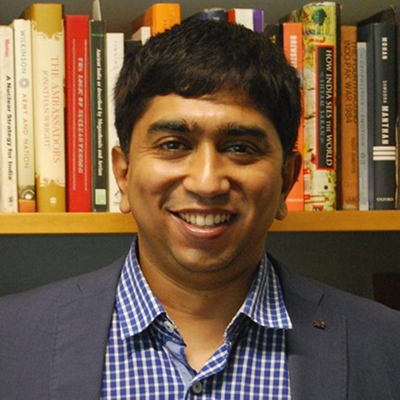
Pranay Kotasthane
Deputy Director and Chairs HTG Programme
Read Bio
Aditya Ramanathan
Associate Fellow with the Takshashila Institution
Read Bio
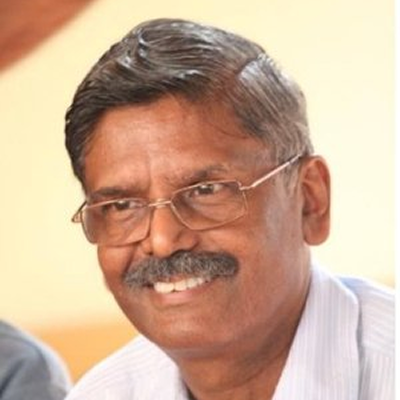
Bharath Reddy
Associate Fellow with the High-Tech Geopolitics Programme
Read Bio
Colonel KPM Das
Adjunct Fellow at the Takshashila Institution

Read Bio
Rijesh Panicker
Fellow with the High-Tech Geopolitics Programme

Read Bio
Anwesha Sen
Assistant Programme Manager
Read Bio
Saurabh Todi
NAST Fellowship Manager
Read Bio
Arindam Goswami
Research Analyst for the High-Tech Geopolitics Programme

Read Bio
Lokendra Sharma
Staff Research Analyst for the High-Tech Geopolitics Programme

Read Bio
Ashwin Prasad
Staff Research Analyst for the High-Tech Geopolitics Programme
Read Bio
Adya Madhavan
Research analyst for the High Tech Geopolitics Programme

Read Bio
Tannmay Kumarr Baid
Junior Adjunct Scholar for the High-Tech Geopolitics Programme
Read Bio