Certificate Programme in Defence and Foreign Affairs
A 12-week programme helping professionals understand public policy through geopolitics, strategic studies, and economic analysis.

The programme aims to familiarise students with public policy analysis through the lens of geopolitics, strategic studies, and economic perspectives. During the course, students will explore the significance of military power in global affairs and gain an in-depth understanding of India’s foreign policy. They will also study texts like the Arthashastra to grasp its application in modern statecraft.
Upon completion, students will be proficient in understanding the interplay between political and economic forces on a global scale and will be skilled in analysing issues related to defence and international relations. A unique aspect of the programme is the inclusion of officers from the Indian Army, Air Force, and Navy, along with civilians in every cohort. This promotes a rich classroom diversity that fosters a multitude of perspectives and enriches students’ learning experiences.
Designed for full-time professionals, the GCPP offers a seamless online learning experience. The programme spans 12 weeks and includes weekly webinars (usually held on Saturdays) and two interactive virtual workshops. Wherever you are, just ensure a stable internet connection, and you’re ready to dive in.
Who This Programme is For
Defence Officers
Serving and retired military professionals seeking to strengthen their understanding of strategic policy and international relations.
Diplomats and Foreign Affairs Professionals
Those working in or aspiring to work in diplomacy, international organisations, or foreign policy analysis.
Journalists and Analysts
Media professionals and strategic affairs commentators looking to deepen their analytical frameworks.
Policy Enthusiasts
Engaged professionals and citizens interested in understanding geopolitics, defence strategy, and India’s role in the world.
How It Works
Designed for working professionals around the work week — Saturday webinars, 7–10 hours of weekly commitment, and a 3-day in-person workshop you can plan around.
Five weeks covering policy analysis, economic reasoning, and effective communication.
Seven weeks on strategic studies, Arthashasthra and strategic economics.
Online conference featuring research presentations and panel discussions. A two-day online conference in week 5 that bridges the core modules and your specialisation. Keynote sessions and breakout tracks covering relevant policy issues from practicing experts.
Graduate Certificate in Public Policy upon successful completion.
Join a network of 7,000+ Takshashila alumni across government, tech, law, and civil society and engage with faculty who are active researchers and practitioners.
Key Dates
| Milestone | Date |
|---|---|
| Early bird deadline (10% scholarship) | 29 March 2026 |
| Application deadline | 26 April 2026 |
| Programme begins | 9 May 2026 |
| Academic Conference | 6–7 June 2026 |
| Workshop (near Bengaluru) | 17–19 July 2026 |
| Programme ends | 1 August 2026 |
Application Process and Fee Structure
- Individuals with an undergraduate degree in any field are welcome to apply.
- The programme is designed for working professionals. Work experience is preferred but not mandatory.
- The programme fee is ₹42,000 (plus GST). Fees, once paid, are non-refundable. Students will have the option to defer their admission to one subsequent batch.
- Limited merit and need-based scholarships are available. Early applicants will have a significant advantage in availing scholarships.
- Corporate sponsorship options are available.
GCPP Cohort 44
Starts: 9 May 2026
Early bird: 29 March 2026
Apply before: 26 April 2026
Fee: ₹ 42,000 + 18% GST
What You’ll Learn
Core Modules (Weeks 1–5)
This module explores the foundations of public policy, from understanding nations, states, and governments to examining the paradoxes and pitfalls governments face.
Learning Units:
- Introduction to Public Policy
- Nations, States, and Governments
- Paradoxes and Pitfalls of the Government
- Goals of the Government and Things Governments Do
- Introduction to Kautilya’s Arthashasthra
This module explores the fundamental principles of economics, from understanding economic reasoning and the price system to trade and government intervention in markets.
Learning Units:
- Introduction to Economic Reasoning
- The Price System
- Market Dynamics
- Introduction to Macroeconomics
- Trade
- Government Intervention in Markets
This module aims to get you to start writing. It also provides an overview of the role of narratives and their use in political and policy communication.
Learning Units:
- Basics of Writing
- Understanding the Media Environment
- Political and Policy Narratives
Specialisation Modules (Weeks 5–12)
The module focuses on the role of force, foreign policy, internal security, cyberspace and nuclear policy in contemporary geopolitics.
Learning Units:
- Basics of Strategic Studies
- Understanding Geopolitics
- Tools of Statecraft (Force, Foreign Policy and Diplomacy, Intelligence)
- National Security Challenges
- Strategic Communication (Information in Statecraft)
- High-Tech Geopolitics
- India’s Nuclear Doctrine
Modern Indian strategic thinking is deeply rooted in Kautilya’s Arthashastra. This module explores its core principles and their contemporary relevance.
Learning Units:
-Introduction to Kautilya’s Arthashastra - Concept Cluster I (Saptanga Theory, Rajadharma) - Concept Cluster II (Rajamandala, Upayas) - Treaties and Alliances
National power has economic foundations. This module explores the relationship between economic strength, military power and statecraft.
Learning Units:
- Origins and Military Power Dynamics
- Instruments of Economic Power I & II
- Economic-Military Power Dynamics(optional)
- Currency and Balance of Payments (optional)
Faculty
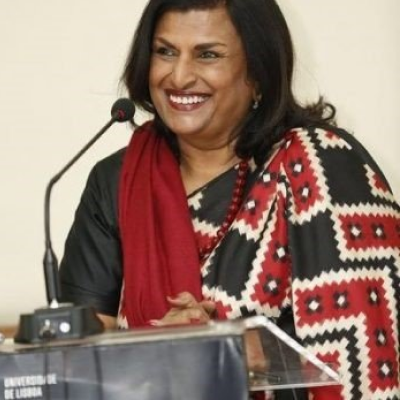
Ambassador Latha Reddy
Former Deputy National Security Adviser of India
Read Bio
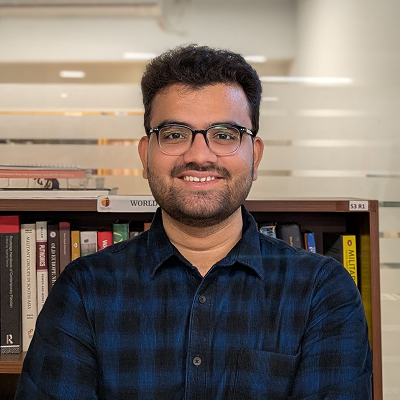
Nitin Pai
Co-Founder and Director
Read Bio
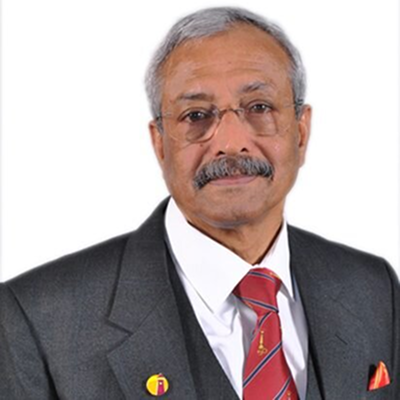
Lt General (Dr) Prakash Menon
Director of the Strategic Studies Programme
Read Bio
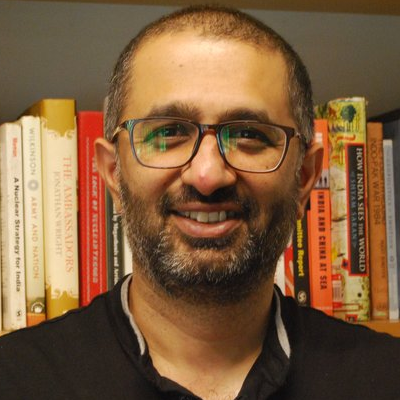
Pranay Kotasthane
Deputy Director and Chairs HTG Programme
Read Bio
Anupam Manur
Professor at the Takshashila Institution

Read Bio
Dr Kajari Kamal
Adjunct Research Fellow
Read Bio
Manoj Kewalramani
Fellow, China Studies at the Takshashila Institution
Read BioVideo Highlights
What Our Students Say
“GCPP (D&FA) is a unique course carefully designed by highly knowledgeable and experienced faculty. It covers a wide range of topics relevant to the present global environment. Exercise AMRUT has been thoughtfully embedded in the course, which helps better understand policy-making & defence analysis.”
— A K Mishra, GCPP (Defence and Foreign Affairs) Alumnus
“Takshashila isn’t your typical think tank. It empowers participants to embrace a 360-degree perspective and champion holistic thinking. By urging them to anticipate what’s beyond the immediate horizon, Takshashila seamlessly integrates public policy, strategy, and results.”
— Praveer, GCPP (Defence and Foreign Affairs) Alumnus
“The AMRUT exercise was both engaging and beneficial. Making crucial decisions within short timeframes for the greater good added an electrifying dynamic to the process. It’s no surprise that politics captivates so many. This program was truly an eye-opener.”
— Anand Bhat, GCPP (Defence and Foreign Affairs) Alumnus
Frequently Asked Questions
About the Course
No, we have not sought approval from any government body. Our priority is to offer top-notch education to individuals who seek it. However, it’s important to note that the GCPP may not be recognised as a means of career advancement.
No. The programme primarily targets individuals seeking to understand the policy/technology ecosystem well. GCPP students have found employment in public affairs consulting, think tanks, civil society organisations and private corporations. Several alumni have also taken up master’s and PhD programmes in public policy and related fields at renowned universities worldwide.
Fees and Financial Assistance
The course fee is INR 42,000 (excluding 18% GST) and is to be paid after admission. The registration fee of INR 500 has been waived. Once the course fee is paid, it is non-refundable. Students can defer to one of the next two batches at no additional cost if they wish.
We advise applicants to only apply for financial support if they cannot afford to take the course without it. A limited number of scholarships will be available to deserving candidates who require financial assistance. Applicants requesting financial support will be required to explain why they need it. They may be asked to submit additional information and supporting documents if their application is approved for admission and financial support. It’s important to note that financial support is not guaranteed. If a student who has received financial support fails to complete the course satisfactorily, they will be responsible for paying the full fees.
Application Process and Admissions
Individuals with a minimum of 3 years of work experience in various fields, particularly in technology entrepreneurship, government, media, civil society organisations, business, and corporate management, are well placed to take advantage of what the course offers. Nevertheless, individuals with less work experience and even full-time undergraduate students are encouraged to apply.
Students do not necessarily have to be based in India to participate. However, it is important to note that all webinars will be scheduled in IST. Therefore, students are encouraged to check for time differences and ensure the timing suits them.
To participate in the sessions, students should possess fundamental computer skills and a reliable internet connection (ideally a broadband connection of 256kbps or above). As all the sessions take place online, it is recommended to attend the live webinars through a laptop or desktop computer.
At the time of application, students are not required to send any documents through the mail. However, the Takshashila Institution reserves the right to request applicants to provide supporting documents for their educational qualifications and employment history.
Dynamic undergraduate students from any discipline can apply, and a few scholarships will be available to deserving candidates. Please note that all students will follow the same curriculum.
Open Course in Public Policy (OCPP): This is a free course to understand & transform governance in India. It is a self-paced online course. However, it is not a replacement for the GCPP programme we offer, which includes live online classes conducted by subject-matter experts, workshops, academic conferences, quizzes, and group activities. If you have successfully completed the OCPP, you can get in touch with us, and we will offer a scholarship for the 12-week GCPP programme.
Schedule
Although attendance at the workshop and conference is mandatory, students who are unable to attend can request deferment by providing adequate reasons for their inability to participate. If a student chooses to defer, these components can be completed with one of the two subsequent cohorts. If students complete all other requirements except the contact workshops, they’ll receive a Citation of Completion of Studies, which can be converted into the full Graduate Certificate once they complete the workshop and conference within the stipulated deferment period.
The Academic Conference is planned for the fifth weekend for all specialisations. The workshop is planned for the tenth weekend of the course for APP and TP specialisations and for the twelfth weekend for the DFA specialisation. The Academic Conference will be held online, while the Workshop will be in-person.
The classes for the programme will be conducted as interactive webinars online on weekends, typically on Saturdays. It is advisable for students to keep the time slot of 9:30 am to 3:30 pm on Saturdays free during the programme. Students who attend 70% or more of the live webinars typically perform well.
Occasional webinars may take place on weeknights, subject to the availability of guest speakers and faculty. These webinars are typically scheduled after 7:00 PM IST.
To ensure the successful completion of readings and coursework, it is suggested that students allocate approximately seven to ten hours per week. Every student has their own pace, so this estimate serves as a general guideline.