The Four ’I’s of the 2026 US Midterm Elections
| AUTHOR | Abhishek Kadiyala |
| DATE | October 28, 2026 |
| DOCUMENT | Takshashila Issue Brief 2026-23 |
| VERSION | Version 1.0, October 2026 |
| CATEGORIES | Geostrategy United States US Congress |
Executive Summary
Inflation, institutional mistrust, the Iran war and immigration are the four issues shaping voter choices in the 2026 United States midterm elections. Voters are found to trust Democrats more on the first three, while the Republican edge on immigration has narrowed and is now contested. This preference clearly reflects in the generic ballot with a clear Democratic lead. It is also reflected in the polling data, with the Democrats certainly expected to flip the House of Representatives and possibly the US Senate as well.
Table 1. The four ’I’s at a glance
| Issue | Share of voters who rank it highly | Party trusted more | Rating of President Trump on the issue |
|---|---|---|---|
| Inflation | 84% call the cost of living a top issue | Democrats, by 14 points | 21% approve on the cost of living |
| Institutional mistrust | 60% are extremely concerned about corruption | Democrats, by 9 points | 66% say he uses the presidency to enrich himself |
| Iran war | 64% call the war a top issue | Democrats, by 11 points | 27% approve |
| Immigration | 45% call immigration and crime a top issue | Roughly tied; support for Democrats | 38% approve |
The author would like to thank Anushka Saxena and Manoj Kewalramani for their review and feedback.
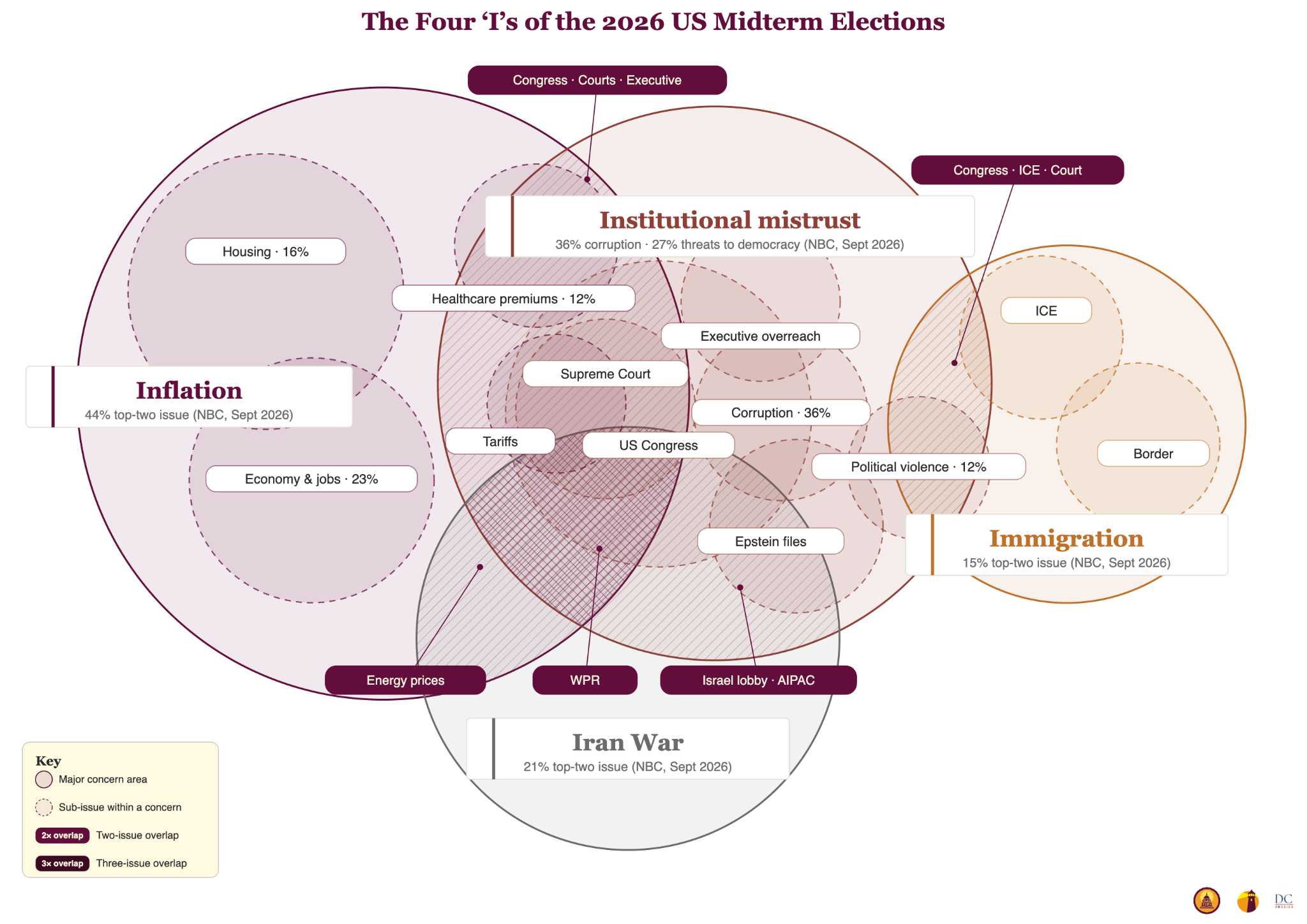
Figure 1. The top four issues and sub-issues of the 2026 US midterms1
AI use disclosure: Claude (Opus 5.5) was used for proofreading, citation generation, reviewing, brainstorming and identifying logical inconsistencies in this paper.
Introduction
The US midterms are scheduled to take place on November 3, 2026. National polls indicate that the cost of living and government corruption are top voter concerns. They are followed by the Iran war and immigration, which have also consistently remained among the top voter concerns throughout 2026. Each issue also amplifies the others. The Iran war, in particular, shapes the midterms not only as a standalone issue but also through its amplifying effects on issues of inflation and institutional mistrust.
This brief examines the electoral relevance of each issue. For each, it reviews how voters rank the issue, which party they trust on it and how they rate President Donald Trump’s performance on each issue. It then looks at issue polling and at divisions between and within the parties, through their impact on key primaries. The final section maps where the four issues overlap and highlights other lower priority issues that direct voter behaviour in specific demographies. The primaries show a clear pattern. Democratic voters ousted incumbents and candidates backed by the party establishment, while Republican voters rewarded loyalty towards President Trump.
Voter concerns shifted through the year before the midterms. In late 2025 and early 2026, they centred on tariff hikes, two government shutdowns and the Jeffrey Epstein investigation.2 The American and Israeli strikes on Iran on February 28, 2026, brought foreign policy and energy prices into the campaign.3 The fatal shootings of Renee Good and Alex Pretti during immigration enforcement in Minneapolis in January 2026 pushed immigration up the agenda.4
By October 2026, these concerns began falling under four labels. These are inflation, institutional mistrust, the Iran war and immigration. Together they form the four ’I’s of the 2026 midterms. Each is amplified by smaller issues, party factions and local concerns that tie back to national debates.
The national mood favours the opposition. Democrats lead the generic congressional ballot by 8 points among registered voters, 50% to 42%. President Trump’s approval stands at 33%, a record low in the ABC News, Washington Post and Ipsos polls.5 Midterms, which are considered to be a referendum on the administration, are clearly reflecting the record disapproval ratings of President Trump.
Inflation
Inflation as the first “i” includes concerns about rising cost of living, rising healthcare costs, unemployment concerns, energy prices, criticism of the administration’s tariff policies and housing costs. Many polls rank many of these sub-issues as individual issues as well, highlighting the depth of this issue as the top voter concern nationally. In the Marquette Law School Poll, 37% rank inflation and the cost of living first, more than double the 16% who pick the economy.6 In an AP-NORC poll, 84% of voters call the cost of living one of the most important issues for their vote.7 Half of registered voters in a Reuters and Ipsos poll call it the most important factor in how they will vote.8
Prices have risen again since the Iran war began. Consumer prices rose 3.7% in the year to September 2026, and petrol accounted for over half of the monthly increase.9 Petrol prices are up 34.2% over the year.10 Inflation in the Midwest runs above the national rate, at 4.2%.11 Some 71% of Americans now call petrol unaffordable, up from 28% in February. Healthcare follows at 65%.12
Medicaid is a joint federal and state programme that provides free or low-cost health coverage to low-income Americans. The ACA extended it to people earning up to 138% of the federal poverty line.
Healthcare costs add to this pressure. President Trump signed the One Big Beautiful Bill Act (OBBBA) on July 4, 2025.13 The Congressional Budget Office (CBO) estimates that the law cuts federal Medicaid spending by USD 1.06 trillion and will leave 10 million more Americans uninsured by 2034.14 The enhanced Affordable Care Act (ACA) tax credits then became the central issue of the 43-day government shutdown that began in October 2025, the longest in US history. It ended on November 12, 2025 without an extension.15 The credits expired at the end of 2025. It has been estimated that this would more than double average premium payments, from USD 888 in 2025 to USD 1,904 in 2026.16 In January 2026, the House passed a three-year extension by 230 to 196, with 17 Republicans in favour, but the bill was expected to die in the Senate.17 Some 67% say Congress was wrong not to extend the credits, including 37% of Republicans, and Democrats lead by 13 points on healthcare.18 By June, about 5 million fewer Americans were enrolled in ACA marketplace plans than a year earlier.19
Affordable Care Act (ACA) or Obamacare
The ACA is a 2010 health law passed under President Barack Obama, commonly called Obamacare. It allows people without employer or government coverage to buy private health insurance through government-run marketplaces. The government pays part of their monthly premiums through income-based subsidies, or tax credits. When the subsidies lapse, enrollees pay more for the same insurance.
Voters prefer Democrats on the issue. Democrats lead by 14 points on both inflation and the cost of living in the ABC News, Washington Post and Ipsos poll.20 A Fox News poll puts their lead on inflation at 16 points.21 President Trump’s approval is 21% on the cost of living and 23% on inflation, his weakest issues.22 Some 65% of adults say higher prices are the result of his policies.23
Tariffs shape this view even though some economists find their direct effect on inflation was limited.24 81% of Americans say tariffs have been bad for their cost of living.25 When the Supreme Court struck down most of the tariffs in February 2026, only 23% disapproved of the ruling.26
Parties differ on the blame. Some 67% of Republicans say higher prices are beyond President Trump’s control, yet 52% of Republicans say his handling of the cost of living is worse than they expected.27 Intensity also differs, with 70% of Democrats extremely concerned about inflation, against 49% of Republicans.28
Within the Republican Party, tariffs split MAGA and non-MAGA voters. Some 64% of MAGA Republicans disapproved of the court’s tariff ruling, against 26% of non-MAGA Republicans.29 Most Republican primaries turned on loyalty to President Trump rather than on prices. Florida’s 7th District was an exception. Ryan Elijah defeated Representative Cory Mills by 47% to 34%, calling affordability “the number one thing that we hear from people”. Mills was also weighed down by scandal.30 Among Democrats, affordability gave momentum to non-establishment candidates. In Michigan’s Senate primary, Abdul El-Sayed pitched his campaign to voters who believe “you ought to be able to afford your groceries”. He beat Representative Haley Stevens by 48.5% to 47.5%, despite a 12-to-1 outside spending disadvantage.31
Institutional Mistrust
Mistrust of government institutions has become a top voter concern. While this mistrust is directed at both federal and state level institutions, the federal institutions have consistently had higher disapproval ratings. In a Fox News poll, 60% of voters are extremely concerned about government corruption.32 A record 89% of Americans say corruption is widespread in government, the highest level in 20 years.33 Some 73% of voters call the future of democracy very important to their vote.34
Apart from the historically low Presidential approval ratings, Congress bears much of this anger. Its approval fell to 10% in April 2026, while disapproval reached a record-tying 86%.35 Approval stood at 16% in September.36 Two government shutdowns, including the longest in US history, drove much of this decline.37 The Epstein files deepened it. Some 75% of Americans think the federal government is hiding information about Epstein’s alleged clients. 53% say the files lowered their trust in political and business leaders.38
The Iran war exposed the limits of congressional oversight. Attempts by Congress to curtail the President’s use of the military in Iran were embroiled in intra-party differences and the influence of the Israel lobby. This led to repeated stalling of votes on war powers bills with broader appeal, while other bills repeatedly failed or were pigeonholed.39 A concurrent resolution that passed both chambers in June was widely seen as nonbinding.40 The War Powers Resolution has thus seemingly worked more as a tool for political expression than a binding institutional restraint.41
This was because approving the war funding risks making Congress “a default accomplice to the war.”42 However, if Congress passed a war powers resolution to limit Presidential power, then Congress risked the lives of the US troops present in the region, and the security of the US regional allies including Israel, thereby being held responsible for any potential military failures that could follow. This led to a silent bipartisan stance towards the war whereby Congress in principle opposed the war, but would not act to curtail the administration, thereby feeding into institutional mistrust.
Voters view the Democrats more favourably on the issue of corruption, with a lead of 9 points in the ABC News, Washington Post and Ipsos polls, and by 10 points in the Fox News poll.43 President Trump is central to the issue. Some 66% of Americans say he is using the presidency to enrich himself, including 27% of Republicans. About two-thirds say he has gone beyond his authority as president.44
Concern runs across party lines but at different intensities. Some 72% of Democrats are extremely concerned about corruption, against 47% of Republicans.45
Republican primaries turned institutional loyalty into loyalty to President Trump. Senator Bill Cassidy, who voted to convict him in 2021, finished third in Louisiana’s primary.46 The defeat of Senator John Cornyn in Texas who was backed by the Senate Republican leadership, against Trump-endorsed Ken Paxton by about 64% to 36% is a case in point. Even so, dissent is growing among non-MAGA Republicans, 47% of whom now disapprove of President Trump.47
Among Democrats, the institutional mistrust is directed towards the party establishment. In Maine, Senate Minority Leader Chuck Schumer openly backed Governor Janet Mills. She suspended her campaign in April, saying she lacked the money to continue.48 Graham Platner, who argued that “people don’t want establishment politicians”, went on to win by 72.3% to 19.4%.49 In Michigan, Schumer said Stevens had “the best chance to win”, but voters chose El-Sayed.50 House incumbents fared no better. In New York’s 10th District, Brad Lander beat Representative Dan Goldman by about 66% to 34%.51 By late August, 11 House incumbents had lost primaries, the second-highest number since 2014. Seven were Democrats.52 Darializa Avila Chevalier unseated Representative Adriano Espaillat, and Luke Bronin ousted 14-term Representative John Larson. Spending by the American Israel Public Affairs Committee (AIPAC) became a liability in several of these races.53
The Iran War
The Iran war ranks below the economy and corruption as a standalone issue but impacts and influences many voters. Some 21% of Americans name it their most important issue by September, down from 24% in April.54 64% of voters call it one of the most important issues for their vote, with issues of cost of living at 84%.55 The current state of the war after the collapse of the June memorandum, deadlocked over Hormuz, and fears of major escalation following the Israeli elections and US midterms have only furthered voter concerns.56
Voter preference sides strongly with the Democrats over the handling of the Iran war. Democrats lead by 11 points on handling Iran in the ABC News, Washington Post and Ipsos poll.57 In the CNBC survey, the issue flipped from a 2-point Republican lead to a 5-point Democratic lead.58 President Trump’s approval on Iran is 27%, and 65% of Americans say the use of military force was a mistake.59 Some 69% say the war has not been worth fighting.60
Voters understand the implications of the war mainly through prices. Some 86% of Americans say the war has been bad for the cost of living.61 This includes 76% of Republicans.62 The war has also raised questions about Israel, furthering institutional mistrust. Some 58% of Americans want US military support for Israel reduced or ended, while a majority are also critical of growing Israeli influence over US politics.63
Republican support for the war is eroding. In September, 53% of Republicans said going to war was the right decision, down from 68% in April. In a CNN poll, Republican approval of the war fell from 73% in March to 60%, and 53% of Republicans under 45 now disapprove.64 The split follows MAGA lines. In the spring, 83% of MAGA Republicans backed the war, against 43% of non-MAGA Republicans. America First voices such as Tucker Carlson and Marjorie Taylor Greene broke with the President.65
Yet Republican primary voters punished dissent. Representative Thomas Massie co-sponsored a War Powers Resolution to end US hostilities against Iran.66 He lost his Kentucky primary by nearly 10 points to Trump-endorsed Ed Gallrein.67 Three PACs linked to pro-Israel donors spent more than USD 15.5 million in the race, the most expensive House primary in US history.68
Among Democrats, the war sharpened campaigns against the party establishment. In North Carolina’s 4th District, Nida Allam closed her campaign with an ad condemning the war. She pledged to “never take a dime from defense contractors or the pro-Israel lobby”.69 She lost to Representative Valerie Foushee by just 49.2% to 48.2%.70 In Michigan’s 13th District, both candidates opposed the war, so Israel became the dividing line. Donavan McKinney called for ending military aid to Israel and defeated Representative Shri Thanedar by 51.9% to 48.1%.71 McKinney had attacked Thanedar as AIPAC’s favoured candidate.72
Immigration
Immigration issues matter most to Republican voters. Some 72% of Republican voters call it very important, against 53% of Democrats.73 Democratic concern, however, is up 17 points since 2022.74 Overall, 45% of voters say immigration and crime are among their most important issues.75 As a first priority, the issue has faded. Only 5% named immigration and border security the most important issue in their view in July, down from 14% in January.76
The Republican edge on immigration has also narrowed. Americans are roughly divided on which party would handle it better.77 CNBC finds a Republican lead of 9 points, down from 15.78 Fox poll suggests that this lead comes from independents and non-MAGA Republicans preferring the Democrats.79 Republicans, however, continue to lead on border security and crime.80
Immigration remains President Trump’s strongest issue, yet he is unpopular on it. His approval stands at 38% in the ABC News, Washington Post and Ipsos poll and 39% in AP-NORC.81 He fares better on border security, at 49% in the Marquette poll.82
Enforcement methods are the main point of friction. Some 56% say President Trump is going too far in deporting undocumented immigrants.83 Only 35% view Immigration and Customs Enforcement (ICE) favourably, while 56% view it unfavourably.84
The partisan gap is wide. Approximately 67% of Republicans view ICE favourably, against 9% of Democrats. Hispanic Republicans are less positive, at 53% favourable against 71% of White Republicans.85 Latino voters, a key Republican gain in 2024, are moving away. President Trump’s approval among Latino voters is 27%.86
Both parties are divided over tactics. Some Republicans, such as Representative María Elvira Salazar of Florida, have openly criticised the administration’s policies.87 White House border czar Tom Homan replied that he did not care about the midterms.88 Yet ICE barely moved Republican primaries, since two-thirds of Republicans still view the agency favourably.89
However, for Democrats who suffer the tag of being “too soft” on immigration, the impact is clearly visible. The primary debate among the Democrats is between presenting a concrete solution to the border crisis, and managing undocumented immigration while also remaining critical of the extremes of border and immigration management under the current administration.
ICE was central to two Democratic Senate primaries. In Illinois, Lieutenant Governor Juliana Stratton called for abolishing ICE. She attacked Representative Raja Krishnamoorthi for accepting “funding from ICE contractors”. She was also the only candidate who said she would not back Schumer as party leader.90 Krishnamoorthi had banked more than USD 19 million, yet Stratton won with about 40% to his 33%.91 In Minnesota, Representative Angie Craig had voted for the Laken Riley Act, an immigration bill passed early in President Trump’s second term. After the killings of Good and Pretti, she apologised and said she regretted the vote. Lieutenant Governor Peggy Flanagan still beat her by 59% to 39%.92 The Democratic National Committee remains split, approving duelling resolutions on abolishing and reforming ICE.93 Moderates warn that “abolish ICE” could hurt the party as “defund the police” once did.94 Many Democrats therefore frame the issue as an abuse of power rather than a question of border policy.
Overlaps and outliers
The four issues do not act alone. Each amplifies the others, and the Iran war amplifies them most. It links most directly to inflation, with pump prices still the highest they have ever been for this time of year.95 It also feeds institutional mistrust with Congress’s failure to check the war and growing concern over Israel’s influence in Washington. About 36% of likely voters say they are more likely to back candidates who reject AIPAC funding, against 22% who are less likely. This includes 44% of Democrats and 28% of Republicans.96 AIPAC spending became a liability in several Democratic primaries, while pro-Israel groups spent heavily against Massie on the Republican side. This has led to AIPAC announcing an end to its candidate endorsements in October.97
Inflation and institutional mistrust also overlap. Congress passed the Medicaid cuts in the OBBBA and let the ACA tax credits lapse, leading to a sharp rise in healthcare costs. The courts could only partly check the tariffs while Congress has gradually ceded tariff authority to the President since the 1960s. When the Supreme Court struck down most of them, the administration imposed a 10% global tariff under a different law and later raised it to 15%, while other tariffs stayed in force.98 This meant that the oversight exercised by the courts was bypassed through mechanisms that were ceded by Congress several decades ago. Allegations of corruption within the Trump administration and its alleged ties to tariff negotiations only amplify this frustration.
Immigration overlaps with mistrust through ICE. Voters object less to enforcement itself than to how it is carried out. Critics point to deportations without court hearings and to clashes between ICE and state authorities. Some 68% say President Trump is not committed to respecting the authority of Congress.99 This lets Democrats fold immigration into a wider argument about checks on the President. The passage of OBBBA also brings Congress into the picture for allocating ICE a funding of USD 75 billion, expanding the scale of its operations.100 The courts have acted quickly in several states, but critics still see them as slow to rein in ICE.
The primaries show these overlaps at work. ICE, Israel and mistrust of party leaders unseated Democratic incumbents and leadership picks, while the Iran war sharpened campaigns against the establishment. Among Republicans, loyalty to President Trump outweighed every issue. Two Indian American members of Congress, Krishnamoorthi and Thanedar, lost to challengers from the left.101 Nationally, 59% of Americans prefer a Democratic Congress that would act as a check on President Trump.102 Seven in ten voters say they will vote to send him a message.103 The midterms are therefore shaping up as a referendum on the President across all four issues.
Beyond the four ’I’s, the Epstein files, the Greenland acquisition, and artificial intelligence (AI) and data centres have each risen among voter concerns at different points. All now rank well below the four main issues.104 Each instead amplifies one of them, shaping voter behaviour in specific races and among specific groups.
Crime remained a prominent issue linked closely with the border crisis, and substance abuse, which deepened institutional mistrust and concerns about immigration. YouGov has ranked the issue as a top concern for 3.8% of voters by October 2026.105 A Pew survey highlights the shift in violent crime as an election issue for Congress in which 61% of the voters considered it very important for US Congress in 2022 as opposed to 52% in 2026.106 This is largely also due to the declining crime rates in the US.107 This issue is linked closely to the issue of corruption in politics, and political violence, amplified by the issue of institutional mistrust.
The Epstein investigation has also remained an important voter concern related to institutional mistrust, though Republican concern has faded since mid-2025. Among Republicans, dissatisfaction with how much the government had released fell from 40% in July 2025 to 21% in January 2026. The share of Republicans who said the files mattered to their view of President Trump fell from 46% to 36% between July and November.108 Wider concern remains high. In February 2026, 77% of voters said it was important to continue the investigation, including 91% of Democrats, 64% of Republicans and 85% of those aged 18 to 34.109 Republicans who pushed for the files paid a price. Representative Nancy Mace, who signed the petition to force their release, finished last in South Carolina’s governor primary with 11.6%. Massie, who led the petition, lost his primary, and Representative Marjorie Taylor Greene resigned after a feud with President Trump.110 Democrats now aim the issue at Republican-held states. They are running Epstein ads against Senators Roger Marshall in Kansas and Cindy Hyde-Smith in Mississippi, and the Democratic National Committee plans more on Fox News and right-wing YouTube channels.111
Greenland rose briefly up the agenda in January 2026 and tied foreign policy to prices. President Trump threatened tariffs of up to 25% on eight European countries, including Denmark, over their opposition.112 He dropped the threat on January 21, after agreeing a ‘framework’ for a future deal with NATO Secretary General Mark Rutte.113 By late January, 55% said the attempt to control Greenland had been bad, and 52% said he was focusing too little on the economy.114 In February, only 24% approved of his handling of Greenland, and about half of Republicans disapproved.115 Support splits sharply by party. Some 41% of Republicans favour a takeover, against just 4% of Democrats.116 Even in Alaska, most Republican candidates for governor said the state should not support the acquisition.117
AI and data centres have risen later in the cycle. In September, 12% of voters named AI among their three most important issues, and 7% named data centres.118 On a broader measure in October, 35% called AI one of the most important issues for their vote.119 The issue feeds into inflation through power bills. Electricity prices rose 4.4% in the year to September.120 Some 72% oppose a new data centre in their community. Opposition is highest among Democrats at 81%, adults under 30 at 80% and rural residents at 78%, but 58% of Republicans also object.121 This cross-party anger has unseated incumbents in pro-Trump counties. In Utah, State Senate President Stuart Adams, who helped fast-track a hyperscale data centre, lost his primary by more than 8 points. All three Republican commissioners in Calvert County, Maryland, also lost.122 In Michigan, at least 14 anti-data-centre candidates beat pro-data-centre rivals in both parties’ primaries. El-Sayed and McKinney both back a moratorium on new data centres.123 In Ohio, Democrat Sherrod Brown has cast Senator Jon Husted as the “face of data centres”.124 AI money has had mixed results. The industry super PAC Leading the Future spent more than USD 8 million against New York Assembly member Alex Bores. He lost the 12th District primary to Micah Lasher by about 39% to 35%, even though AI safety groups spent more than twice as much backing him.125
US Congressional elections have increasingly been dominated by national issues and priorities over local issues.126 This election clearly follows that trend with the four ’I’s driving voter behaviour. However, each of these issues has overlapping impacts on each other, while also amplifying local concerns specific to region and demographics in the US.
Figure 2. Mid-term Observer: interactive tracker of the 2026 US midterms
Footnotes
Takshashila Institution. “Mid-term Observer.” DC Dossier, 2026. Link↩︎
“Americans’ Disapproval of Congress Ties Record High: Gallup.” The Fiscal Times, April 22, 2026. Link; Ipsos. “Americans Say Epstein Files Lowered Their Trust in U.S. Political and Business Leaders.” Reuters/Ipsos Poll, February 18, 2026. Link↩︎
“Iran Says Hormuz to Remain Closed Until US Meets Conditions.” Al Jazeera, October 4, 2026. Link↩︎
Moore, Elena. “Will Calls to ‘Abolish ICE’ Sway Voters in 2026? The Strategy Has Democrats Split.” NPR, February 4, 2026. Link↩︎
Guskin, Emily. “Democrats Lead Republicans in House Vote Choice as Trump’s Approval Rating Hits Record Low: ABC/Post/Ipsos Poll.” ABC News, October 18, 2026. Link↩︎
Marquette Law School Poll. “New Marquette Law School National Survey Finds Democrats Expand Lead on Congressional Ballots; Trump Approval Declines.” Marquette Today, September 16, 2026. Link↩︎
AP-NORC Center for Public Affairs Research. “Ahead of the Midterms, Most Voters Cite the Economy and Cost of Living as Top Issues and Favor Political Change.” October 15, 2026. Link↩︎
Reuters. “Explainer: Three Issues Defining the 2026 US Midterm Elections.” U.S. News & World Report, October 20, 2026. Link↩︎
U.S. Bureau of Labor Statistics. “Consumer Price Index, September 2026.” News Release USDL-26-1574, October 14, 2026. Link↩︎
U.S. Bureau of Labor Statistics. “Prices for Gasoline Increased 34.2 Percent over the Year Ended September 2026.” The Economics Daily, October 2026. Link↩︎
U.S. Bureau of Labor Statistics. “Consumer Price Index, Midwest Region, September 2026.” October 2026. Link↩︎
Guskin, Emily. “Democrats Lead Republicans in House Vote Choice as Trump’s Approval Rating Hits Record Low: ABC/Post/Ipsos Poll.” ABC News, October 18, 2026. Link↩︎
Gore, D’Angelo. “The CBO Breakdown on Medicaid Losses, Increase in Uninsured.” FactCheck.org, July 11, 2025. Link↩︎
American Hospital Association. “CBO Projects OBBBA Will Increase Uninsured by 10 Million, Federal Deficit by $3.4 Trillion.” July 21, 2025. Link↩︎
“House Votes to End the Longest Government Shutdown in U.S. History.” NPR, November 12, 2025. Link↩︎
Lo, Justin, Larry Levitt, Jared Ortaliza, and Cynthia Cox. “ACA Marketplace Premium Payments Would More than Double on Average Next Year if Enhanced Premium Tax Credits Expire.” KFF, September 30, 2025. Link↩︎
Sullivan, Peter. “House Passes ACA Subsidies Extension in Dramatic Vote.” Axios, January 8, 2026. Link↩︎
Schumacher, Shannon, Audrey Kearney, Mardet Mulugeta, Isabelle Valdes, Ashley Kirzinger, and Liz Hamel. “KFF Health Tracking Poll: Health Care Costs, Expiring ACA Tax Credits, and the 2026 Midterms.” KFF, January 29, 2026. Link↩︎
Awan, Omer. “Five Million Americans Lost ACA Health Insurance. Here’s What That Could Mean for Public Health.” Forbes, June 27, 2026. Link↩︎
Guskin, Emily. “Democrats Lead Republicans in House Vote Choice as Trump’s Approval Rating Hits Record Low: ABC/Post/Ipsos Poll.” ABC News, October 18, 2026. Link↩︎
Fox News. “Fox News Poll: Cost of Living Concerns Weigh on GOP in Midterms.” Fox News, October 2026. Link↩︎
Guskin, Emily. “Democrats Lead Republicans in House Vote Choice as Trump’s Approval Rating Hits Record Low: ABC/Post/Ipsos Poll.” ABC News, October 18, 2026. Link↩︎
AP-NORC Center for Public Affairs Research. “Most Blame President Trump for Higher Prices and Are Unhappy with How He Is Handling the Economy.” October 1, 2026. Link↩︎
Brookings Institution. “Why Haven’t Tariffs Significantly Damaged the Economy?” n.d. Link; Economic Policy Institute. “Tariff Increases Did Not Cause Inflation, and Their Removal Would Undermine Domestic Supply Chains.” n.d. Link↩︎
“War, Tariffs, Israel: How Trump’s Foreign Policy Is Influencing the Midterms.” Christian Science Monitor, October 6, 2026. Link↩︎
YouGov. “Most Americans Approve of the Supreme Court Striking Down Trump’s Tariffs.” February 2026. Link↩︎
AP-NORC Center for Public Affairs Research. “Most Blame President Trump for Higher Prices and Are Unhappy with How He Is Handling the Economy.” October 1, 2026. Link↩︎
Fox News. “Fox News Poll: Cost of Living Concerns Weigh on GOP in Midterms.” Fox News, October 2026. Link↩︎
Brookings Institution. “MAGA Republicans Won the Party but May Lose the Future.” 2026. Link↩︎
Unsworth, David. “Trump-Backed GOP Candidate Who Ousted Scandal-Plagued Incumbent Warns Against ‘Never-Ending War’ with Iran.” Fox News, October 14, 2026. Link↩︎
Guillen, Joe. “El-Sayed Bests Stevens in Senate Primary.” Axios Detroit, August 5, 2026. Link↩︎
Fox News. “Fox News Poll: Cost of Living Concerns Weigh on GOP in Midterms.” Fox News, October 2026. Link↩︎
Gallup. “Record-High 89% in U.S. Say Government Corruption Widespread.” 2026. Link↩︎
Pew Research Center. “Democratic Voters More Engaged in Midterms as Americans Are in a Sour Mood.” October 8, 2026. Link↩︎
Brenan, Megan. “Disapproval of Congress Ties Record High at 86%.” Gallup, April 22, 2026. Link↩︎
Gallup. “Congress and the Public.” Accessed October 27, 2026. Link↩︎
“Americans’ Disapproval of Congress Ties Record High: Gallup.” The Fiscal Times, April 22, 2026. Link↩︎
Ipsos. “Americans Say Epstein Files Lowered Their Trust in U.S. Political and Business Leaders.” Reuters/Ipsos Poll, February 18, 2026. Link↩︎
Kadiyala, Abhishek. “Analysing US Congressional Oversight on the Iran War.” Takshashila Issue Brief No. 2026-18, Takshashila Institution, May 20, 2026. Link↩︎
Donnelly, John M. “Senate Joins House in Calling for Stop to US War on Iran.” Roll Call, June 23, 2026. Link↩︎
Andrew C. McCarthy, “The Theater of Congress’s Iran War Votes,” National Review, June 27, 2026, Link.↩︎
Kadiyala, Abhishek. “Analysing US Congressional Oversight on the Iran War.” Takshashila Issue Brief No. 2026-18, Takshashila Institution, May 20, 2026. Link↩︎
Guskin, Emily. “Democrats Lead Republicans in House Vote Choice as Trump’s Approval Rating Hits Record Low: ABC/Post/Ipsos Poll.” ABC News, October 18, 2026. Link; Fox News. “Fox News Poll: Cost of Living Concerns Weigh on GOP in Midterms.” Fox News, October 2026. Link↩︎
Guskin, Emily. “Democrats Lead Republicans in House Vote Choice as Trump’s Approval Rating Hits Record Low: ABC/Post/Ipsos Poll.” ABC News, October 18, 2026. Link↩︎
Fox News. “Fox News Poll: Cost of Living Concerns Weigh on GOP in Midterms.” Fox News, October 2026. Link↩︎
“Cassidy Loses GOP Primary in Louisiana as Trump-Backed Letlow, Fleming Make Runoff.” Roll Call, May 16, 2026. Link↩︎
Guskin, Emily. “Democrats Lead Republicans in House Vote Choice as Trump’s Approval Rating Hits Record Low: ABC/Post/Ipsos Poll.” ABC News, October 18, 2026. Link↩︎
“Mills Suspends Campaign for Senate.” The Boston Globe, April 30, 2026. Link↩︎
Kapur, Sahil, and Brennan Leach. “Graham Platner Controversies in the Maine Senate Campaign.” NBC News, November 3, 2025. Link; Koenig, Paul. “Maine Vote Results: Graham Platner, Senate.” Bangor Daily News, June 10, 2026. Link↩︎
Desiderio, Andrew, and Laura Weiss. “Schumer Backs Stevens, Sees ‘Multiple Paths’ to Majority.” Punchbowl News, June 11, 2026. Link; Guillen, Joe. “El-Sayed Bests Stevens in Senate Primary.” Axios Detroit, August 5, 2026. Link↩︎
Brendlen, Kirstyn, and Ethan Stark-Miller. “Brad Lander Wins Democratic Nomination in NY-10, Defeats Incumbent Dan Goldman.” PoliticsNY, June 23, 2026. Link↩︎
Ballotpedia News. “Eleven U.S. House Incumbents Have Lost Primary Elections So Far This Year, the Second-Highest Since 2014.” August 27, 2026. Link↩︎
“Pro-Israel Candidates Lose Big in NYC House Primaries.” Responsible Statecraft, June 2026. Link; “List of Democrats Who Beat AIPAC-Supported Foes: Can They Win Midterm?” Newsweek, August 2026. Link↩︎
Marquette Law School Poll. “New Marquette Law School Poll National Survey Finds Inflation and Cost of Living the Most Important Issue; Economy Next Most Important.” August 5, 2026. Link; Marquette Law School Poll. “New Marquette Law School National Survey Finds Democrats Expand Lead on Congressional Ballots; Trump Approval Declines.” Marquette Today, September 16, 2026. Link↩︎
AP-NORC Center for Public Affairs Research. “Ahead of the Midterms, Most Voters Cite the Economy and Cost of Living as Top Issues and Favor Political Change.” October 15, 2026. Link↩︎
“Hormuz Attacks Intensify as Efforts to End War on Iran Stall.” Al Jazeera, October 11, 2026. Link↩︎
Guskin, Emily. “Democrats Lead Republicans in House Vote Choice as Trump’s Approval Rating Hits Record Low: ABC/Post/Ipsos Poll.” ABC News, October 18, 2026. Link↩︎
CNBC. “Trump’s Approval Rating on Economy Hits All-Time Low as Midterm Looms: CNBC Survey.” CNBC, October 22, 2026. Link↩︎
Guskin, Emily. “Democrats Lead Republicans in House Vote Choice as Trump’s Approval Rating Hits Record Low: ABC/Post/Ipsos Poll.” ABC News, October 18, 2026. Link↩︎
AP-NORC Center for Public Affairs Research. “Most Blame President Trump for Higher Prices and Are Unhappy with How He Is Handling the Economy.” October 1, 2026. Link↩︎
Chicago Council on Global Affairs. “Americans Say Iran War Bad for the United States.” October 2026. Link↩︎
“War, Tariffs, Israel: How Trump’s Foreign Policy Is Influencing the Midterms.” Christian Science Monitor, October 6, 2026. Link↩︎
Guskin, Emily. “Democrats Lead Republicans in House Vote Choice as Trump’s Approval Rating Hits Record Low: ABC/Post/Ipsos Poll.” ABC News, October 18, 2026. Link↩︎
“Why a Growing Number of Republicans Are Breaking With Trump on Iran.” Time, September 23, 2026. Link↩︎
Brookings Institution. “MAGA Republicans Won the Party but May Lose the Future.” 2026. Link↩︎
United States Congress. H.Con.Res. 38, Directing the President Pursuant to Section 5(c) of the War Powers Resolution to Remove United States Armed Forces from Unauthorized Hostilities in the Islamic Republic of Iran. 119th Cong. Link↩︎
Associated Press. “Rep. Thomas Massie Loses GOP Primary in Kentucky to Challenger Endorsed by Trump.” Anchorage Daily News, May 19, 2026. Link; Sonka, Joe, and Sylvia Goodman. “Here’s What the Kentucky Election Results Tell Us About Ed Gallrein’s Win Over Thomas Massie.” WKMS, May 20, 2026. Link↩︎
Harb, Ali. “Massie Race Breaks Spending Record as Pro-Israel Groups Target Trump Critic.” Al Jazeera, May 18, 2026. Link↩︎
Dutton, Christa. “Iran Is the Closing Message in a Contested Democratic Primary.” The Washington Sun, March 2, 2026. Link↩︎
Koch, Alexandra. “Progressive Firebrand Concedes in Cliffhanger North Carolina Congressional Primary Battle with Incumbent Dem.” Fox News, March 5, 2026. Link↩︎
Michigan Public. “Donavan McKinney Ousts Democratic Incumbent Shri Thanedar in 13th Congressional District.” August 5, 2026. Link↩︎
“Donavan McKinney Defeats Shri Thanedar in Michigan Primary.” theGrio, August 5, 2026. Link↩︎
Pew Research Center. “Democratic Voters More Engaged in Midterms as Americans Are in a Sour Mood.” October 8, 2026. Link↩︎
Pew Research Center. “Economy Is Top Issue in Midterms for All Voters, but Partisans Differ on Importance of Other Issues.” October 8, 2026. Link↩︎
AP-NORC Center for Public Affairs Research. “Ahead of the Midterms, Most Voters Cite the Economy and Cost of Living as Top Issues and Favor Political Change.” October 15, 2026. Link↩︎
Marquette Law School Poll. “New Marquette Law School Poll National Survey Finds Inflation and Cost of Living the Most Important Issue; Economy Next Most Important.” August 5, 2026. Link↩︎
Guskin, Emily. “Democrats Lead Republicans in House Vote Choice as Trump’s Approval Rating Hits Record Low: ABC/Post/Ipsos Poll.” ABC News, October 18, 2026. Link; “Democrats Lead GOP on 11 of 12 Major Issues Ahead of Midterms: Poll.” Newsweek, October 2026. Link↩︎
CNBC. “Trump’s Approval Rating on Economy Hits All-Time Low as Midterm Looms: CNBC Survey.” CNBC, October 22, 2026. Link↩︎
Victoria Balara, “Fox News Poll: Majority says immigration enforcement has crossed the line,” Fox News, September 17, 2026, Link.↩︎
Marquette Law School Poll. “New Marquette Law School National Survey Finds Democrats Expand Lead on Congressional Ballots; Trump Approval Declines.” Marquette Today, September 16, 2026. Link; Guskin, Emily. “Democrats Lead Republicans in House Vote Choice as Trump’s Approval Rating Hits Record Low: ABC/Post/Ipsos Poll.” ABC News, October 18, 2026. Link↩︎
Guskin, Emily. “Democrats Lead Republicans in House Vote Choice as Trump’s Approval Rating Hits Record Low: ABC/Post/Ipsos Poll.” ABC News, October 18, 2026. Link; AP-NORC Center for Public Affairs Research. “Most Blame President Trump for Higher Prices and Are Unhappy with How He Is Handling the Economy.” October 1, 2026. Link↩︎
Marquette Law School Poll. “New Marquette Law School National Survey Finds Democrats Expand Lead on Congressional Ballots; Trump Approval Declines.” Marquette Today, September 16, 2026. Link↩︎
Guskin, Emily. “Democrats Lead Republicans in House Vote Choice as Trump’s Approval Rating Hits Record Low: ABC/Post/Ipsos Poll.” ABC News, October 18, 2026. Link↩︎
Pew Research Center. “Americans’ Views of ICE Grow More Negative.” October 26, 2026. Link↩︎
Pew Research Center. “Americans’ Views of ICE Grow More Negative.” October 26, 2026. Link↩︎
“Poll: Latino Voters Swing Away from Trump and Republicans.” NBC News, October 2026. Link↩︎
“ICE Tactics Spark Debate Before Pivotal US Midterm Elections.” Al Jazeera, October 15, 2026. Link↩︎
CBS News. “ICE Crackdown Prompts Some Texas Latinos to Turn Away from Trump.” October 23, 2026. Link↩︎
Pew Research Center. “Americans’ Views of ICE Grow More Negative.” October 26, 2026. Link↩︎
Armentrout, Mitchell. “Lt. Gov. Stratton Goes on Attack in Debate Against U.S. Reps. Kelly, Krishnamoorthi.” Chicago Sun-Times, via St. Louis Public Radio, January 27, 2026. Link↩︎
Szalinski, Ben, Brenden Moore, and Jenna Schweikert. “Stratton Defeats Krishnamoorthi with Help from Chicago, Downstate Voters.” Capitol News Illinois, March 17, 2026. Link; Cherone, Heather, and Nick Blumberg. “Juliana Stratton Wins Democratic Primary to Replace Dick Durbin in Senate.” WTTW News, March 17, 2026. Link↩︎
Irwin, Lauren. “Progressive Lieutenant Governor Wins Minnesota Senate Primary After Making Immigration a Top Issue.” Deseret News, August 12, 2026. Link↩︎
Associated Press. “Democrats Disagree over Abolishing or Reforming ICE at DNC Meeting.” The Washington Post, August 15, 2026. Link↩︎
Moore, Elena. “Will Calls to ‘Abolish ICE’ Sway Voters in 2026? The Strategy Has Democrats Split.” NPR, February 4, 2026. Link↩︎
AAA. “Pump Prices Remain at Record Highs for Autumn.” October 8, 2026. Link↩︎
Arab American Institute and John Zogby Strategies. “American Attitudes: Israeli Actions Increasingly Unpopular.” April 2026. Link↩︎
Anvee Bhutani, “Aipac Says It Is Ending Candidate Endorsements, PAC Contributions,” The Wall Street Journal, October 21, 2026, Link.↩︎
WilmerHale. “Supreme Court Strikes Down IEEPA Tariffs. What Now?” February 20, 2026. Link↩︎
Guskin, Emily. “Democrats Lead Republicans in House Vote Choice as Trump’s Approval Rating Hits Record Low: ABC/Post/Ipsos Poll.” ABC News, October 18, 2026. Link↩︎
U.S. Senate Committee on the Budget, Ranking Member. “After Republicans Gave ICE, CBP $70 Billion in New Funding Bill, Agencies Continue to Sit on $95 Billion from Previous Funding Bill.” June 23, 2026. Link↩︎
Islam, Frank F. “Indian Americans Lose Two Spots in Congress.” The American Bazaar, August 20, 2026. Link↩︎
Guskin, Emily. “Democrats Lead Republicans in House Vote Choice as Trump’s Approval Rating Hits Record Low: ABC/Post/Ipsos Poll.” ABC News, October 18, 2026. Link↩︎
Fox News. “Fox News Poll: Cost of Living Concerns Weigh on GOP in Midterms.” Fox News, October 2026. Link↩︎
AP-NORC Center for Public Affairs Research. “Ahead of the Midterms, Most Voters Cite the Economy and Cost of Living as Top Issues and Favor Political Change.” October 15, 2026. Link↩︎
YouGov. “Most Important Issues Facing the US.” Accessed October 28, 2026. Link.↩︎
Pew Research Center, “Economy Ranks as Top Issue in Midterms for All Voters – But Partisans Differ Over the Importance of Other Issues,” October 8, 2026, Link.↩︎
Federal Bureau of Investigation, “FBI Releases 2025 Reported Crimes in the Nation Statistics,” press release, August 14, 2026, Link.↩︎
Blake, Aaron. “How Polls Show Republicans Shifted Away from Caring So Much About Jeffrey Epstein.” CNN, February 10, 2026. Link↩︎
Change Research. “Americans Want Answers on Epstein. Most Don’t Think They’re Getting Them.” March 5, 2026. Link↩︎
Cameron, Hugh. “Republicans Who Defied Trump on Epstein Keep Facing Defeat.” Newsweek, June 9, 2026. Link↩︎
Kalra, Avani. “Democrats Aim to Build Red State Momentum With an Epstein Ad Blitz.” The Washington Sun, October 23, 2026. Link↩︎
Wingrove, Josh. “Trump’s Greenland Threats Reopen Tariff Wounds in Europe.” Bloomberg Government, January 18, 2026. Link↩︎
“Trump Drops Tariff Threat, Says He Won’t Take Greenland by Force.” Al Jazeera, January 21, 2026. Link↩︎
YouGov. “Americans Want Donald Trump to Deprioritize Foreign Policy, Especially Greenland, and Focus on the Economy.” Economist/YouGov Poll, January 27, 2026. Link↩︎
AP-NORC Center for Public Affairs Research. “A Majority Disapprove of How Trump Is Handling Greenland.” February 13, 2026. Link↩︎
Shepard, Steven. “Few Americans Support a US Takeover of Greenland Proposed by Trump.” Pew Research Center, January 29, 2026. Link↩︎
Brooks, James. “At Forum, Alaska’s Republican Governor Candidates Split with Trump on Greenland.” Alaska Beacon, February 13, 2026. Link↩︎
Parks, Molly. “Only 7% of Voters See Data Centers as Top-Three Issue: Poll.” Washington Examiner, September 22, 2026. Link↩︎
AP-NORC Center for Public Affairs Research. “Ahead of the Midterms, Most Voters Cite the Economy and Cost of Living as Top Issues and Favor Political Change.” October 15, 2026. Link↩︎
U.S. Bureau of Labor Statistics. “Consumer Price Index, September 2026.” News Release USDL-26-1574, October 14, 2026. Link↩︎
Guskin, Emily. “Most Americans Say AI Is Bad for Society, Oppose More Data Centers: ABC/Post/Ipsos Poll.” ABC News, October 21, 2026. Link↩︎
Hinckley, Story. “Voters Show Opposition to AI Data Centers in Local Primaries.” The Christian Science Monitor, June 24, 2026. Link↩︎
Perkins, Tom. “Michigan Voters Just Sent a Resounding Message About Data Centers.” Inside Climate News, August 12, 2026. Link↩︎
Turner Lee, Nicol, and Darrell M. West. “Why Data Centers Are a Top Issue in the 2026 Midterms.” Brookings Institution, August 25, 2026. Link↩︎
Irwin, Veronica, and Shakeel Hashim. “What Alex Bores’ Defeat Tells Us About AI Politics.” Transformer, June 24, 2026. Link↩︎
Jamie L. Carson, Joel Sievert, and Ryan D. Williamson, “Increasingly Nationalized US Elections Are Increasing Polarization and Government Dysfunction,” LSE USAPP – American Politics and Policy (blog), November 13, 2023, Link.↩︎