Analysing US Congressional oversight on the Iran war
| AUTHOR | Abhishek Kadiyala |
| DATE | May 20, 2026 |
| DOCUMENT | Takshashila Issue Brief 2026-18 |
| VERSION | Version 1.0, May 2026 |
| CATEGORIES | United States Geostrategy |
Introduction
In a letter to the US Congress on May 1, 2026, President Donald Trump announced that hostilities with Iran, which began on February 28, 2026, were terminated. The letter came in light of the fact that May 1 marked the end of the 60-day deadline under the War Powers Resolution, which limits a President’s authority to commit the US military to armed conflict without congressional consent. The continuation of the conflict beyond this deadline would have required Trump to seek authorisation from Congress.
The US Constitution (USC) and its institutional mechanisms entrust the Congress with the responsibility to oversee and balance executive action and potential excesses. This authority is greater in the case of the use of the US military for combat. This Congressional responsibility can be exercised largely through two specific means. The first is under the above-mentioned War Powers Resolution. The second is the path of restraining executive power through the exercise of the power of the purse.
Recent polls in the US have indicated that the Iran war has garnered immense opposition domestically, and there has been a growing demand for congressional action to stop the executive from further escalation.1 However, Congress as an institution remained reluctant to exercise its institutional oversight. This document explores why this has been the case. It also highlights several bills that have been introduced in Congress on the war, while discussing the political factors leading to their repeated failure. Further, the document tracks patterns in how members across the aisle reacted throughout different stages of the war. By analysing these patterns, this document maps possible escalation scenarios that are likely to push a majority of members to oppose such wars in the future and act against the Trump administration.
Path 1: The War Powers Resolution
| Core clause | H.Con.Res. 38 Massie + Khanna (R+D) | H.Con.Res. 75 Gottheimer (D) | H.J.Res. 156 Fitzpatrick (R) |
|---|---|---|---|
| Defensive Use of Force | Allowed | Allowed | Allowed |
| Withdrawal Period | None | 30-days | 30-days |
| Ceasefire Period | Not Addressed | Not Addressed | Excluded from 60-day limit |
| AUMF Required | Yes (For any offensive ops) | Yes (after 30-days) | Yes (after 30-days; if negotiations fail) |
| US Blockade of Iran | Not Addressed | Not Addressed | Not Addressed |
Figure 1. Three types of WPR bills
Article I, Section 8, Clause 11 of the USC grants Congress the sole power to declare war. However, this power had been steadily eroding after the Second World War, with successive US administrations deploying troops without Congressional approval. The War Powers Resolution of 1973 (WPR) was enacted by Congress as a direct response to President Richard Nixon’s bombing of Cambodia.
The WPR requires the President to notify Congress within 48 hours of deploying armed forces in hostilities, or in situations where hostilities are imminent. It further limits any such deployment to 60-days without congressional authorisation, extendable by another 30-days to allow for the safe withdrawal of forces. If Congress does not authorise the engagement through a declaration of war, a national emergency or an Authorisation for Use of Military Force (AUMF), the President is required to terminate the engagement within 90 days.
This 90-day clause is intended to act as a deterrent for the administration in power from engaging in sustained armed hostilities. However, with the emergence in the technological and logistical dominance of the US military, the 90-day window gradually became ineffective in maintaining Congressional oversight over the President’s use of the forces.2
Another critical structural limitation lies in the mechanics of enforcement itself. Under the US Supreme Court’s ruling in INS v. Chadha (1983), the President retained the right to veto any joint resolution passed under the WPR. This forced Congress to override the veto by a supermajority vote. Given prevailing partisan dynamics, this threshold has remained exceptionally difficult to meet. Hence, in its current form and in the current context, the WPR functions more as a tool for political expression than a binding institutional restraint.
WPR Bills: Iran War
Since the beginning of the US strikes on Iran on February 28, 2026, several bills have been introduced in Congress directly aimed at curtailing President Trump’s use of the armed forces under the WPR. Only one succeeded to pass one chamber. Others became symbolic markers of political legitimacy and loyalty for legislators opposing or supporting the war. Those opposing the war, in particular, viewed these efforts as a source of future political legitimacy, anticipating the scenario that this war would become as unpopular as the Second Gulf War. Those supporting the war, seem to be currying favour with the dispensation in power.
It is important to note that the core intent of these bills was not to end the war outright but to reassert congressional authority over the matter. They directed President Trump to seek congressional approval to continue the engagement, either through a formal declaration of war or a specific AUMF. They did not directly call for an immediate cessation of hostilities.
In the Senate, five out of nine bills on the war have failed since the launch of hostilities, with a near-consistent tally of 47 to 53, with occasional exceptions due to absentees. This voting pattern was centred around two senators whose votes have emerged as a symbol of a deeper institutional divide that the war brought to Congress. Sen. Rand Paul, a senior Republican and a staunch anti-interventionist, supported these bills. Sen. John Fetterman, a Democrat, opposed them in support of Israel.3 Both members essentially broke from the party line, justifying their positions on ideological grounds rather than partisan loyalties.
In the House of Representatives, two bills were tabled. The first was the bipartisan H.Con.Res.38, co-sponsored by Republican Thomas Massie and Democrat Ro Khanna, which called for the immediate termination of the use of armed force against Iran.4 It enabled for the troops a provision to fight in their own defence, but halted all authority to carry out offensive operations without congressional approval. This bill was placed on the voting floor multiple times, only to fail repeatedly. The second was Josh Gottheimer’s H.Con.Res.75, supported primarily by moderate and pro-Israel Democrats.5 In addition to retaining the provisions in the Massie-Khanna bill, it allowed for a 30-day period for the US military to safely conclude operations. This clause catered to moderate elements from both parties who opposed the war but did not want to be viewed as anti-military. Such positioning expanded the bill’s potential support base, and enhanced the possibility of uniting both moderate and hardline opponents of the war. The bill’s most recent rejection with a tied vote of 212-212 on May 15, 2026, is a case in point.
From the Republicans, Congressman Brian Fitzpatrick’s bill stood out with an important clause that not only included Gottheimer’s 30-day window for withdrawal, but also excluded the period of ceasefire and negotiations from the 60-day use-of-force timeline.6 By stopping the 60-day clock during ceasefire periods, this provision effectively extended the window in which the administration could continue operations without congressional authorisation.
So far, none of these bills have gone through as various clauses within them garnered criticism across the aisle, driving intra-party divisions.
Democrat Divisions: Progressives v. the Pro-Israel Wing
The Democrats have been broadly united in opposing US military involvement in Iran, consistently calling for diplomatic engagement as the preferred path forward.7 This consensus, however, masks a more nuanced internal divide between the party’s progressive wing and its pro-Israel, neoconservative-leaning members.
The progressive position is relatively straightforward. They oppose any form of US military intervention and have been the most consistent force behind anti-war legislation, including active support for the Massie-Khanna bill. For this wing, the war represents the latest instance of a pattern of executive overreach and foreign entanglement, leading to faraway regional instability that Congress has historically failed to check.
The pro-Israel Democrats have taken a more complicated stance. Members such as Sen. John Fetterman have broken from the party line, citing their long-standing support for Israel. Rep. Gottheimer and his pro-Israel co-sponsors, including Greg Landsman and Jared Golden, voted against the Massie-Khanna bill, positioning their H.Con.Res.75 as the more responsible alternative to stop the war.
A particularly divisive provision in the Massie-Khanna bill was the clause requiring the immediate withdrawal of US forces. Moderates and pro-Israel members have argued that this would leave troops exposed and vulnerable to Iranian retaliation during the peak of military engagement. As an alternative, Gottheimer’s bill guarantees a 30-day period for US forces to safely conclude the operation. However, due to Gottheimer’s pro-Israel credentials, this clause has been interpreted as providing Israel with an assured 30-day period during which it could rely on US military support against Iran without congressional interference. As the war has dragged on, however, the bill has increasingly worked to limit, rather than enable, US support to Israel by restricting it to a 30-day period.8
The postponement of the vote on the Gottheimer bill reflected these calculations in concrete form. The bill was expected to reach the floor in the final week of March 2026, with much of the month spent negotiating its timing and contents. The Easter break pushed the vote from late March to mid-April as Congress entered a two-week recess. Gottheimer’s pro-Israel stance has been the primary explanation behind this postponement. However, another explanation from commentators was that a section of the Democratic leadership would prefer the war to continue for as long as possible in order to damage Trump’s approval ratings and the mid-term prospects of the Republicans.9 By doing so, they also aimed to avert the risk of seeming “anti-troops” or weak on foreign policy—an approach that anti-war Democrats and other critics call outdated.10
During the Easter break from March 28 to April 12, 2026, several important developments lowered the appeal of Gottheimer’s bill. First was a comment by Trump in early April calling for the destruction of Iranian civilian infrastructure and the “eradication” of the Iranian civilisation.11 While some commentators interpreted this as a threat of nuclear annihilation, others within Congress described these comments as a threat of war crimes.12 This drew strong reactions from members who openly discussed reasserting congressional authority, tilting support toward the Massie-Khanna resolution.
Following this, came the second development where the administration announced a ceasefire as the US and Iran entered negotiations facilitated by Pakistan. This helped remove support from any anti-WPR bills, as members were concerned that such action could endanger the ceasefire and weaken American leverage in the negotiations. This ceasefire also allowed Gottheimer additional space to postpone his bill, which is expected to enter the voting stage only if the conflict resumes.
Republican Rift: The MAGA-Israel Alliance v. the America First Challenge
Congressional behaviour on Iran within the Republican Party cannot be understood through the lens of Presidential loyalty alone. Two broad coalitions have emerged, and their divisions have grown more consequential with time.
The first is the coalition of Trump loyalists and pro-Israel, neoconservative-leaning members. The Trump loyalists have overwhelmingly supported the President’s actions on Iran, and have been driven by his cult of personality. For this faction, opposition to the war is indistinguishable from opposition to the President. They have, thus, remained the primary force holding the Republican majority in line.
The neoconservative Republicans, on the other hand, broadly supported short-term military action against Iran and, even today, remain optimistic about the prospect of regime change. They view the conflict as an extension of the United States’ long-standing commitment to Israel and as a necessary confrontation with a designated state sponsor of terrorism.
The primary reason that most Republicans, and a few Democrats, have publicly opposed WPR bills, was that since the US troops had already been deployed and were in active combat, any move by Congress to limit the time or scope of their operations would, in turn, endanger their lives.
As the ceasefire was announced and the conflict entered the negotiation stage, the members opposing WPR bills shifted their reasoning from the protection of troops to “punishing the ceasefire.” Simply put, they contended that any WPR bill during the ceasefire would firstly be irrelevant since US troops were no longer officially in active combat; secondly, any bills that restrict the administration during the ongoing negotiations could weaken the American negotiating position as a whole.13
The second coalition consists of traditional anti-interventionists, and America First members who oppose any form of US military involvement overseas. Rand Paul and Thomas Massie are the most prominent voices of this group, drawing on a deep and historically grounded tradition of non-interventionism within the Republican Party. This faction views overseas military engagements as costly distractions from domestic priorities and a misuse of Presidential authority. They supported anti-war legislation on constitutional grounds, independent of members’ positions on Israel. Several Constitutionalists are also a part of this coalition. They contended that Congress should reassert its ‘Article I’ constitutional authority to check and balance the executive.
Despite Trump’s threats garnering criticism across the aisle, the ceasefire provided an important opportunity to unite the Republican party behind the common message of “peace through strength.”14 Under this ambit, the administration’s use of force, threats and the broader rhetoric against Iran were portrayed as the reasons behind Iran coming back to the negotiating table. However, as the first round of talks ended, and the administration announced a blockade of the Strait of Hormuz, fears of renewed hostilities reignited the divide within the party.
The Constitutionalist faction was also keen on addressing the issue of the 60-day deadline without compromising the negotiations. Fitzpatrick’s bill, introduced in mid-April, tried to address this and was welcomed in principle by some moderate Democrats.
Despite the support of pro-Israel moderates and members sympathetic to its constitutional framing, Fitzpatrick’s bill drew opposition from Democrats who viewed the ceasefire exclusion as a backdoor extension of executive authority. Moderate Republicans had remained consistent in their view that they would not “punish the ceasefire” by passing a WPR during the ceasefire. This attitude extended to Fitzpatrick’s bill as well, despite its exclusion of the ceasefire time clause.
As a result, the bill’s prospects have remained uncertain, though its political utility to the Republican leadership has been significant. Through this bill, Republican members of Congress could claim to have invoked the WPR over Iran while actively enabling the President to not only conduct the negotiations but also resume hostilities if needed.
None of the bills sponsored by either party addressed the administration’s imposition of the naval blockade. This blockade, irrespective of legal or institutional ramifications, is a move that has injected tremendous uncertainty in global energy markets. It fostered mistrust among Iranians during negotiations and continues to pose the risk of disrupting the ceasefire, thereby warranting Congressional interest. Despite this, Congress has seemingly completely disregarded the issue of a naval blockade.
Path 2: Supplemental Appropriation Bill
Article I, Section 9, Clause 7 of the USC grants Congress the power of the purse. Congress passes an annual budget appropriations act, within which it allocates a “base-funding” for the Department of War. In case of war or conflict, however, Congress either provides funding through an AUMF or passes supplemental funding focused on the war effort.
The Impoundment Control Act of 1974 prevents the executive from impounding allocated funds, while the Antideficiency Act prevents the executive from spending money that is not allocated for an intended purpose. However, when needed, the Department of War uses the Reprogramming and Transfer Authority whereby Congress has granted it powers to repurpose the funding authorised for a specific purpose to another programme or purpose.15
For the limited military engagements like airstrikes, drone strikes, and special forces operations, the US military uses the Operation and Maintenance funds (O&M) that have now been made a part of the base funds.16 In the course of operations, Reprogramming and Transfer Authority is used to redirect funds from other areas of the Department to focus on the conflict.
If ground forces are deployed, the Department of War can also use the Feed and Forage Act, under which the military can purchase clothing, food, fuel, quarters, transportation, or medical and hospital supplies unilaterally by assigning contracts and accepting deliveries.17 This provision was aimed at preventing the troops from suffering in the event of a delay in the congressional budget process during wars.
In the case of the Iran war, it is estimated that the US military spent approximately USD 1 billion every day since the beginning of the conflict.18 If one takes into account the damages to US bases, radar systems and other defences in the region, this number is likely to be much higher.
While Secretary of War Pete Hegseth denied having a final figure on the losses to US bases during this war, independent experts estimate the total cost to be around USD 40 to 50 billion.19
By mid-March, the Department of War had requested supplemental funding of USD 200 billion, indicating a continuation of the conflict.20 This was the largest supplemental wartime spending request in post-Cold War history. The unprecedented nature of this request was a cause for concern among members who viewed this as an indicator of prolonged regional conflict. Some moderate Democrats and most Republican members were, however, inclined to consider the request provided the administration addressed their concerns by providing clarity on the administration’s objectives, exit strategy, and timeframe.21
If passed, this funding request would take the form of a supplemental appropriations bill, introduced in the House and passed through the Senate. Its passage would not be straightforward, given a divided Republican Party and a Democratic caucus prepared to deploy a filibuster.22 However, the filibuster can also be bypassed if the supplemental funding is introduced through a Reconciliation Bill, which strictly limits debate time to 20 hours, after which the bill automatically goes to a vote.23
Filibuster can be defined as an action of prolonging the debate indefinitely aimed at delaying or preventing a vote on a bill, resolution, amendment, or other debatable question24
On the other hand, a section of fiscal conservative Republicans expressed strong opposition to the approval of this funding as it risked breaching the current debt ceiling of USD 41 trillion, threatening the stability of the US dollar.25 On the other side of the aisle, this funding also garnered criticism from the Progressive Democrats, as any supplemental funding for this war without breaching the current debt ceiling would require austerity measures. This could mean additional cuts to welfare programmes that have already taken a hit after the massive spending cuts announced under the One Big Beautiful Bill Act in 2025.26
Congressional approval of this supplemental funding could, by implication, signal an indirect endorsement of the administration’s actions.27 This would cement the argument that by entering an intense war without Congressional approval, the administration has made the Republican-majority Congress a default accomplice to the war. This would allow the administration to claim implied Congressional approval, and, thereby, the adequate legal space necessary to bypass an AUMF in the future.
Electoral Calculations
In early March, a Chicago Council on Global Affairs survey found that 56% of Americans believed that the administration should seek Congressional approval for continuing US strikes in Iran. This figure was dominated by Democrats (79%) and independents (59%), while nearly 47% of surveyed Republicans saw Congressional approval as preferable but not necessary.28 This data reflected the pressure on members to act, especially with midterms on the horizon.
By late March, polls indicated that 58% of Americans opposed US military intervention in Iran, with Democrats and independents being among the strongest opponents of the war.29 However, 70% of Republicans supported the war; among these, approximately 30% were strongly supportive, and the remainder were somewhat supportive. Amongst the MAGA base, support for President Trump’s actions stood at nearly 90% according to the Ipsos poll in March, and has remained consistent ever since.30 All of this has electoral significance heading into the midterm elections in November 2026.
Amongst the 19 swing districts that will determine the outcome of the midterms, independents who oppose the war are expected to play a significant role.31 For Republicans in safe MAGA districts, any opposition to the President’s actions could carry a severe cost. Such opposition risks being characterised as disloyal, inviting the President to campaign against those members.32 This calculus reinforces partisan loyalty on the war question and has, thus far, been a significant constraint on the anti-war coalition’s growth within the Republican Party.
However, broader Presidential approval ratings have been in freefall since the start of the war.33 The energy price shock and the resulting inflationary pressures are increasingly becoming important determinants shaping public perceptions of the administration. If inflation continues to rise alongside fuel prices, polling data will no longer adequately protect the President and his loyalists.
Several members and prominent MAGA commentators opposing the war, like Marjorie Taylor Greene, Tucker Carlson and Megyn Kelly, among others, have seemingly anticipated such risks and are preparing a personal record of opposing the war since the start.34 This anticipation explains their anti-war stance despite the polls and the associated political risk suggesting otherwise. As in the case of those who opposed the Iraq war, by doing so, they are likely aspiring to insulate themselves from criticism, while bolstering their America First credentials, rather than tying their political future to Trump personally.
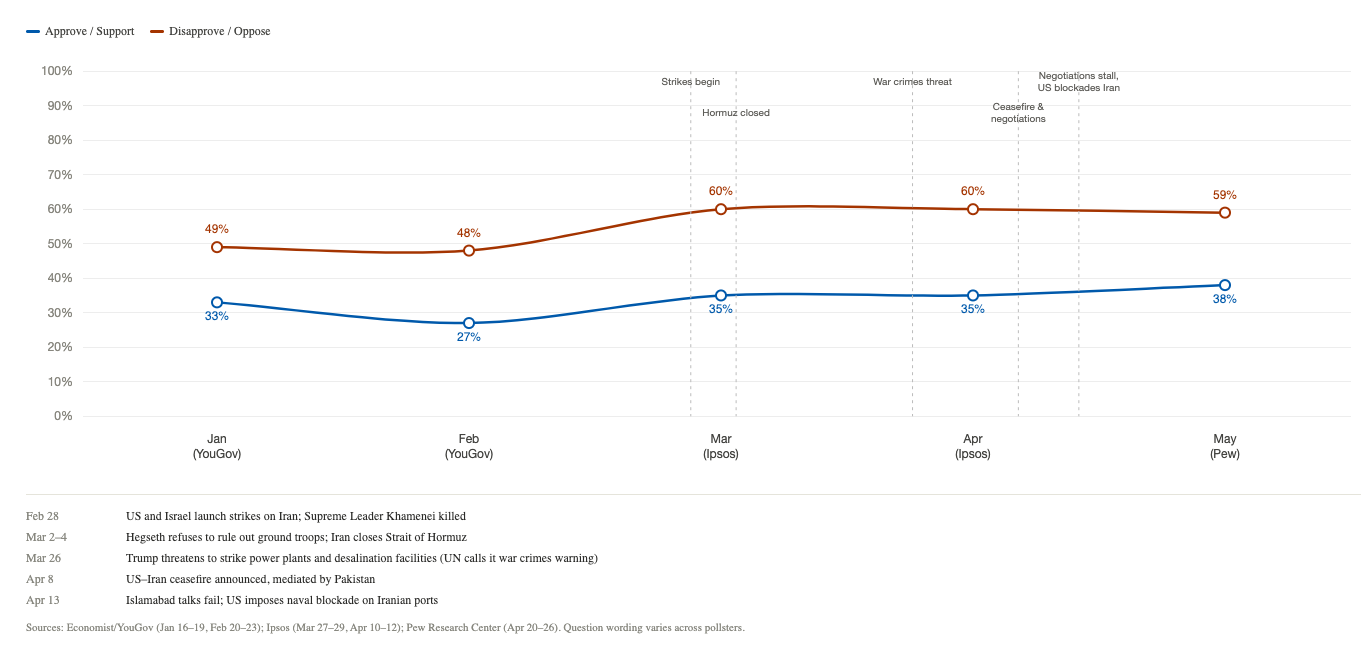
Figure 2. Domestic Support and opposition for US military intervention in Iran 35
Red Lines for Congress
Congressional action during the conflict can be interpreted as a collective willingness to grant the President a free hand on the Iran question. Opposition to the administration’s actions has been arguably more symbolic than substantive. However, the growing public pressure on and expectations from Congress, coupled with complex inter- and intra-party divisions, suggest the existence of two broad red lines that could trigger Congressional action. The first is the collapse of the ceasefire and a resumption of the conflict. The second is the US deployment of ground troops. Either of these scenarios would imply an escalation that has the potential to result in substantive Congressional opposition to the war. The voting record of the Congress (Figure 3.) (Figure 4.) is reflective of the growing nervousness in the Congress with the WPR gaining more and more support as the war prolonged and ceasefire was threatened.
| Date (Indian) | Bill | Support Vote | Opposition vote | Sponsor | Key features | Result | Chamber |
|---|---|---|---|---|---|---|---|
| May 20, 2026 | S.J.Res.185 | 50 | 47 | Sen. Kaine | No withdrawal period; No ceasefire inclusion; only defensive action | Passed | Senate |
| May 16, 2026 | H.Con.Res.75 | 212 | 212 | Rep. Gottheimer | Allows 30-day window and excludes ceasefire period from the 60-days | Failed | House |
| May 14, 2026 | S.J.Res.163 | 49 | 50 | Sen. Merkley | No withdrawal period; No ceasefire inclusion; only defensive action | Failed | Senate |
| May 1, 2026 | S.J.Res.184 | 47 | 50 | Sen. Schiff | No withdrawal period; No ceasefire inclusion; only defensive action | Failed | Senate |
| April 23,2026 | S.J.Res.114 | 46 | 51 | Sen. Baldwin | No withdrawal period; No ceasefire inclusion; only defensive action | Failed | Senate |
| April 17, 2026 | H.Con.Res.40 | 213 | 214 | Rep. Meeks | No withdrawal period; No ceasefire inclusion; only defensive action | Failed | House |
| April 16, 2026 | S.J.Res.123 | 47 | 52 | Sen. Duckworth | No withdrawal period; No ceasefire inclusion; only defensive action | Failed | Senate |
| Mar 25, 2026 | S.J.Res.116 | 47 | 53 | Sen. Murphy | No withdrawal period; No ceasefire inclusion; only defensive action | Failed | Senate |
| Mar 19, 2026 | S.J.Res.118 | 47 | 53 | Sen. Booker | No withdrawal period; No ceasefire inclusion; only defensive action | Failed | Senate |
| March 6, 2026 | H.Con.Res.38 | 212 | 219 | Rep. Massie | No withdrawal period; No ceasefire inclusion; only defensive action | Failed | House |
| Mar 5, 2026 | S.J.Res.104 | 47 | 53 | Sen. Kaine | No withdrawal period; No ceasefire inclusion; only defensive action | Failed | Senate |
Figure 3: Congressional voting record on the WPR
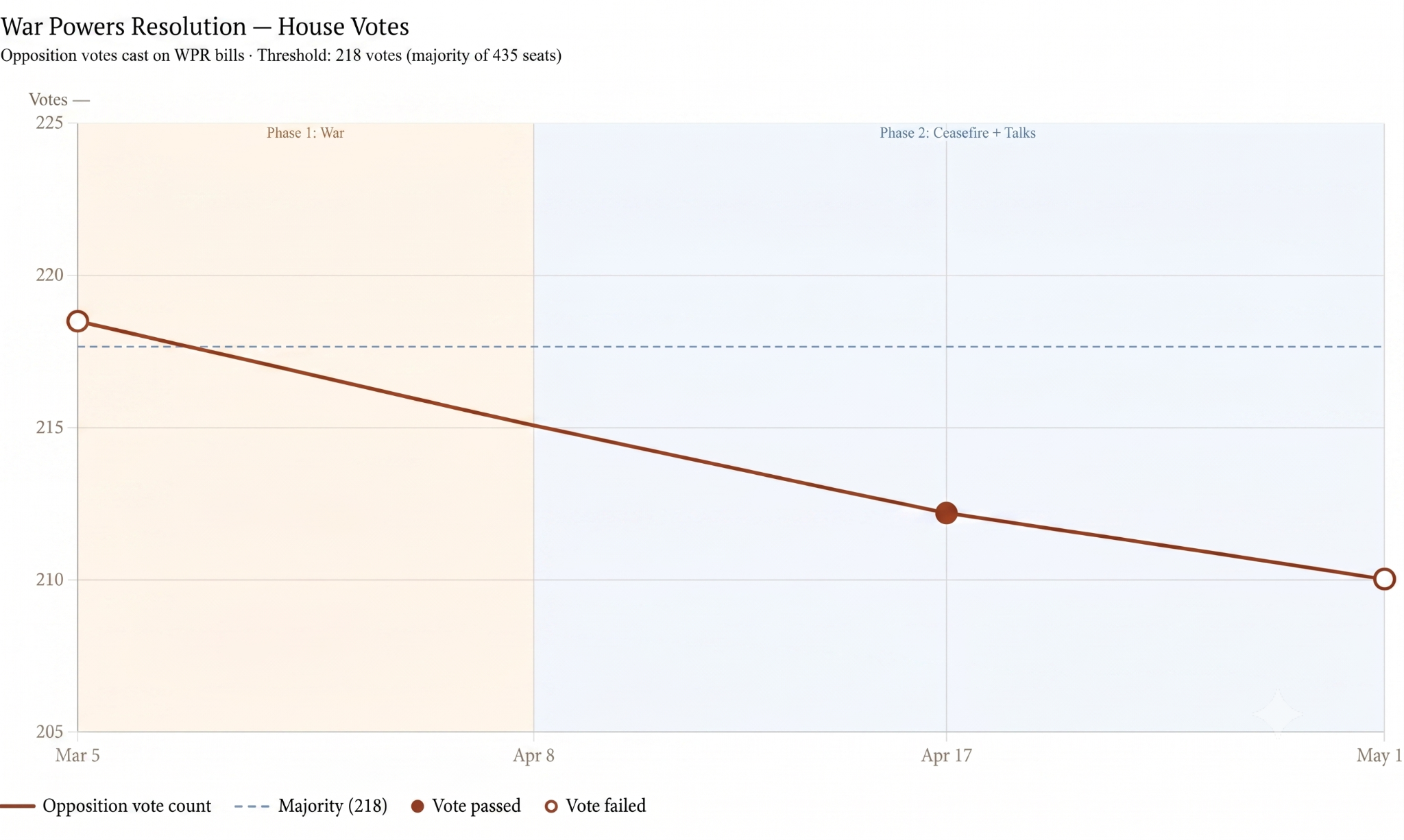
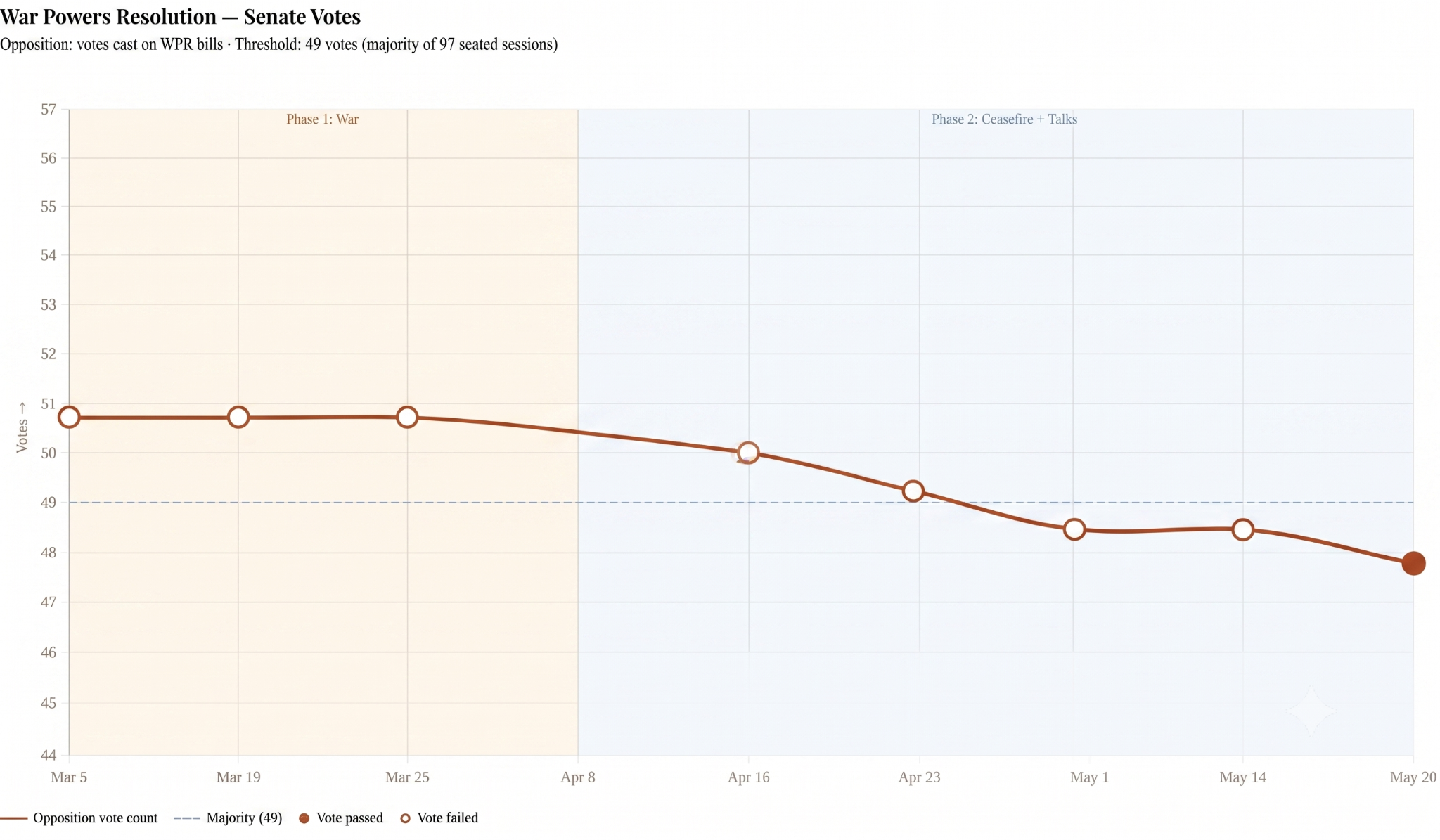
Figure 4: House and Senate Voting trend on WPR
The reactions of several members following the administration’s briefing on March 25 and the President’s threats to commit war crimes, hinted at a red line most members might be sensitive about. In these briefings, the administration had allegedly indicated that there were serious prospects of a US ground offensive into Iran.36 This led to strong backlash from members, MAGA and non-MAGA alike, with several prominent pro-Trump members storming out of the meeting.37 Such strong reactions also followed the President’s Truth Social comments threatening the eradication of Iranian civilisation, which resulted in bipartisan Congressional criticism.
For the Democrats, such signals from the administration indicated a breach of international law, a violation of human rights, and executive excesses leading to war crimes. For the Republicans, they represented an irrational escalation that could prolong the conflict and entrap the US into another foreign quagmire. Thus, for both parties, any further escalation would not only indicate a violation of their overarching vision for the US, but also directly impact their political and electoral interests, thereby becoming a red line.
Economically, the war, thus far, has had a limited impact on energy prices in the US.38 However, if the talks collapse and fighting resumes, the economic impact could be far more devastating and prolonged.39 With the conflict now targeting civilian infrastructure, including energy infrastructure in West Asia, global energy prices have spiked drastically.40 Considering the damage to the infrastructure, and the heightened geopolitical risk in the region, these price hikes could continue for years, resulting in inflation across sectors globally.41 The strong domestic pressure resulting from such escalation remains another important factor for members of Congress heading into the midterms. The recent passage of Senator Tim Kaine’s War Powers Resolution Bill on May 20, 2026 is a case point to prove that as the threat to the breakdown of ceasefire increases, so does the members’ tendency to vote against the administration.42
The prospect of a ground offensive has also emerged as a significant red line that could unite a majority within the US Congress against the war. Such an escalation would put the lives of many American citizens at risk, and would directly impact the constituents of most members, especially those from conservative districts with high military enrolment rates.43 The fluctuating energy prices would only remain a short-term disruption when compared to the long-lasting psychological, social and cultural impacts of putting American lives in harm’s way. This could result in devastating political consequences for current members, and can thus be considered a red line that would highly likely push Congress to act.
In either case, the requirement to override a Presidential veto through a supermajority makes it unlikely that Congress would be able to block US military engagement against Iran via the WPR. The more likely and preferable path of resistance would be to use the power of the purse, and block funding for the war by voting down a supplemental appropriations bill.
Footnotes
Pew Research Center, “Americans Broadly Disapprove of U.S. Military Action in Iran.” March 25, 2026. Link; Baz, Dina SmeltzCraig Kafura, Lama El. 2026. “Majority of Americans Say Congress’ Approval Needed for US Strikes in Iran.” Chicago Council on Global Affairs. March 3, 2026. Link.↩︎
Goldsmith, Jack. “Reclaiming Congressional War Powers.” Written statement for the Committee on Foreign Affairs, U.S. House of Representatives, March 23, 2021. Link.↩︎
Mitchell, Ellen. “Senate Shoots Down Iran War Powers Measure; Fetterman, Paul Cross Aisle.” The Hill, March 24, 2026. Link. ; CNN. “Fetterman Lone Democrat Who Voted Against Limiting Trump’s War Powers.” Video, 2:23. April 18, 2026. Link.↩︎
United States Congress. H.Con.Res. 38, Directing the President Pursuant to Section 5(c) of the War Powers Resolution to Remove United States Armed Forces from Unauthorized Hostilities in the Islamic Republic of Iran. 119th Cong., 1st sess. Link.↩︎
United States Congress. H.Con.Res. 75, Directing the President, pursuant to section 5(c) of the War Powers Resolution, to remove United States Armed Forces from hostilities against the Islamic Republic of Iran. 119th Cong., 2nd sess. Link.↩︎
United States Congress. H.J.Res.156, Directing the President, pursuant to the War Powers Resolution, to comply with the 60-day use of force and 30-day phased withdrawal requirements regarding the use of the United States Armed Forces in Operation Epic Fury in Iran. 119th Congress, 2nd sess. Link.↩︎
Jin, Lama El BazDebi. 2026. “The Iran War Is Dividing America Along Party Lines.” Chicago Council on Global Affairs. April 23, 2026. Link.↩︎
Julian Andreone, “With the House Eyeing Another Iran WPR Vote, Pro-Israel Democrats Explore Routes to Delay,” Drop Site News, March 20, 2026. [Link](https://www.dropsitenews.com/p/house-iran-wpr-gottheimer-meeks%5D(https://www.dropsitenews.com/p/house-iran-wpr-gottheimer-meeks)↩︎
Joseph Stepansky, “One Month In: Disapproval High but US Lawmakers Take No Action on Iran War,” Al Jazeera, March 28, 2026. Link↩︎
“Democrats Must Defund Trump’s Imperial War.” The Guardian, March 10, 2026. Link.↩︎
Gritten, David. 2026. “Trump Condemned Over Threat That Iran’s ‘civilisation Will Die.’” April 7, 2026. Link.↩︎
Miller, Alex, Adam Pack, Alex Miller, and Adam Pack. 2026. “Trump’s Iran Threat Rattles GOP as Some Republicans Break Ranks.” Fox News. April 8, 2026. Link ; Gedeon, Joseph, and Lauren Gambino. 2026. “Democrats Outraged at Trump’s Iran Post: ‘A Threat to Commit a War Crime.’” The Guardian, April 8, 2026. Link.↩︎
Nobles, Ryan, Monica Alba, and Alexandra Marquez. “House Speaker Mike Johnson says the U.S. is ‘not at war’ with Iran as White House approaches 60-day deadline.” NBC News, April 30, 2026. Updated May 1, 2026. Link.↩︎
The White House. 2026. “Peace Through Strength: Operation Epic Fury Crushes Iranian Threat as Ceasefire Takes Hold.” April 8, 2026. Link ; Nowell, Cecilia, Shrai Popat, Lucy Campbell, and Tom Ambrose. 2026. “Republicans Express Hope for Trump’s Deal with Iran as Democrats Voice Skepticism – as It Happened.” The Guardian, April 8, 2026. Link.↩︎
Congressional Research Service, Defense Primer: DOD Transfer and Reprogramming Authorities, IF11243, by Brendan W. McGarry. December 6, 2024. Link.↩︎
U.S. Department of Defense, Financial Management Regulation (DoD 7000.14-R), Volume 2A, Chapter 3: Operation and Maintenance Appropriations. December 2010. Link.↩︎
U.S. Department of Defense, Financial Management Regulation (DoD 7000.14-R), Volume 3, Chapter 12. Link↩︎
“$1 billion a day: The escalating cost of America’s war with Iran.” The Times of India, March 30, 2026. Link↩︎
Bertrand, Natasha, and Zachary Cohen. 2026. “Repairing Damaged US Military Bases Will Add Billions to Iran War Cost, Sources Say.” CNN Politics. Updated April 30, 2026. Link.↩︎
“Trump seeks to wind down Iran war but requests $200 bn funding boost.” BBC News, March 19, 2026. Link↩︎
Lisa Mascaro, “Congress Looks for Trump’s Exit Plan as the Iran War Drags On,” The Washington Post March 21, 2026. [Link](https://www.washingtonpost.com/politics/2026/03/21/iran-war-powers-exit-strategy-congress-trump/fafc11b2-2527-11f1-954a-6300919c9854_story.html%5D(https://www.washingtonpost.com/politics/2026/03/21/iran-war-powers-exit-strategy-congress-trump/fafc11b2-2527-11f1-954a-6300919c9854_story.html).↩︎
Bolton, Alexander. 2026. “Senate GOP Divided Over Trump Push for Iran War Funding.” The Hill, April 15, 2026. Link.↩︎
ibid.↩︎
U.S. Senate. “About Filibusters and Cloture.” Accessed May 20, 2026.Link.↩︎
U.S. Congress. House. One Big Beautiful Bill Act. HR 1. 119th Cong., 1st sess. Became law July 4, 2025. Link.↩︎
Ives-Rublee, Mia, and Kim Musheno. “The Truth About the One Big Beautiful Bill Act’s Cuts to Medicaid and Medicare.” Center for American Progress, July 3, 2025. Link.↩︎
Kalra, Avani. 2026. “Senate Democrats Are Split Over Supplemental Funding for the War in Iran - NOTUS - News of the United States.” NOTUS. March 10, 2026. Link.↩︎
Baz, Dina SmeltzCraig Kafura, Lama El. 2026. “Majority of Americans Say Congress’ Approval Needed for US Strikes in Iran.” Chicago Council on Global Affairs. March 3, 2026. Link.↩︎
Paul Steinhauser, “Polls: Most Americans Oppose Strikes on Iran, but Big Gap Between Democrats, Republicans,” Fox News, March 26, 2026. Link. ; Pew Research Center, “Americans Broadly Disapprove of U.S. Military Action in Iran.” March 25, 2026. Link↩︎
“How the Iran war exposed cracks in Trump’s Republican coalition.” BBC News, March 13, 2026. Link. ; Ipsos/Reuters, Topline & Methodology: Reuters/Ipsos Iran Airstrike Poll (February 28–March 1, 2026). March 1, 2026. Link ; Montgomery, David H. 2026. “The U.S.’s War with Iran Remains Unpopular.” YouGov, April 8, 2026.Link.↩︎
“Trump’s Iran War Rattles US Swing Voters Ahead of Midterms.” The Economic Times, March 21, 2026. Link↩︎
“Trump’s Primary Targets: The Midterm Races That Will Test His Grip on the GOP.” Politico Magazine, March 31, 2026. Link↩︎
“Trump’s Approval Hits New 36% Low as Fuel Prices Surge amid Iran War, Reuters/Ipsos Poll Finds.” Reuters, March 24, 2026. Link↩︎
“‘Extremely ugly’: MAGA media figures squabble over Trump’s Iran war.” The Guardian, March 22, 2026. Link↩︎
YouGov. “Few Democrats and Most Republicans Support Military Action in Iran: January 16–19, 2026 Economist/YouGov Poll.” January 20, 2026. Link ; YouGov. “U.S. Military Intervention in Iran Has Little Support but Half of Americans Think It’s Likely to Happen Soon: January 30–February 2, 2026 Economist/YouGov Poll.” February 3, 2026. Link ; Tyson, Alec. “Ipsos Poll on the War in Iran: March 27–29, 2026.” Ipsos, March 31, 2026. Link ; Tyson, Alec. “Ipsos Poll on the War in Iran: April 10–12, 2026.” Ipsos, April 13, 2026. Link ; Pew Research Center. “Americans Remain Critical of Trump’s Approach to Iran.” May 1, 2026. Link↩︎
Kube, Courtney, Melanie Zanona, Jonathan Allen, and Gordon Lubold. 2026. “Tensions Flare During Iran Briefing on Capitol Hill.” NBC News, March 26, 2026. Link.↩︎
Raasch, Jon Michael. “Furious Republicans Storm Out of Secret Iran Briefing as Shifting Objectives Sparks Panic.” Daily Mail via MSN, March 26, 2026. Link.↩︎
Cohen, Patricia, and Ben Casselman. 2026. “Iran War Shakes Global Economy, but the U.S. Has Mostly Been Spared.” The New York Times, April 27, 2026. Link.↩︎
“As US-Iran Talks Remain ‘Stalled’, Experts Warn of ‘Long-Term Disruptions.’” Al Jazeera, April 28, 2026. Link.↩︎
“2026 Energy Crisis Policy Response Tracker – Data Tools - IEA.” April 29, 2026. IEA. Link.↩︎
Cox, Jeff. “Here Are All the Ways the Iran War Has Affected the U.S. Economy So Far.” CNBC, April 15, 2026. Last modified April 15, 2026. Link.↩︎
United States Senate. “U.S. Senate: Votes.” Accessed May 20, 2026. Link.↩︎
Miles, Matthew R., and Donald P. Haider-Markel. “Personality and Genetic Associations With Military Service.” Armed Forces & Society 45, no. 4 (2019): 637–658. Link ; U.S. Army Recruiting Command, Facts and Figures. (2020-2025) [Link](https://recruiting.army.mil/pao/facts_figures/%5D(https://recruiting.army.mil/pao/facts_figures/).↩︎