The United Kingdom is not disintegrating. Yet.
| AUTHOR | Abhishek Kadiyala |
| DATE | September 14, 2026 |
| CATEGORIES | Geostrategy |
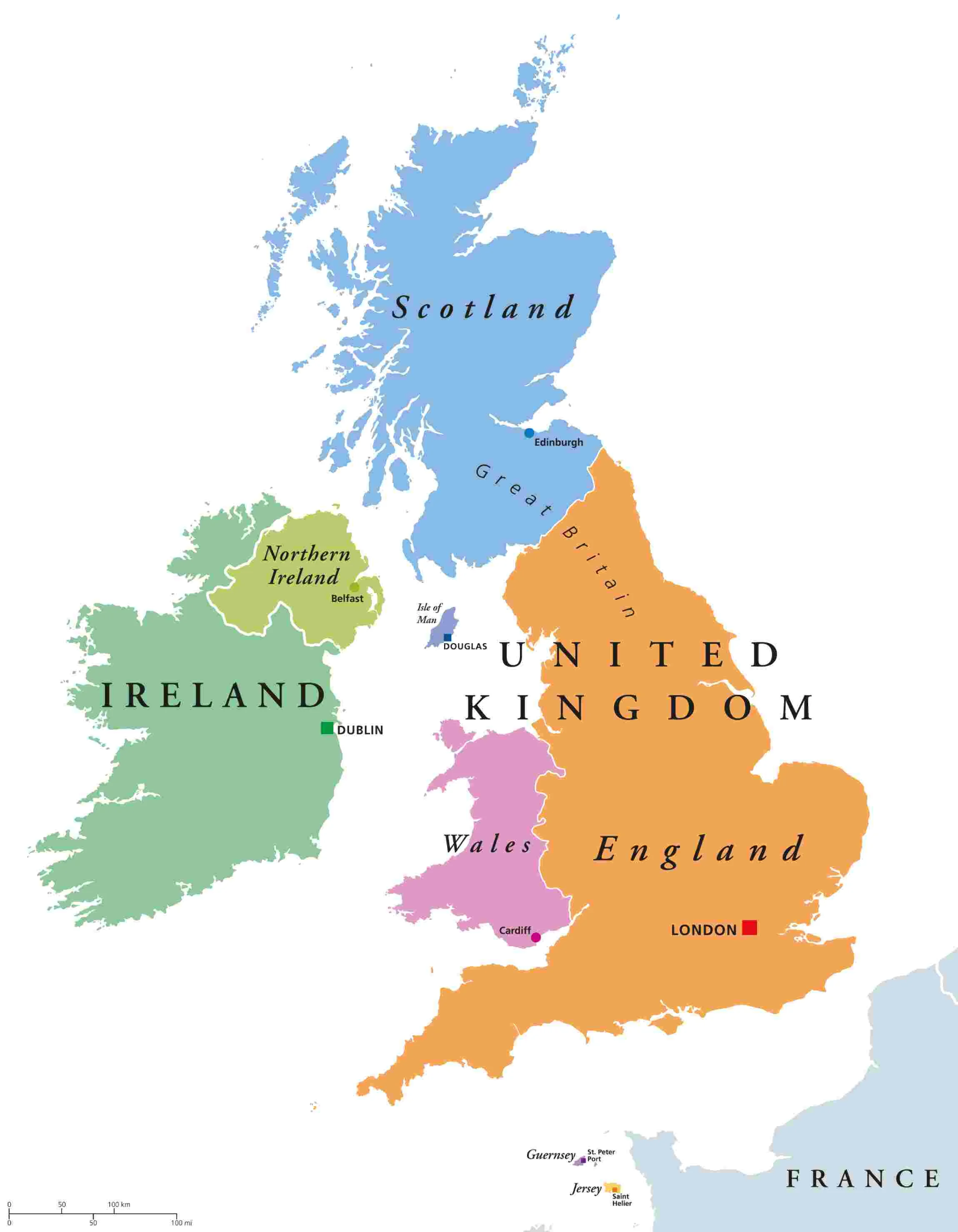
Map of the UK highlighting England, Scotland, Wales and Northern Ireland. (Casita, 2026)
What is happening?
On 14 September 2026, the leaders of three pro-independence parties, the Scottish National Party (SNP), Plaid Cymru and Sinn Féin, representing Scotland, Wales and Northern Ireland, signed a Memorandum of Understanding in Cardiff. They called on the UK government to prepare for, plan and facilitate constitutional change that would enable their independence. The document declares that Westminster’s time is coming to an end. John Swinney, the leader of the SNP, went further and said Andy Burnham will be the last Prime Minister of the United Kingdom.
The trigger was a singleanswer at Prime Minister’s Questions on 9 September. SNP MP Chris Law noted that the Northern Ireland Act contains a provision for a referendum on leaving the United Kingdom, and that no equivalent provision exists in law for Scotland. Burnham replied that Scotland was in exactly the same position, and that there would be no vote until a majority in Scotland wanted one.
Following this, the Prime Minister’s Office clarified that there had been no change in the Prime Minister’s position. Swinney said that for the first time since 2014 a British Prime Minister had accepted that majority support for a referendum should mean one takes place. Burnham then wrote to Swinney saying Northern Ireland and Scotland have distinct constitutional arrangements, and that independence and a referendum remain off limits.
What does the law say?
The Good Friday Agreement 1998 and the Northern Ireland Act 1998 clearly establish conditions under which the UK government would be legally required to call for a referendum. The act directs the Northern Ireland Secretary (UK government) to hold a border poll if it appears likely that a majority in Northern Ireland would vote for Irish unification, and can call one at any time provided seven years have passed since the last. This “appearance of majority” is left to the discretion of the Secretary who is likely to infer this from polling, election results or Assembly (state legislature) resolutions.
In the case of Scotland, the process is complicated. A section 30 Order of Scotland Act 1998 allows the UK government to temporarily transfer legislative powers to the Scottish Parliament. This transfer would require the approval of the House of Commons, House of Lords and Scottish Parliament. Pro-independence advocates have attempted to use this law in 2013 and 2017 to hold an independence referendum in the past, positioning this as the clearest route to a referendum. A primary challenge this referendum would face is the UK Supreme Court ruling from 2022 which held that the Scottish Parliament does not have the legal power to legislate for a referendum on self-determination without the consent of the UK Parliament. Wales has neither the legal route nor precedent.
What happens now?
Legally the position remains unchanged on the question of self-determination of Northern Ireland, Scotland and Wales. However, Prime Minister Burnham’s statement has allowed a symbolic-political scope for the discussion on a referendum to resume.
It is also important to note the political signalling from the other side. Leaders from each state met in their capacity as party leaders, rather than as officials in their respective governments. This means that despite their respective parties running the government in their respective states, this memorandum of understanding is only political signalling and has no legal or constitutional backing. The value of this MoU will only emerge if the pro-independence parties can demonstrate that there are conditions and majority support within their respective states for a referendum, thereby pressurising the UK government to hold a referendum.