You’re Grounded Forever!
| AUTHOR | Anushka Saxena |
| DATE | August 31, 2026 |
| CATEGORIES | China Defence Geostrategy South China Sea |
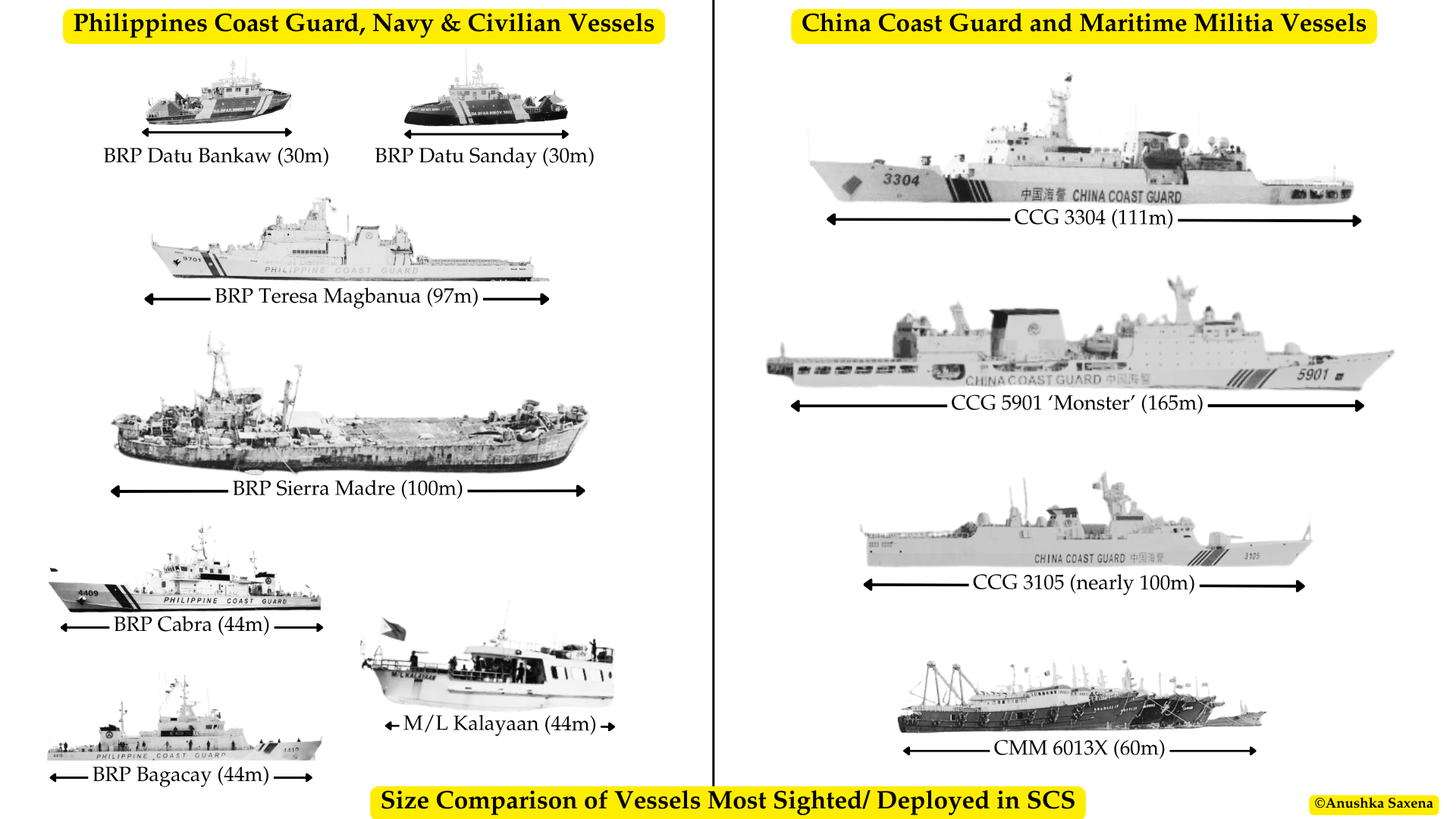
At a regular press conference of the Chinese Ministry of National Defence, on August 27, 2026, Senior Colonel Zhang Xiaogang said the Philippines should, as soon as possible, tow away BRP Sierra Madre (LT-57), as Beijing perceives it to be “unlawfully grounded” at the Ayungin Shoal/ Ren’ai Jiao/ Second Thomas Shoal in the Spratly Islands of the South China Sea. As tensions are heating up once more after a series of spats in 2024, Beijing’s assertions against the Sierra Madre’s permanent presence on the shoal that it claims as its own, are witnessing a revivalist movement.
The entire interaction between a reporter asking about the vessel, and spokeserson Zhang, revolves around how Manila has repeatedly attempted to smuggle reinforcement materials under cover of RORE missions to the vessel in order to retain it permanently on the reef. For context, it has already been grounded at the spot since 1999, and at any given time, between 8 and 20 Filipino personnel are stationed on the vessel.
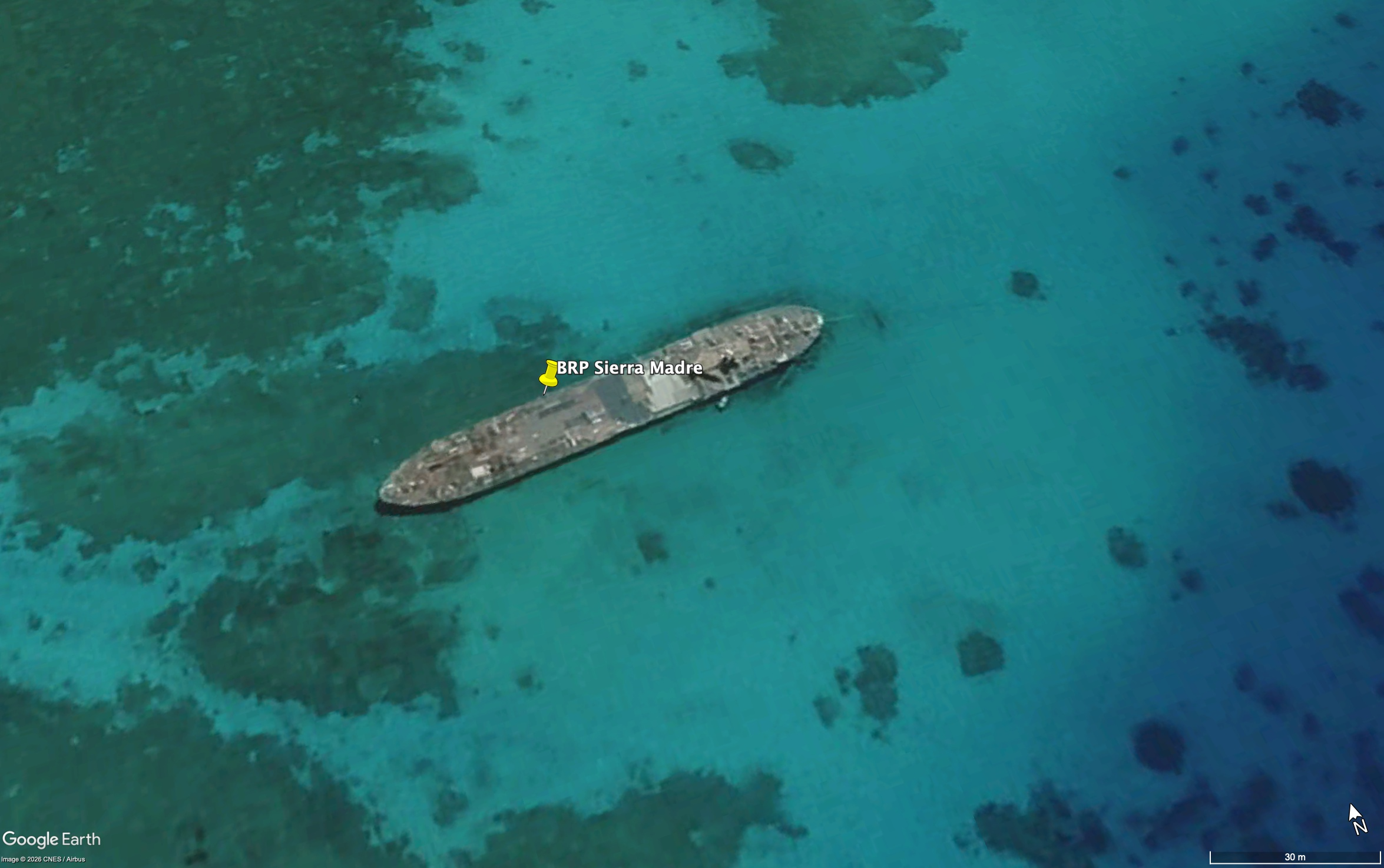
Beijing has signed onto a provisional arrangement with Manila in 2024, allowing for humanitarian resupply of daily necessities. The latest resupply mission also reached the vessel after reportedly some 50 days of near-shortfall of supplies. Because the vessel is rusting, China often accuses Philippines of delivering either construction materials, or materiel to enable a military campaign, which is also why its coercion toolkit involves everything from intercepting airdrops to boarding fishermen vessels for “inspections.”
In the provisional understanding reached on July 21, 2024, Manila emphasised three principles to avoid miscalculation during its lawful and routine resupply missions – that it will not submit to prior notification, cargo inspection/ “on-site verification,” or seeking of permission. Beijing, on the other hand, described it as a temporary concession on humanitarian grounds. It further made the same conditional on prior notification and on-site verification, while demanding that ultimately the warship be towed away. And because, from China’s perspective, cargo category cannot be verified without inspection, skirmishes between routine resupply vessels and the Chinese coast guard are bound to continue.
Hence, given the asymmetry of military power and Beijing’s insistence on sustaining militarisation, the only likely path forward in beginning to seek a little more peace may be for the two sides to chart out the text of the agreement at a convening of the Bilateral Consultation Mechanism (BCM).