Journey of Japan’s Defence Transformation
| AUTHOR | Vanshika Saraf |
| DATE | June 8, 2026 |
| DOCUMENT | Takshashila Discussion Document 2026-15 |
| VERSION | Version 1.0, May 2026 |
| CATEGORIES | Indo-Pacific Geostrategy |
Executive Summary
Japan’s defence and security posture is undergoing a transformation without precedent in the post-Second World War era. For nearly eight decades, the country’s strategic identity rested on constitutional pacifism, a deliberately restrained military footprint, and near-total reliance on the United States for extended deterrence. That framework is now being systematically reworked. Between the landmark 2022 National Security Strategy and the record-setting 2026 defence budget, Tokyo has signalled a shift from a passive, defence-only orientation toward a more proactive, capabilities-driven security posture.
The paper finds that Japan’s seemingly paradoxical outlook—characterised by a pacifist constitution coexisting with rapidly expanding military capabilities—is the product of four policy changes: the 2014 reinterpretation of collective self-defence, the 2015 Security Legislation, the 2022 National Security Strategy, and the ongoing Defense Buildup Programme (2023-2028). The policy shift has occurred primarily through the reinterpretation of existing legal frameworks, incremental capability development, and alliance restructuring, rather than through radical legal revision. As a result, Japan’s security policy today reflects both continuity with its post-war pacifist identity and adaptation to a changing regional security environment.
Introduction
Understanding Japan’s defence and security policy is increasingly important for analysing the future security architecture of the Indo-Pacific region. As regional power balance shifts and alliance structures evolve, Japan is likely to play a more central role in maritime security and defence technology cooperation. This paper, therefore, seeks to provide a comprehensive analysis of the institutional, strategic, and political factors shaping Japan’s defence transformation and its implications for the regional and global security order.
The paper examines the evolution of Japan’s defence and security policy by analysing the interaction amongst its strategic culture, threat perceptions, alliance politics, and domestic political economy. It begins by tracing the constitutional and historical foundations of Japan’s post-war pacifism, examines the reinterpretations that stretched the boundaries of Article 9, and then analyses the catalytic policy changes implemented over the last five years. The discussion also covers the defence budget trajectory, the restructuring of the US–Japan alliance architecture and the emergence of Japan as a defence exporter.
Further, it evaluates Japan’s threat perceptions and strategic environment—focusing on China’s military modernisation and grey-zone activities, North Korea’s missile and nuclear programmes, and Russia’s military activity in Northeast Asia. These external threats have played a central role in shaping Japan’s defence planning and military modernisation.
Finally, the paper examines the domestic political economy of defence, including public attitudes toward the military and budgetary trade-offs in an ageing society. Although Japan’s defence industry has historically been small and domestically oriented, recent policy reforms aim to strengthen production capacity and enhance technological cooperation with allies.
Overall, the paper argues that Japan is transitioning from a pacifist security state to a proactive security actor, but this transformation is occurring within an environment shaped by several constraining factors. Japan is, therefore, not becoming a military power in the conventional sense, but rather developing a model that combines advanced technology with limited power-projection capabilities.
Constitutional Foundations and Post-War Pacifism
Article 9 of Japan’s 1947 Constitution, drafted during the American occupation under General Douglas MacArthur, explicitly renounces war as a sovereign right and prohibits the maintenance of war potential. Its intent was to ensure that Japan could never again threaten regional peace. The origins of this provision remain contested within Japanese scholarship. Some view it as an externally imposed constraint by the occupying power, while others argue that it reflected a genuine domestic revulsion against militarism after the devastation of the Second World War.1
In practice, successive governments interpreted Article 9 as permitting a minimal right of individual self-defence, leading to the creation of the Self-Defense Forces (SDF) in 1954. Nevertheless, the SDF was bound by a strictly defensive operational doctrine: Japan would not project force abroad, would not exercise collective self-defence, and would not develop offensive military capabilities. This restraint became a cornerstone of Japan’s post-war national identity.
Incremental Reinterpretation (1954–2014)
Over the decades, the scope of permissible SDF activity expanded through a series of cabinet decisions, legislative actions, and bureaucratic interpretations rather than through formal constitutional amendment. Japan’s participation in UN peacekeeping operations after 1992, its provision of rear-area logistical support during the War on Terror, and the gradual expansion of its maritime surveillance role in the East China Sea—all tested the boundaries of Article 9.
Japanese defence policy also became anchored in formal statements articulating the purpose and principles of national defence (e.g., the 1957 Basic Policy on National Defense; later, the 1976 National Defense Program Outline), reinforcing a strategic culture of a defensive posture and strong political sensitivity to the overseas use of force.
A core post-war strategic settlement is often captured by the “Yoshida Doctrine,” which emphasised reliance on the U.S. for security while prioritising economic recovery and limited rearmament. The doctrine is linked to Shigeru Yoshida, the former Prime Minister of Japan, who led the country during most of its occupation after the Second World War. Although he was not ideologically opposed to rearmament, he believed that Japan’s immediate priority should be internal affairs, and that any defence plans must be commensurate with national strength.2
From an identity perspective, these post-war arrangements institutionalised two characteristics: (i) a public-facing “peace-loving nation” orientation and (ii) a pragmatic commitment to deterrence and survival via minimum necessary defence capabilities. This duality is evident in later strategy documents that explicitly reaffirm Japan’s commitment to an exclusively defence-oriented policy, and to avoid becoming a military power that threatens others—even as they emphasise deterrence, readiness, and alliance integration.3
To maintain domestic support for alliance and rearmament, Japanese leaders introduced self-imposed constraints which eventually came to be regarded as sacred in national discourse. In 1976, under Prime Minister Takeo Miki, the government established a policy to limit defence spending to 1% of national GDP. This cap served to insulate Japan from US pressure for greater burden-sharing, and signalled to neighbours that Japan remained a peaceful, non-threatening power.4
Japan’s Military Expenditure as a Share of GDP
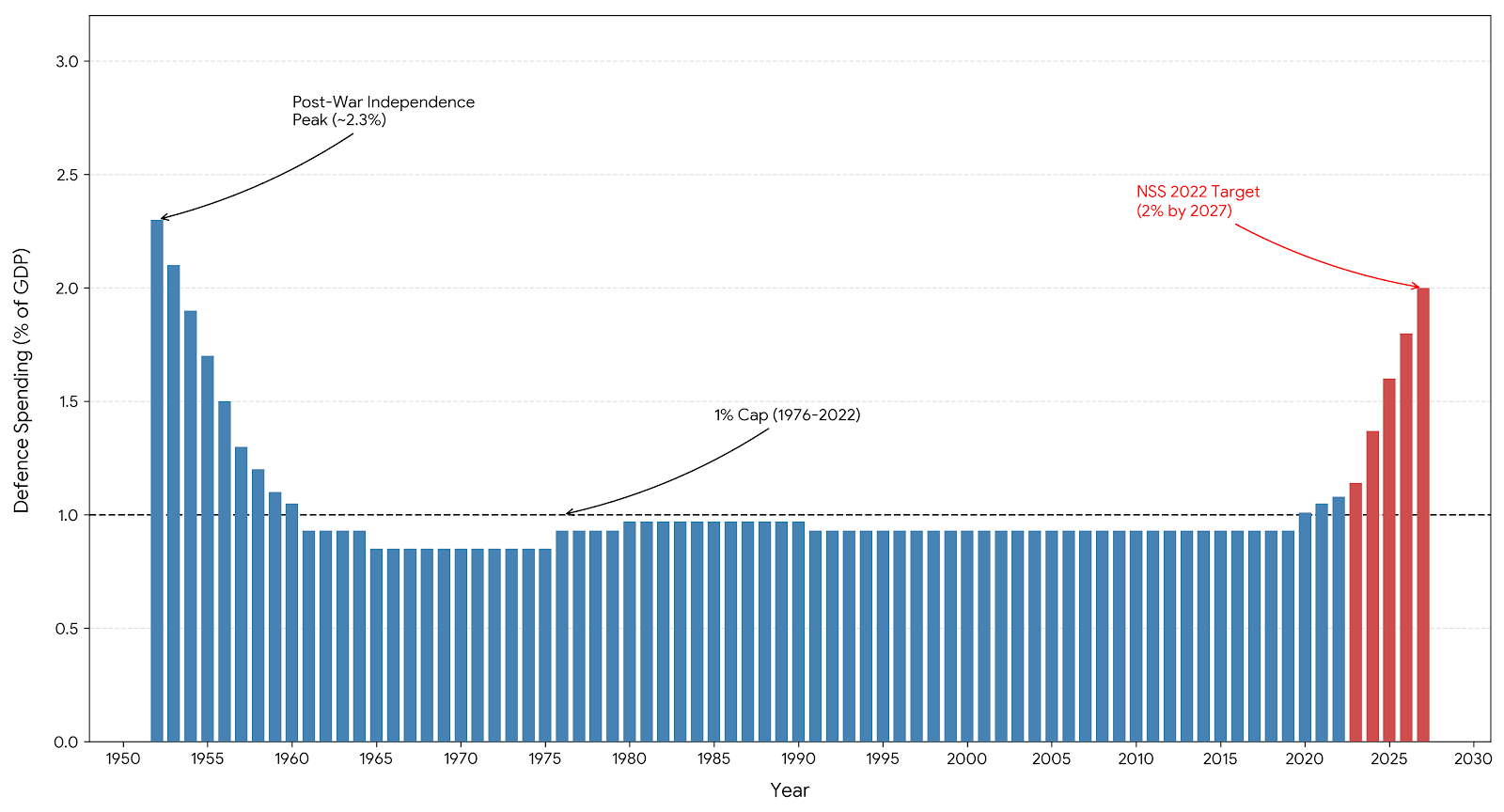
Figure 1: Japan’s Military Expenditure as a Share of GDP (1997 - 2027 Projected) | Created by author using data from SIPRI Database5
The 1% limit was part of a broader set of constraints, including the Three Principles on arms exports, which essentially banned the sale of military equipment to foreign nations, and the Three Non-Nuclear Principles (1967), which prohibited the possession, manufacture, or introduction of nuclear weapons in Japan. These measures reinforced its identity as a peace-state and a civilian power.
The end of the Cold War and the 1991 Gulf War were transformative events for Japan’s security policymaking elite. Despite contributing US$13 billion to the coalition effort, Japan was internationally criticised for its chequebook diplomacy and its inability to provide personnel during a major global security crisis. This experience triggered a period of strategic re-examination and led to a gradual revision of the economics-led defence and foreign policy.
Japan’s chequebook diplomacy refers to its post-war use of economic aid, loans, infrastructure finance and financial contributions as the main tools of foreign policy, while avoiding direct military involvement. The term became especially prominent after the 1991 Gulf War, when Japan contributed around US$13 billion to the US-led coalition but did not send troops. Despite the scale of the contribution, Japan was criticised for paying rather than participating, and its name was famously absent from Kuwait’s public expression of thanks after the war. This episode deeply embarrassed Tokyo and became a turning point in Japan’s security debate, ultimately driving passage of the Peacekeeping Operations Law (1992)—Japan’s first legal basis for overseas SDF deployments.
The 1990s also saw the first major revision to the Guidelines for Japan-US Defense Cooperation since their promulgation in 1978. While the original 1978 Guidelines focused strictly on the defence of Japan—specifically against a potential Soviet invasion of Hokkaido—the 1997 revision expanded the alliance’s scope to include situations in areas surrounding Japan that could significantly affect Japanese security. This was a critical step in normalising the alliance and preparing for contingencies on the Korean Peninsula.6
Contemporary Shifts in Policy (2014 - 2026)
The return of Shinzo Abe to the premiership in 2012 marked a turning point in the effort to reconcile Japan’s national security identity with the imperatives of a changed regional environment. Abe sought to bridge this gap by reforming institutions and reinterpreting the Constitution, without formally amending it.
The most significant achievement of the Abe administration was the 2015 Legislation for Peace and Security. This package of bills reinterpreted Article 9 to allow Japan, for the first time, to exercise the right of collective self-defence in limited circumstances. Previously, the government’s view was that Japan could only use force when it was under direct attack.7
The legislation introduced the Three New Conditions for the use of force, establishing a rigorous legal framework for military action:8
- When an armed attack against Japan occurs, or when an armed attack against a foreign country in a close relationship with Japan occurs, threatening Japan’s survival and posing a clear danger to the people’s right to life and liberty and pursuit of happiness.
- When no other appropriate means are available to repel the attack.
- The use of force is limited to the minimum extent necessary.
This reinterpretation allowed for closer integration with US forces—including the protection of US naval vessels, and the provision of logistical support in situations that have an important influence on Japan’s security. Further, it expanded the SDF’s roles in UN peacekeeping, permitting the use of weapons to rescue Japanese nationals overseas and protect local populations.9
Abe also centralised security decision-making by establishing a National Security Council (NSC) in 2013 and releasing the first National Security Strategy (NSS). This centralisation replaced the previous Basic Defense Force concept with a Dynamic Defence Force (later Dynamic Joint Defense Force). This shift emphasised mobility, flexibility, and readiness, moving forces focused solely on Russia away from the northern islands, toward the southwestern Nansei island chain to counter Chinese assertiveness in the East China Sea.10
Between Abe’s resignation in 2020 and December 2022, two developments accelerated reform: Russia’s invasion of Ukraine and China’s exercises around Taiwan. These convinced Prime Minister Kishida that Japan could no longer defer action.
Timeline of Japan’s Defence Policy
.png)
Figure 2: Japan’s Defence Policy (1947 - 2022)\ Created by author
The 2022 Pivot
In December 2022, the Kishida government released three revised strategic documents—the National Security Strategy (NSS), the National Defense Strategy (NDS), and the Defense Buildup Program (DBP). These collectively represented the most significant recalibration of Japan’s defence posture since the creation of the SDF. The NSS explicitly identified China as Japan’s greatest strategic challenge, a departure from the more circumspect language of previous iterations. It also acknowledged the threats posed by North Korea’s nuclear and missile programmes, and Russia’s demonstrated willingness to use force in Ukraine.11
The documents introduced the concept of counterstrike capability—the ability to strike enemy bases to neutralise imminent missile threats. This represented a fundamental break from the post-war principle that limited the use of force to defending Japanese territory alone. They also laid out a five-year plan to double annual defence spending to approximately 2% of GDP, bringing Japan’s military expenditure into alignment with NATO benchmarks.12
Defence Planning and Budgetary Priorities
For nearly five decades, since 1976, Japan’s defence budget remained stable, oscillating around the JP¥5 trillion mark. This stability reflected a period of fiscal restraint and adherence to the traditional 1% of GDP spending cap. But that changed since the first Trump administration took charge in 2017, as demands from the US for greater burden-sharing by allies started rolling in. The following are some of the main takeaways from the recent defence budget documents:
- The 2022 Defense Buildup Program allocates about JP¥43 trillion over five years to fundamentally reinforce seven areas: standoff defence, integrated air/missile defence, unmanned assets, cross‑domain operations (cyber/space/EM), C2/ISR, mobility and civil protection.13
- Recent budgets (FY 2024–26) fund this shift with record allocations of around 7.9 to 9 trillion yen annually, with emphasis on munitions stockpiles, base hardening, and new platforms, rather than just personnel expansion.14
- About JP¥64 billion in FY 2024 is allocated to the Japan–UK–Italy Global Combat Air Programme (next‑generation fighter) and related systems, as part of a longer‑term outlay to field the aircraft by around 2035.
- Roughly JP¥822.5 billion is earmarked for defence R&D, including a DARPA‑style research agency and work on hypersonic‑guided missiles and advanced interceptors.
Major Budget Lines as highlighted in Japan’s Defense Build-Up Program
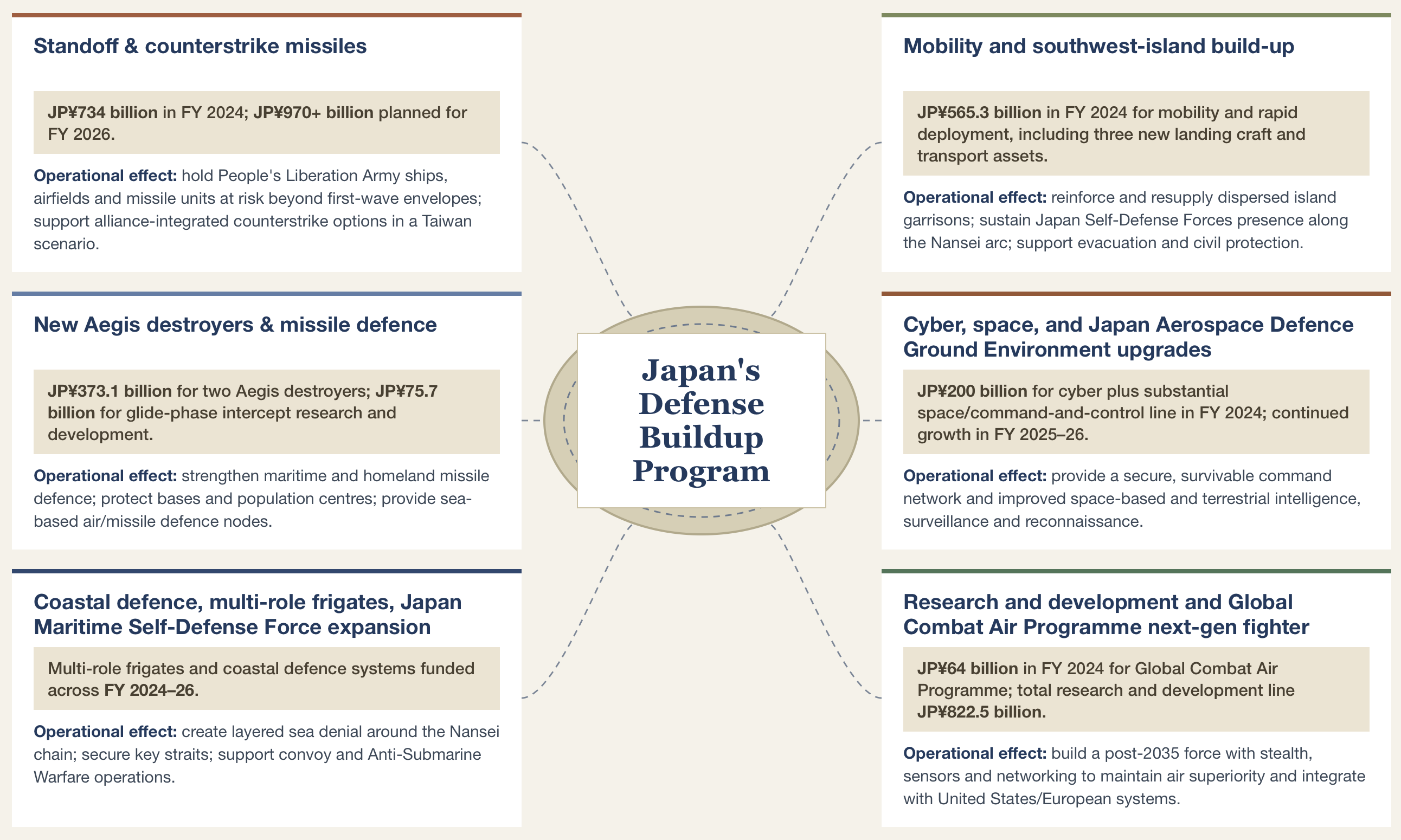
Figure 3: Created by Author using data from Japan’s Defense Buildup Program15
As a result of these shifts, Japan is currently ranked 9th in the world in absolute defence spending. This is a notable ascent, as Japan spent decades oscillating between the 10th and 12th spots. Within Asia, Japan ranks behind China and India but has surpassed South Korea.
Top 10 Global Military Spenders 2025
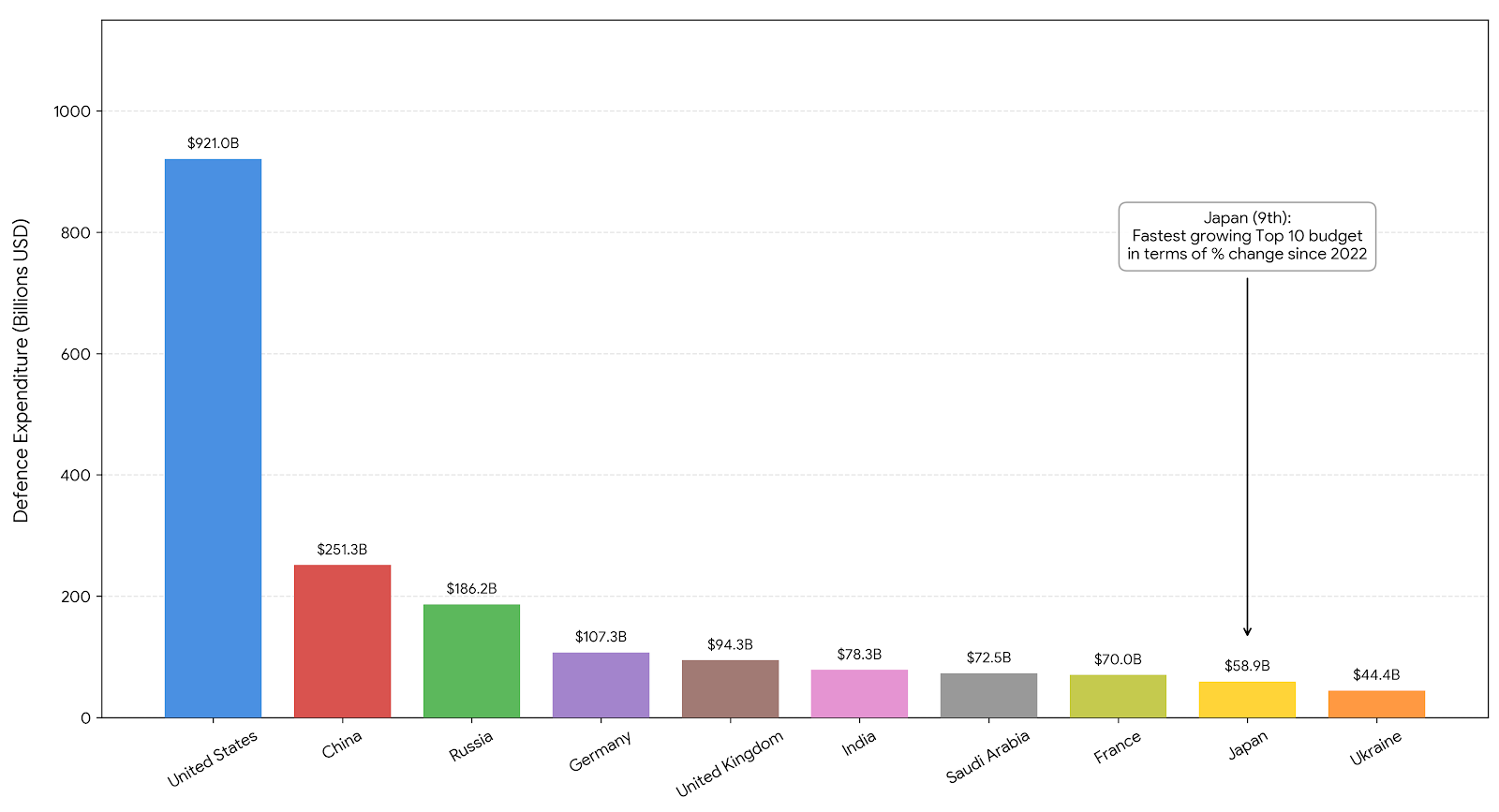
Figure 4: Created by author using data from The Military Balance 202616
Threat Perceptions and Strategic Environment
China’s Military Modernisation and Grey-Zone Challenges
The qualitative and quantitative expansion of the People’s Liberation Army (PLA) of China represents a monumental challenge to Japan’s technological edge. China’s defence budget has grown consecutively for over 30 years, reaching approximately 4.8 times that of Japan’s in 2022. The transformation of Japan’s strategic culture is inextricably linked to the changing perception of China. In the 1990s, Japan’s views of China were relatively positive, with a focus on economic interdependence.17 However, this relationship underwent a dramatic deterioration in the 2000s, catalysed by a negative view of Japan in Chinese political discourse.18
Since the 2010 fishing boat incident and the 2012 nationalisation of the Senkaku Islands, Japanese narratives have increasingly depicted China as a coercive, immoral, and unlawful actor. In contrast, the portrayal of Japan has been of a moral and lawful victim of aggression, thereby justifying the normalising of its security posture.19
This shift was further accelerated by a series of critical flashpoints throughout the 2000s that progressively eroded Japanese trust, and forced a fundamental re-evaluation of its defence policy. Tensions spiked sharply in November 2004 when a Chinese nuclear-powered attack submarine intruded into Japanese territorial waters near Okinawa, prompting Tokyo to issue its first maritime security operational order in five years.20 In 2005, widespread violent protests erupted across major Chinese cities over Japanese textbook revisions and Tokyo’s bid for a permanent UN Security Council seat.21
Public sentiment between the two nations has also changed in the meantime. In 2002, according to the Pew Research Centre, more than half (55%) of the Japanese held a favourable view of China.22 By the end of that decade, that number dropped to only 14%.23
The 2022 NSS designated the external stance and military activities of the People’s Republic of China (PRC) as the greatest strategic challenge in ensuring the peace and security of Japan and the international community. This characterisation reflects a profound shift from earlier, softer language that described China as an “issue of concern”.24 By 2025 and 2026, this challenge has materialised through persistent pressure on the Senkaku Islands, increasing maritime activities in the western Pacific, and a rapidly tilting military balance in the Taiwan Strait.25
The PRC has normalised a grey-zone presence in the waters surrounding the Senkaku Islands, which are Japanese-administered, utilising China Coast Guard (CCG) vessels to challenge Japan’s sovereignty without escalating to full-scale war. In August 2024, a Chinese Y-9 intelligence aircraft breached Japanese territorial airspace off the Danjo Islands for two minutes—marking the first confirmed military incursion of its kind.26 In late 2025 and early 2026, these incursions became more sophisticated and aggressive. For instance, in May 2025, four CCG vessels entered Japan’s territorial waters and a Z-9 anti-submarine helicopter took off from one of these ships to breach Japanese airspace—a tactic that planners view as an attempt to test response times, and establish a new normal of military presence within Japanese territory.27
Total Number of Scrambles by Japan Self Defense Forces (2010-2025)
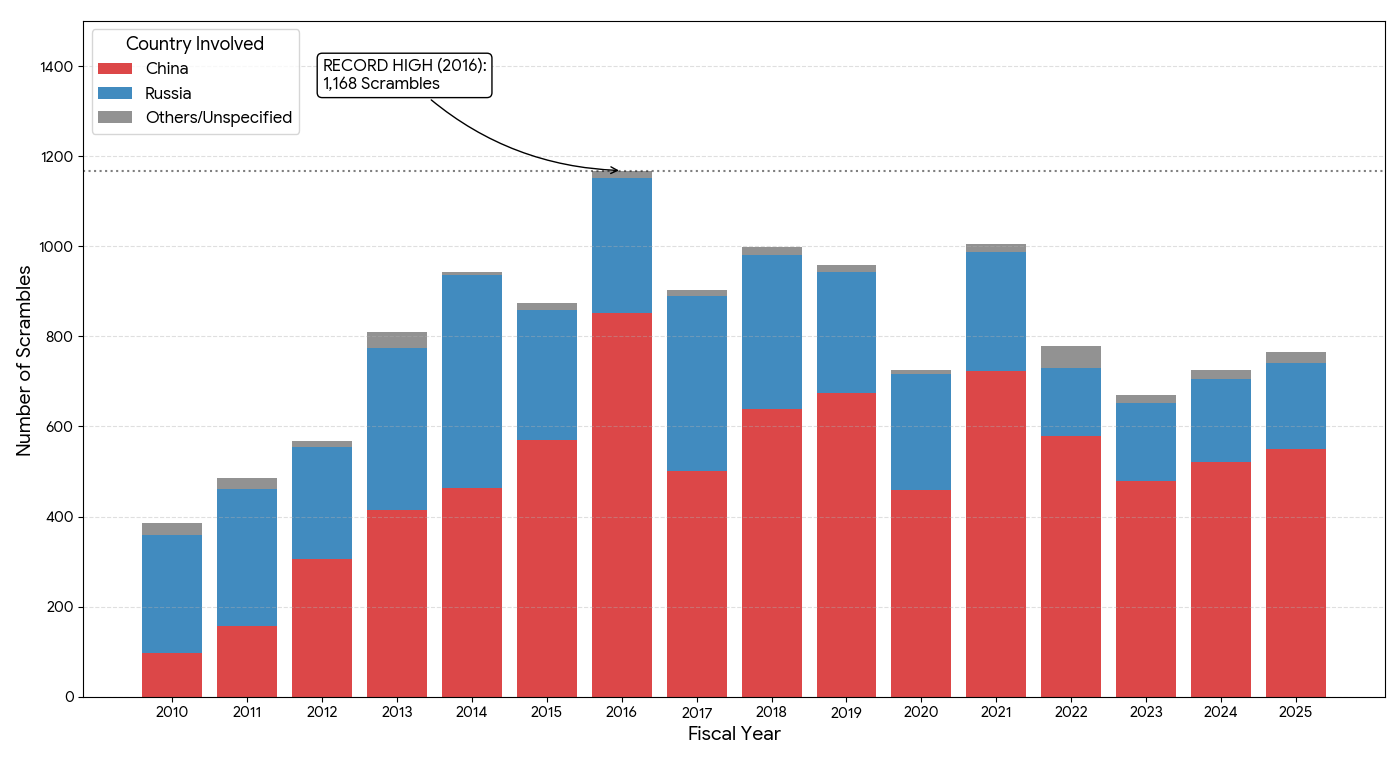
Figure 5: Created by author using data from Joint Staff Quarterly Report28
The Taiwan Dimension
Japan’s defence planners now deem the security of Taiwan as inseparable from the security of Japan. One of the connections is geographical, as Japan’s westernmost inhabited island, Yonaguni, is only 111 kilometres from Taiwan. The 2022 exercises, where Chinese ballistic missiles landed within Japan’s Exclusive Economic Zone (EEZ), proved that a Taiwan contingency would not be a distant event but possibly a direct kinetic threat to Japanese nationals.29
Beyond these immediate geographic and kinetic dangers, the seizure of Taiwan would decisively alter the US-China balance of power in the Indo-Pacific. In addition, a Chinese military move on Taiwan carries a high probability of drawing the United States into a direct conflict with Beijing, which would inevitably trigger mutual defence commitments.
Current Prime Minister Sanae Takaichi has been particularly vocal on this issue, stating in late 2025 that a war over Taiwan could constitute a situation threatening Japan’s survival. This is a critical legal term in Japan’s post-2015 security framework, as such a classification permits the SDF to exercise the right of collective self-defence to assist an ally under attack. The PRC has reacted sharply to these statements, deploying economic pressure and travel advisories against Japan to coerce Tokyo into retracting its support for Taiwan’s security.
North Korea’s Missile and Nuclear Capabilities
North Korea’s military activities pose an “even more grave and imminent threat to Japan’s national security than ever before”, according to the Defence of Japan White Paper 2023.30 The frequency of ballistic missile launches has reached unprecedented levels, with Pyongyang conducting dozens of tests annually to refine its delivery systems and nuclear warheads. By 2026, the technical sophistication of the North Korean arsenal has rendered the possibility of a surprise nuclear attack a palpable reality for Japanese civilian and military planners.31
North Korea’s successful pursuit of nuclear miniaturisation allows it to equip a wide range of missiles, from short-range tactical weapons to ICBMs, with nuclear warheads. Recent Japanese white papers indicate that North Korea has deployed tactical nuclear weapons and adopted a more aggressive nuclear doctrine that suggests a willingness to use these weapons pre-emptively.32 North Korea’s missile tests over Japan in 2006, and its subsequent nuclear advancements, have been cited as primary justifications for Japan’s investment in missile defence systems and the acquisition of counterstrike capabilities.
Russia and Regional Uncertainty
Japan today perceives the Russian Federation as a strong security concern, a significant shift from the engagement-oriented policy of the previous decade. Following the 2022 invasion of Ukraine, Japan re-categorised Russia as a state that has “shaken the very foundation of the international order.”33 Tokyo views the aggression against Ukraine not as a distant European conflict, but as a dangerous precedent that could invite similar might-makes-right behaviour in East Asia.
Former Prime Minister Fumio Kishida argued that the security of Europe and the Indo-Pacific is inseparable. In 2022, Kishida cemented this concept by becoming the first Japanese Prime Minister in history to attend a NATO Summit.34 This normative stance has led Japan to become the most resolute supporter of Ukraine in Asia, committing over US$9 billion in aid and joining Western sanctions. This pivot has essentially ended the era of cautious engagement that sought to use personal diplomacy with Vladimir Putin to resolve the Northern Territories dispute.35
The Northern Territories Dispute refers to competing claims of sovereignty by Japan and Russia over four island groups (Etorofu, Kunashiri, Shikotan, and the Habomai islets). These were seized by the Soviet Union at the very end of the Second World War. Because of this dispute, the two nations have never signed a formal peace treaty to officially end the war. For years, Japan tried to negotiate a compromise. However, following Russia’s invasion of Ukraine, Japan aligned with the West to impose heavy sanctions on Moscow. In response, Russia completely terminated peace talks.
Russia has retaliated by designating Japan as an unfriendly country and increasing its military activities in the Far East. From Tokyo’s point of view, the deployment of advanced military systems to the Kuril Islands (Northern Territories)—including the Bastion and Bal shore-based anti-ship missiles—is an effort to establish a bastion for Russian nuclear-powered ballistic missile submarines in the Sea of Okhotsk.36
Despite the heavy losses sustained by the Russian military in Ukraine, the Russian Pacific Fleet has continued to receive advanced assets. In 2024 and 2025, the deployment of the fifth Borey-class and second Yasen-class M nuclear submarines enhanced Moscow’s underwater strike and deterrent capabilities in Japan’s vicinity. Russia’s military activities, including joint exercises with China and bomber sorties near Japanese airspace, are perceived as provocative actions intended to pressure Japan into abandoning its support for Ukraine and its alliance with the US.37
US–Japan Alliance Restructuring
On 24 March 2025, Japan activated the Japan Self-Defense Force Joint Operations Command (JJOC), an organisational reform first outlined in the 2022 Defense Buildup Program. The JJOC—headquartered at the Ministry of Defense in Ichigaya, Tokyo—is led by Lieutenant General Kenichiro Nagumo and was initially staffed by approximately 240 personnel. It unifies command of the Ground, Maritime, and Air Self-Defense Forces alongside units operating in the space and cyber domains, enabling seamless cross-domain operations from peacetime through contingency.38
The establishment of the JJOC represents a major structural reform that was long debated within Japan’s defence establishment. Previously, each service branch operated under largely independent command structures, creating coordination challenges that would be critical vulnerabilities in any high-tempo, multi-domain crisis. Signalling the command’s growing importance as a node in the Indo-Pacific security architecture, Australia became the first foreign country to post a liaison officer to the JJOC in September 2025. 39
In parallel with the JJOC’s activation, the United States has begun transforming the US Forces Japan (USFJ) from a primarily administrative headquarters into a Joint Force Headquarters (JFHQ), which would entail greater warfighting and operational responsibilities.40 This restructuring, described by US Indo-Pacific Command as the most significant change to USFJ since its creation, is designed to provide the JJOC with a standing American operational counterpart based in Japan.41 A JJOC Cooperation Team was established at the US Army’s Hardy Barracks in central Tokyo from March 2025, comprising around a dozen cross-service planners.42
The USFJ transformation has encountered political headwinds. Reports in early 2025 indicated that the Pentagon considered cancelling the restructuring as a cost-saving measure, creating concern in both Tokyo and Seoul. Secretary of War Pete Hegseth’s visit to Tokyo in March 2025 appeared to allay those fears, but the episode highlighted how Japan’s strategic planning remains vulnerable to shifts in US domestic politics. The 2025 US National Security Strategy’s treatment of the Indo-Pacific through a narrower, more economic lens—along with an insistence on heavier burden-sharing—has raised questions in Tokyo about the long-term reliability of American extended deterrence.43
Recent Operationalisation
In March 2026, the Ministry of Defense began the first operational deployment of indigenously developed long-range missiles. This included the upgraded Type-12 surface-to-ship missile at Camp Kengun in Kumamoto and the Hyper Velocity Gliding Projectile (HVGP) at Camp Fuji. These deployments were accelerated by one year to meet the deteriorating security environment.44
The upgraded Type-12, with a range of 1,000 km, puts the Chinese coastline, much of the East China Sea, and nearly all of North Korea within striking distance from Kyushu. In terms of current ISR and precision-strike capacity, Japan is building a multi-layer architecture. For surveillance, the JASDF operates E-767 and E-2D Hawkeye airborne early warning aircraft, supplemented by reconnaissance satellites and the Quasi-Zenith Satellite System (QZSS). On the strike side, apart from the upgraded Type-12 surface-to-ship missile, Japan has also contracted for 400 Tomahawk cruise missiles from the US. The Kongo-class destroyer JS Chokai completed modifications in the US to carry Tomahawk missiles, with live-fire tests scheduled for mid-2026. Together, these systems give the JSDF the reach to hold adversary missile sites and airfields at risk, a capability that did not exist before 2025.45
Japan’s new strategy also includes a multi-layered approach to security that extends beyond hard military power. A central pillar of this is Official Security Assistance (OSA), introduced in 2023. OSA allows Japan to provide equipment and infrastructure directly to the armed forces of developing countries, a significant departure from previous ODA policies that were limited to civilian agencies.46
Early OSA agreements with the Philippines (coast guard vessels with radar systems), Bangladesh (maritime security), and Malaysia (surveillance equipment) reflect Japan’s intent to offer an alternative to Chinese security influence in the Global South. Takaichi has aggressively put financial muscle behind Japan’s security assistance. For the fiscal year, her cabinet more than doubled the OSA budget, scaling it to JP¥18.1 billion (US$116 million), up from JP¥8.1 billion under former Prime Minister Fumio Kishida.47
Defence Industrial Policy
Japan’s post-war defence industry operated under the Three Principles on Arms Exports (1967), which evolved into a near-total ban on arms transfers and effectively isolated Japanese defence manufacturers from global markets. In 2014, the Three Principles on Transfer of Defense Equipment and Technology were introduced, permitting limited exports for joint development purposes.48 In March 2024, further revisions allowed the export of jointly developed finished products, including the GCAP fighter, to countries with defence cooperation agreements—provided they are not involved in active conflicts.49
The most consequential reform came on 21 April, 2026, when the Japanese government lifted the categorical restrictions that had confined defence exports to non-lethal support roles such as rescue, transport, surveillance, and mine-clearing.50 The reform permits the export of lethal systems—including warships, missiles, and combat equipment—to a defined list of international partners. A new defence industrial strategy, to be released alongside the revised national security documents in December 2026, is expected to establish an interagency export promotion organisation.51
In Japan, official policy increasingly treats the defence production and technology base not as a peripheral economic sector but as “a virtually integral part of defence capability itself,”—thereby explicitly linking factories, skills, and suppliers to deterrence and wartime readiness.52
The country lacks state-owned armament production facilities and relies on private industry for production, maintenance, and sustainment. Institutionally, export licensing and transfer approvals involve multiple ministries and the National Security Council. The 2014 Strategy on Defense Production and Technological Bases was an early marker of industrial policy entering defence planning. It was adopted to maintain and strengthen the base, replacing older domestic-production guidance.53
Top Japanese Arms Manufacturers
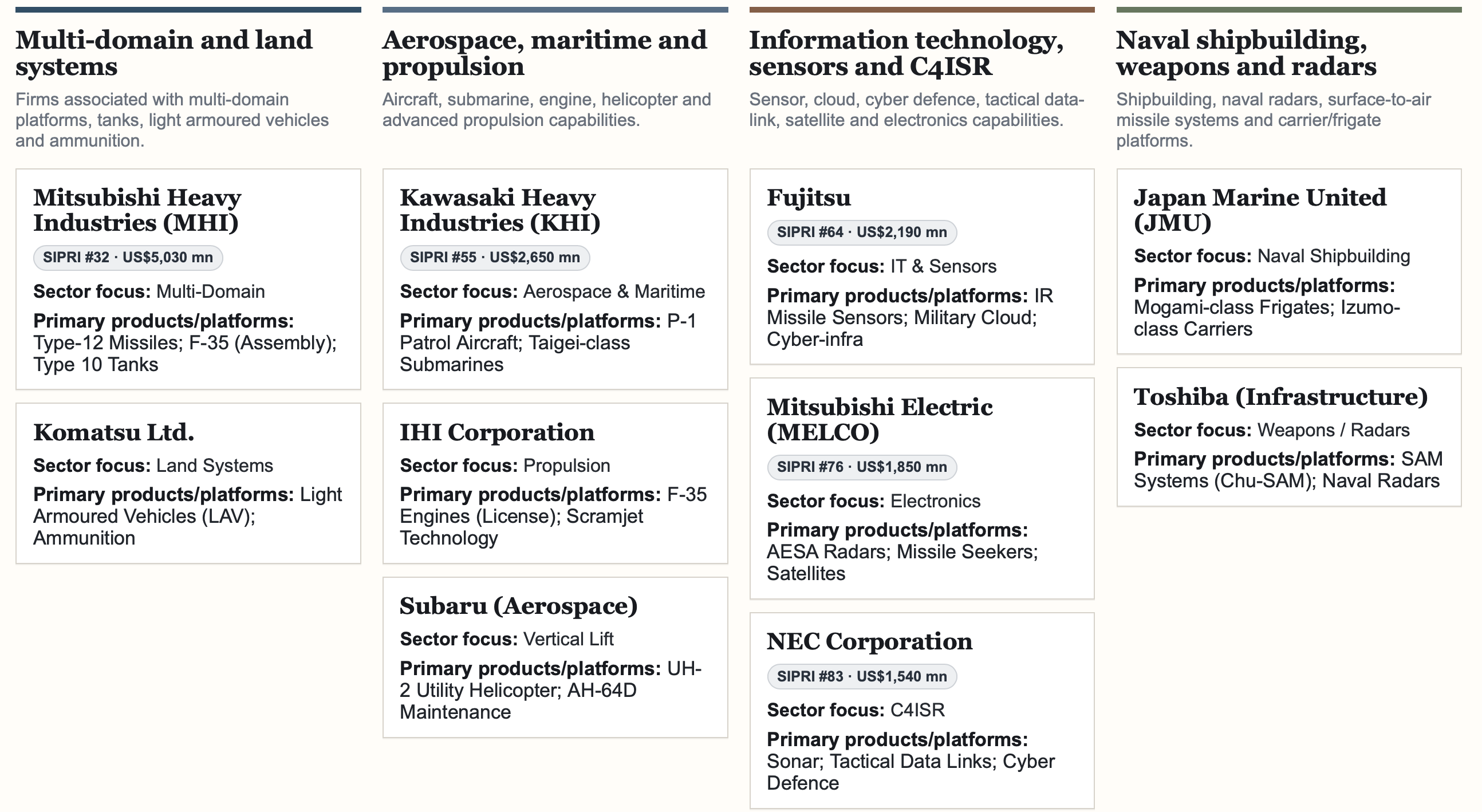
Figure 6: Created by author using data from SIPRI Top 100 Arms-Producing and Military Service Companies54
Acquisition governance has since shifted toward lifecycle project management. The Acquisition, Technology & Logistics Agency (ATLA)—created in 2015, under the Ministry of Defense (MOD)—states that acquisition functions formerly divided across internal departments and other organisations were integrated to support project management across the equipment lifecycle, and to reflect operational needs swiftly during every stage.55 Further, the Defense Technology Guideline 2023 organises directions to reinforce the defence technology base, aims to improve predictability for industry, and seeks to build a common understanding across ministries, research institutes, academia and allies.56
Technology transfer and co-development are governed through the Three Principles on Transfer of Defense Equipment and Technology (2014) and their Implementation Guidelines, which are regularly amended. The Guidelines define permitted cases, including mutual technology exchange with the United States and licensed products for security partners, as well as Foreign Exchange and Foreign Trade Act of Japan (FEFTA)-based export authorisation.57
There are several challenges that the Japanese defence industry faces. First, the industrial capacity challenge is rooted in small and uncertain demand. The MOD’s assessment notes that defence demand dependence (the ratio of defence-related sales to total company sales) is about 5% on average, indicating that defence is not the main business for many companies.58 The assessment also links rising maintenance costs to increased foreign imports, which squeeze out domestic manufacturers and force a reduction in overall acquisition volumes.
Second, the MOD also notes that increasing per-unit and sustainment costs have contributed to reduced procurement quantities. It reports an emerging issue of firms pulling out when they cannot handle reduced procurement units. From an industrial policy standpoint, this is the classic thin market problem: low volume undermines unit-cost competitiveness and incentivises exit, which then creates single points of failure.59
The Takaichi government has integrated defence into its growth strategy under the banner of Sanaenomics. This involves a dual focus on crisis-management investment and growth investment, consequently designating the defence industrial base as a national growth asset. By framing defence procurement as a way to create new demand and stimulate technological innovation in strategic sectors like shipbuilding and aerospace, Tokyo aims to make itself indispensable to its allies.
Prior to 2023, Japan’s MOD had limited visibility into its defence supply chains, as its role was restricted primarily to contracting with select manufacturers. The 2023 Act introduced vital mechanisms to provide direct financial assistance to companies across the entire supply chain, including Tier 2 and Tier 3 suppliers. By early 2026, the MOD had already inked over US$64 million in contracts specifically targeted at bolstering the resilience of troubled suppliers, funding improvements in cybersecurity, and supporting the domestic production of formerly imported components.60
An important pillar of this policy is the normalisation of profit margins. For years, low earnings led several major firms to exit the defence sector. The new framework allows for profit margins of up to 10% for companies that meet critical cost, schedule, and performance targets.61 Furthermore, the government has even begun examining the possibility of nationalising military factories in extreme cases to ensure the stable production of ammunition and weaponry, while potentially leaving day-to-day management in private hands.
Domestic Political Economy
The transformation of Japan’s strategic culture is not only an elite project but is increasingly reflected in domestic political outcomes and shifting public opinion.
In early 2026, the Liberal Democratic Party (LDP), under the leadership of Prime Minister Sanae Takaichi, secured a supermajority of 316 seats in the House of Representatives. This victory provided the LDP and its allies with the two-thirds majority necessary to formally propose an amendment to Article 9. Takaichi, a staunch conservative, has made constitutional revision a central pillar of her agenda. Her most recent move in this regard has been setting up an Expert Panel on Revising the Three Security Documents, which held its inaugural meeting on April 27, 2026. The panel consists of 15 members ranging from researchers, former government officials and corporate leaders tasked with “considering security from the perspective of comprehensive national power.”62
Public Opinion and Constraints
Since the 2010s, the public attitude has become more tolerant towards strengthening military capabilities; but this permissiveness is uneven. Survey-based analyses highlight that Japan’s positive image of the armed forces is strongly tied to disaster relief and civil protection. One study reports disaster dispatch as the most frequently selected important role for the forces (77.0%), exceeding defend against armed attacks (72.4%).63 A Cabinet Office poll after the 2011 Great East Japan Earthquake has measured a good impression of the forces at around 90%, suggesting legitimacy is anchored in soft domestic roles more than in deterrence.64
More recent polling summaries indicate an attitudinal shift toward strengthening capabilities. A 2025 Cabinet Office survey summary reported 45.2% support for strengthening the size and capabilities of the forces—described as a record high for that question series—and linked the shift to concern over neighbouring military build-ups and normalisation of missile launches. It also reported significant support (68.3%) for promoting overseas transfer of defence equipment and technology under specified rules, implying reduced normative resistance to export-related industrial policy, though not necessarily equivalent support for constitutional revision or overseas combat missions.65
Despite this rising support for the amendment, the peace state identity remains influential. A significant portion of the public still values Article 9 for its role in preventing Japan from engaging in overseas conflicts since 1945. The current consensus is better described as a contested ideological battleground in which the state is seeking to bridge the gap between its pacifist legacy and contemporary security imperatives through manga and public relations.66
Fiscal and Industrial Considerations
The 2022 Defense Buildup Program stated the medium-term political economy constraints explicitly. It highlighted planned expenditures of about JP¥43 trillion (US$292 billion) over a five-year period (FY2023-FY2027). It further noted increasingly severe fiscal conditions and therefore emphasised optimisation through suspending less important equipment, reviewing low cost-effectiveness projects, while also pursuing non-tax revenues and tax enhancement measures.67 Therefore, the build-up is presented not as unconstrained militarisation but as a bargain-based reallocation within a tight fiscal space.
The transformation of Japan’s defence policy is not without internal obstacles. The Takaichi government’s plan to double defence spending to 2% of the GDP by 2027 requires an additional JP¥1.3 trillion annually in tax revenue. This has led to the implementation of corporate and tobacco tax surcharges, and a planned 1% income tax hike in 2027. These measures remain controversial, as the public is wary of increased financial burdens amid broader economic uncertainty.68
Furthermore, the demographic crisis posed by an ageing population and a declining birth rate has led to intensified competition for human resources. The SDF faces chronic recruitment shortages, making the pivot to unmanned systems and optimised personnel structures a necessity rather than a choice. The success of Japan’s Fundamental Reinforcement will ultimately depend on its ability to balance these fiscal and demographic realities with the urgent demands of a deteriorating security environment.
Fundamental Reinforcement is the official name for Japan’s current defence transformation. It was formalised in the 2022 National Security Strategy (NSS) and the National Defense Strategy (NDS). The Japanese government specifically uses this phrase to signal that they are no longer just adjusting their military posture but are fundamentally rebuilding it from the ground up69
Conclusion
Japan’s defence transformation must be understood as the outcome of a long interaction between constitutional constraints and shifting threat perceptions. Its post-war security identity has not disappeared; rather, it has been progressively reinterpreted and adapted in response to a more contested Indo-Pacific environment.
The next major change is slated for December 2026, when the Takaichi government is scheduled to release revised national security and defence strategies alongside a new defence buildup programme and defence industrial strategy. This review, brought forward from the original timeline, will set the trajectory for the latter half of the decade and is expected to address several critical questions:
- Whether defence spending will be pushed beyond 2% of the GDP
- How Japan’s counterstrike capabilities will be operationalised and integrated with the US alliance
- The scope of future defence exports
- How to sustain the defence-industrial base while managing fiscal constraints with the highest public debt-to-GDP ratio in the developed world.
Therefore, Japan’s transformation is not a story of remilitarisation. Domestic constraints continue to matter. Public opinion remains cautious, and fiscal pressures are significant in an ageing society. Moreover, Japan’s defence industry is still developing from a historically limited and narrow base. Recent reforms in export rules and technological cooperation indicate a shift toward a more proactive security role, but this role remains carefully constricted by political, institutional, and economic realities.
Footnotes
Barry Cooper, “The Evolution of Japanese Security Policy,” Canadian Global Affairs Institute, December 2016, https://www.cgai.ca/the_evolution_of_japanese_security_policy↩︎
Hiroyuki Hoshiro, “Deconstructing the ‘Yoshida Doctrine’,” Japanese Journal of Political Science 23, no. 2 (June 2022): 105–128, https://doi.org/10.1017/S1468109922000019.↩︎
Ministry of Defense, Japan, “Defense Policy,” https://www.mod.go.jp/en/d_act/d_policy/index.html↩︎
John C. Wright, The Persistent Power of 1 Percent (Washington, DC: Sasakawa Peace Foundation USA, 2016), https://spfusa.org/wp-content/uploads/2016/09/1-percent-final.pdf↩︎
Stockholm International Peace Research Institute, SIPRI Military Expenditure Database, https://milex.sipri.org/sipri↩︎
James J. Przystup, The U.S.-Japan Alliance: Review of the Guidelines for Defense Cooperation, Strategic Perspectives No. 18 (Washington, DC: National Defense University Press, 2015), http://files.ethz.ch/isn/189420/Strategic-Perspectives-18.pdf↩︎
Ministry of Defense, Japan, Defense of Japan 2019, Part II, Chapter 5, Section 1, https://www.mod.go.jp/en/publ/w_paper/wp2019/pdf/DOJ2019_2-5-1.pdf↩︎
Ministry of Foreign Affairs of Japan, “Japan’s Security Policy,” April 2023 https://www.mofa.go.jp/fp/nsp/page1we_000084.html↩︎
Ministry of Foreign Affairs, Japan, Japan’s Legislation for Peace and Security: Seamless Responses for Peace and Security of Japan and the International Community (Tokyo: Ministry of Foreign Affairs, 2016), https://www.mofa.go.jp/files/000143304.pdf↩︎
National Institute for Defense Studies (Japan), East Asian Strategic Review 2011: Japan—The Adoption of the New National Defense Program Guidelines—Toward a More Dynamic Defense Force (Tokyo: National Institute for Defense Studies, 2011), https://www.nids.mod.go.jp/english/publication/east-asian/pdf/2011/east-asian_e2011_08.pdf↩︎
Robert Ward, “Introduction: Evaluating Japan’s New Grand Strategy,” International Institute for Strategic Studies, May 30, 2025, https://www.iiss.org/online-analysis/online-analysis/2025/05/introduction-evaluating-japans-new-grand-strategy/↩︎
Satohiro Akimoto, “2022: A Year of Major Political Advancement in Japan’s National Security,” Sasakawa Peace Foundation USA, 2023↩︎
Ministry of Defense, Japan, Medium Term Defense Program (FY2019–FY2023) (Tokyo: Ministry of Defense, December 18, 2018), https://www.mod.go.jp/j/policy/agenda/guideline/plan/pdf/program_en.pdf↩︎
Ministry of Defense, Japan, Progress and Budget in Fundamental Reinforcement of Defense Capabilities: Overview of FY2026 Defense Budget (Tokyo: Ministry of Defense, December 26, 2025), https://www.mod.go.jp/en/d_act/d_budget/pdf/fy2026_20251226a.pdf↩︎
Ministry of Defense, Japan, Defense Buildup Program (FY2023–FY2027) (Tokyo: Ministry of Defense, December 16, 2022), https://www.mod.go.jp/j/policy/agenda/guideline/plan/pdf/program_en.pdf↩︎
International Institute for Strategic Studies, The Military Balance 2026: Global Defence Spending, 2026, https://www.iiss.org/publications/the-military-balance/2026/the-military-balance-2026/global-defence-spending/↩︎
Karl Gustafsson, “Identity and Recognition: Remembering and Forgetting the Post-War in Sino-Japanese Relations,” The Pacific Review 28, no. 1 (2014): 117–138, https://doi.org/10.1080/09512748.2014.970053↩︎
Shogo Suzuki, “The Importance of ‘Othering’ in China’s National Identity: Sino-Japanese Relations as a Stage of Identity Conflicts,” The Pacific Review 20, no. 1 (2007): 23–47, https://doi.org/10.1080/09512740601133195↩︎
Karl Gustafsson, “Identity and Recognition: Remembering and Forgetting the Post-War in Sino-Japanese Relations,” The Pacific Review 28, no. 1 (2015): 117–138, https://doi.org/10.1080/09512748.2014.970053.↩︎
Miyoshi, Masahiro. “The Submerged Passage of a Submarine through the Territorial Sea: The Incident of a Chinese Atomic-Powered Submarine.” Singapore Year Book of International Law 10 (2006): 243–250. https://www.asianlii.org/sg/journals/SGYrBkIntLaw/2006/13.pdf↩︎
Jonathan Watts, “Tokyo Makes Protest after Anti-Japanese Violence in China,” The Guardian, April 11, 2005, https://www.theguardian.com/world/2005/apr/11/japan.china↩︎
Stokes, Bruce. “Asia’s View of China—Mostly Wary, but Japan Most of All.” Pew Research Center, August 5, 2013. https://www.pewresearch.org/global/2013/08/05/asias-view-of-china-mostly-wary-but-japan-most-of-all/↩︎
Pew Research Center. “Chapter 3. Views of China.” In Global Economic Gloom—China and India Notable Exceptions. June 12, 2008. https://www.pewresearch.org/global/2008/06/12/chapter-3-views-of-china/↩︎
Government of Japan. National Security Strategy. Provisional translation. December 17, 2013. https://www.cas.go.jp/jp/siryou/131217anzenhoshou/nss-e.pdf↩︎
Government of Japan, National Security Strategy of Japan (Tokyo: Government of Japan, December 2022), https://www.ci.emb-japan.go.jp/files/100436491.pdf↩︎
Anushka Saxena and Vanshika Saraf, “Chinese Military Aircraft Violates Japanese Airspace: Potential Explanations,” Takshashila Institution – Legion of Scholars, September 5, 2024, https://legion.takshashila.org.in/blogs/chinese-military-aircraft-violates-japanese-airspace-potential-explanations↩︎
Ministry of Defense, Government of Japan, “China’s Activities in East China Sea, Pacific Ocean, and Sea of Japan,” https://www.mod.go.jp/en/d\_act/sec\_env/pdf/ch\_d-act\_a.pdf↩︎
Joint Staff Office, Ministry of Defense, Japan, Quarterly Report on JASDF Fighters Scramble (The Third Quarter of FY2025) (Tokyo: Ministry of Defense, January 21, 2026), https://www.mod.go.jp/js/pdf/2026/p20260121_01e.pdf↩︎
Ministry of Defense, Japan, Defense White Paper 2025 (Tokyo: Ministry of Defense, July 2025), https://www.mod.go.jp/j/press/wp/wp2025/pdf/DOJ2025_EN_Reference.pdf↩︎
Ministry of Defense, Government of Japan, Defense of Japan, 2023, https://www.mod.go.jp/en/publ/w_paper/wp2023/DOJ2023_EN_Full.pdf↩︎
Government of Japan, National Defense Strategy (Tokyo: Government of Japan, December 16, 2022), https://japan.kantei.go.jp/content/000120033.pdf↩︎
H I Sutton, “North Korea Focuses on Improving Nuclear and Missile Arsenal,” Naval News, July 15, 2025, https://www.navalnews.com/naval-news/2025/07/north-korea-focuses-on-improving-nuclear-and-missile-arsenal/.↩︎
Hayashi, Yoshimasa. “Video Message by Mr. HAYASHI Yoshimasa, Minister for Foreign Affairs of Japan, at an Online Discussion Event on ‘A Just and Lasting Peace in Ukraine.’” Ministry of Foreign Affairs of Japan, March 28, 2023. https://www.mofa.go.jp/files/100483294.pdf↩︎
Dobell, Graeme. “NATO Recognises Global Power Shift to the Indo-Pacific.” The Strategist, Australian Strategic Policy Institute, July 11, 2022. https://www.aspistrategist.org.au/nato-recognises-global-power-shift-to-the-indo-pacific/↩︎
Tsuyoshi Goroku, Japan’s Strategic Policy: A New Security Strategy in a Changing International Environment, Programme Japon, Fondation pour la Recherche Stratégique, June 2024, https://www.frstrategie.org/web/documents/programmes/Programme-japon/Publications/2024/202406-prog-japon.pdf↩︎
James D.J. Brown, “The Accomplice: Japanese Threat Perceptions of Russia,” The Asan Forum, Special Forum, April 23, 2024, https://theasanforum.org/the-accomplice-japanese-threat-perceptions-of-russia/↩︎
Leilani Chavez, “China-Russia Nexus Jumps Top of Mind for Japan’s Defense Planners,” Defense News, July 16, 2025, https://www.defensenews.com/global/asia-pacific/2025/07/16/china-russia-nexus-jumps-top-of-mind-for-japans-defense-planners/↩︎
Matthew Olay, “Defense Secretary Announces U.S. Forces Japan’s Upgrade to Joint Force Command,” U.S. Department of Defense, March 30, 2025, https://www.war.gov/News/News-Stories/Article/Article/4139213/defense-secretary-announces-us-forces-japans-upgrade-to-joint-force-command/↩︎
Tom Corben and Zack Cooper, “A Partnership for the AJUS? Operationalising Australia-Japan-United States Defence Cooperation,” United States Studies Centre, July 24, 2024.↩︎
Matthew Olay, “Defense Secretary Announces U.S. Forces Japan’s Upgrade to Joint Force Command,” U.S. Department of Defense, March 30, 2025, https://www.war.gov/News/News-Stories/Article/Article/4139213/defense-secretary-announces-us-forces-japans-upgrade-to-joint-force-command/↩︎
U.S. Indo-Pacific Command, “Fact Sheet: Joint Statement of the Security Consultative Committee (‘2+2’),” July 28, 2024, https://www.pacom.mil/Media/NEWS/Article/3855973/fact-sheet-joint-statement-of-the-security-consultative-committee-22/↩︎
Gabriel Dominguez, “Coordination Office Marks First Step in U.S. Forces Japan’s Shift to ‘Warfighting’ Command,” The Japan Times, July 31, 2025, https://www.japantimes.co.jp/news/2025/07/31/japan/us-military-japan-upgrade↩︎
Mina Pollmann, “Japan Reacts to the New US National Security Strategy,” The Diplomat, December 9, 2025, https://thediplomat.com/2025/12/japan-reacts-to-the-new-us-national-security-strategy/.↩︎
Jesse Johnson, “In First, Japan to Deploy Homegrown Long-Range Missiles on March 31,” The Japan Times, March 9, 2026, https://www.japantimes.co.jp/news/2026/03/09/japan/japan-deploy-missiles-kumamoto/↩︎
Kyodo News, “Japan Deploys Long-Range Missiles at Two Bases for First Time,” Kyodo News, March 31, 2026, https://english.kyodonews.net/articles/-/73106↩︎
Bart Gaens, Japan’s Multi-Layered Security Strategy: Deterrence, Coalition-Building and Economic Security, FIIA Briefing Paper No. 382 (Helsinki: Finnish Institute of International Affairs, February 2024), https://fiia.fi/en/publication/japans-multi-layered-security-strategy↩︎
Kamisuna, Takahiro, and Jumpei Ishimaru. “Japan’s Update of Its Free and Open Indo-Pacific Framework.” International Institute for Strategic Studies, May 22, 2026. https://www.iiss.org/online-analysis/online-analysis/2026/05/japans-update-of-its-free-and-open-indo-pacific-framework/↩︎
Ministry of Foreign Affairs, Japan, Three Principles on Transfer of Defense Equipment and Technology (Tokyo: Ministry of Foreign Affairs, April 1, 2014), https://www.mofa.go.jp/files/000034953.pdf↩︎
Japan Ministry of Defense, Acquisition, Technology & Logistics Agency, “Overview of the Revision of the Three Principles on Transfer of Defense Equipment and Technology and Implementation Guidelines,” n.d., https://www.mod.go.jp/atla/en/policy/pdf/detc_01_03_overview_of_the_revision.pdf↩︎
Jumpei Ishimaru, “Japan Loosens the Reins on Defence Exports,” International Institute for Strategic Studies, April 2026, https://www.iiss.org/online-analysis/online-analysis/2026/04/japan-loosens-the-reins-on-defence-exports/↩︎
Sato, M. “Japan Aiming for First Strategy to Enhance Defense Industry.” The Asahi Shimbun, January 24, 2026. https://www.asahi.com/ajw/articles/16306762↩︎
Acquisition, Technology & Logistics Agency, Ministry of Defense, Japan, Basic Policy on Enhancing Defense Production and Technology Bases (Summary) (Tokyo: Ministry of Defense, October 2023), https://www.mod.go.jp/atla/soubiseisaku/basicpolicy/basicpolicy_summary_en_202310.pdf↩︎
Acquisition, Technology & Logistics Agency, Ministry of Defense, Japan, Strategy on Defense Production and Technological Bases (Tokyo: Ministry of Defense, June 2014), https://www.mod.go.jp/atla/en/policy/pdf/strategy_defense_technology.pdf↩︎
Stockholm International Peace Research Institute, The SIPRI Top 100 Arms-Producing and Military Services Companies in the World, 2024, 2025, https://www.sipri.org/visualizations/2025/sipri-top-100-arms-producing-and-military-services-companies-world-2024↩︎
Acquisition, Technology & Logistics Agency, Ministry of Defense, Japan, “Missions of ATLA,” https://www.mod.go.jp/atla/en/soubichou_gaiyou.html↩︎
Acquisition, Technology & Logistics Agency, Ministry of Defense, Japan, Defense Technology Guideline 2023: To Defend Our Nation at All Times with Technologies (Tokyo: Ministry of Defense, June 2023), https://www.mod.go.jp/atla/guideline2023/assets/pdf/technology_guideline2023_plain.pdf↩︎
Ministry of Foreign Affairs, Japan, Three Principles on Transfer of Defense Equipment and Technology (Tokyo: Ministry of Foreign Affairs, April 1, 2014), https://www.mofa.go.jp/files/000034953.pdf↩︎
National Diet Library, Research and Legislative Reference Bureau, Status of Defense Production and Technological Bases, and the Strategy on Defense Production and Technological Bases https://dl.ndl.go.jp/view/prepareDownload?contentNo=44&itemId=info:ndljp/pid/11341912↩︎
Ibid↩︎
Acquisition, Technology & Logistics Agency, Ministry of Defense, Japan, Basic Policy on Enhancing Defense Production and Technology Bases (Tokyo: Ministry of Defense, October 2023), https://www.mod.go.jp/atla/soubiseisaku/basicpolicy/basicpolicy_en_202310.pdf↩︎
Hirohito Ogi and Rintaro Inoue, “From Decline to Surge: The Defense Industry in the Era of Excess Demand (Executive Summary),” Institute of Geoeconomics, October 24, 2025, https://instituteofgeoeconomics.org/en/research/2025102402/↩︎
The Asahi Shimbun. “Nuclear Subs, AI Systems Listed as Panel Begins Security Rewrite.”April 28, 2026. http://asahi.com/ajw/articles/16531797↩︎
Yoshida Kun, “The Realities of National Defense,” Japan Policy Forum, January 26, 2023, https://www.japanpolicyforum.jp/politics/pt2023012615083912900.html↩︎
Ibid↩︎
Nippon.com, “Cabinet Office Survey Shows Record High Support for Strengthening Japan’s Self-Defense Forces,” Nippon.com, January 28, 2026, https://www.nippon.com/en/japan-data/h02668/cabinet-office-survey-shows-record-high-support-for-strengthening-japan%E2%80%99s-self-defense-f.html↩︎
Brummer, Matthew, and Eitan Oren. ““We Must Protect This Peace with Our Hands”: Strategic Culture and Japan’s Use of Force in International Disputes as Depicted in Ministry of Defense Manga Promotional Materials.” Journal of Advanced Military Studies 13 (2022): 88-111. https://muse.jhu.edu/article/851421.↩︎
Ministry of Defense, Japan, Defense Buildup Program (FY2023–FY2027) (Tokyo: Ministry of Defense, December 16, 2022), https://www.mod.go.jp/j/policy/agenda/guideline/plan/pdf/program_en.pdf↩︎
Kyodo News, “Japan Raises Tobacco, Corporate Taxes to Finance Boost in Defense Spending,” Kyodo News, April 2026, https://english.kyodonews.net/articles/-/73349↩︎
Ministry of Defense, Government of Japan, Fundamental Reinforcement of Japan’s Defense Capabilities, https://www.mod.go.jp/en/images/guidline_pamph_english.pdf↩︎