Politics and Policy of AI
Politics and Policy of AI
Artificial intelligence is no longer just a technology story. It has become a contested arena of national power and economic competition with widespread economic and political implications. Frontier models are concentrating compute, capital, and talent in a small number of firms and a smaller number of countries. The AI supply chain has become a geopolitical instrument, with export controls, industrial policy, and sovereignty claims reshaping who can build what.
The IndiaAI Mission, compute subsidies for priority sectors, indigenous model efforts, and the layering of AI on top of Digital Public Infrastructure all signal serious intent. State governments are competing for data centre investment. Sector regulators in finance, health, and securities markets are framing guidelines. Indian industry is beginning to deploy AI at scale, even as the country’s labour, copyright, security, and governance regimes are still adjusting to what AI actually does.
The Politics and Policy of AI is a five-week capsule course designed to give participants a structured, analytically serious understanding of these dynamics. Participants leave with concepts and frameworks for analysing the political economy, governance frameworks, and India’s pathway to AI diffusion.
POLITICS and POLICY OF AI - COHORT 2
| FORMAT | 5 weeks · online |
| CADENCE | Saturdays · 3 × 90 min webinars |
| EARLY BIRD DEADLINE | 27 Jun 2026 · 10% scholarship |
| APPLICATION DEADLINE | 26 Jul 2026 |
| COURSE START | 1 Aug 2026 |
| COURSE END | 5 Sept 2026 |
| FEE | ₹16,000 + 18% GST |
How it works
Four modules
A primer on understanding AI, the political economy that shapes AI development and deployment, governance frameworks across jurisdictions, India's pathway to building and diffusing AI.
Five Weeks
An immersive five week course from 1st August to 5th September.
Designed for working professionals
Three 90-minutes live webinars each week, anchored on Saturdays with the occasional weekday session.
~8 hours of weekly commitment
Including live sessions, readings, and preparation. No prior technical background required.
Policy meets practice
Faculty-led concepts and frameworks, with industry experts and researchers brought in to provide practioners perspectives on the Indian AI ecosystem.
Certificate and cohort
A Takshashila certificate upon successful completion. A diverse cohort of technologists, journalists, lawyers, and researchers thinking about AI across sectors.
Curriculum
A Primer on AI
Foundational primer on how AI systems work and where they fail. Completed at your own pace before live sessions begin.
UNITS- U.01How Machines Think
Build a working vocabulary for ML, LLMs, training, inference, and the rest of the stack. See beyond technical jargon to understand what an AI system actually does. - U.02When AI Fails: Limits, Biases, Snake Oil
Distinguish between AI that works as claimed, AI that doesn't, and AI that can't.
Political Economy of AI
The economics, labour dynamics, and geopolitics shaping who builds and benefits from AI.
UNITS- U.01Economics of Building AI
Analyse how the capital structure of frontier AI — capex intensity, circular investment, VC incentives — shapes the narratives around what AI can and will do. Read the AI hype cycle against historical tech bubbles, and separate technological progress from inflated expectations. - U.02Labour Markets and Work: Augmentation vs Automation
Evaluate where the augmentation versus automation thesis holds and where it breaks, using sector-wise analyses for Indian and global labour. Assess the policy responses, such as UBI, reskilling, and labour protections, against this backdrop. - U.03Geopolitics of the AI Stack
Evaluate how AI impacts national power and how narratives shape its development and adoption. Disaggregate the AI stack into compute, data, models, and applications, and identify the chokepoints that shape the AI race. - U.04Socio Economic Impact of AI Diffusion
Synthesise the frameworks from the course to evaluate the opportunity-versus-risk trade-offs for India and articulate a reasoned position on them.
Governance, Regulation, and Decision Frameworks
How AI is governed worldwide, India's diffusion strategy, copyright tensions, responsible deployment, and the security risks of frontier AI.
UNITS- U.01State of AI Governance
Compare the US, EU, China, and Indian approaches to AI governance using a shared typology based on Takshashila's annual State of AI Governance report. Analyse how geopolitics and competition are increasingly the dominant forces shaping governance choices. - U.02India's Pathway to AI Diffusion
Analyse India's AI mission priorities – indigenous models, compute subsidies, and priority-sector deployments – and what they reveal about India's strategic choices. Map the actors shaping Indian AI policy — MeitY, NITI Aayog, MoD, RBI, industry associations, and civil society. - U.03AI and Copyright
Analyse how AI training and AI outputs challenge existing copyright regimes and how responses in different jurisdictions are evolving. Evaluate where India stands in this debate, and what is actually at stake for creators, model builders, and users. - U.04Responsible Strategy for AI Development and Deployment
Apply Takshashila's responsible strategy framework to anticipate risks in an AI build or deployment decision. Evaluate the design of safeguards in organisational and government settings. - U.05AI and Security
Understand the cybersecurity threat posed by frontier AI, distinguishing between offensive and defensive capabilities. Evaluate India-specific risks to critical infrastructure relative to the current security posture.
Building and Diffusing AI
The constratints of diffusing AI in India and what early adoption means for Indian industry.
UNITS- U.01AI Diffusion in India: Challenges and Choices
Analyse the practical constraints that Indian builders face when deploying AI on the ground. - U.02The Politics of Building AI Infrastructure
Frontier AI requires massive compute infrastructure. Identify the political and economic choices embedded in building data centres, securing power, and accessing chips. Evaluate the current national and state-level policies regarding data centres and what compute sovereignty would mean for India in practice. - U.03Open Source/Weight AI: Possibilities and Challenges
Analyse the open-versus-closed debate in AI as a contest over the distribution of power. Evaluate the US–China competition in open-weight models, frontier labs' distillation concerns, and the discoverability and packaging gaps that limit open AI's actual reach. - U.04AI's Impact on Indian Industry
Analyse how Indian companies are adopting AI, how it is reshaping organisational structures, and what early evidence shows on jobs and workflows. Distinguish signal from the speculation that currently crowds the debate in this space.
Application process
and fees
Eligibility
An undergraduate degree in any discipline is mandatory. A Statement of Purpose of up to 200 words is required as part of the application. Open to professionals from any sector.
Application
The Academic Council will review the application form. Please take some time to reflect on your purpose of taking up this course and how you think you will be able to use the learning in future. The Committee gives significant weight to this response in its decision when reviewing the application. Hence, you are requested to fill the application form with sincerity and diligence.
Scholarships
Apply before the early bird deadline for a 10% scholarship. University students and Takshashila alumni are eligible for a 20% scholarship.
Payment
Selected applicants will be intimated over email and must complete payment by the payment deadline to confirm their seat.
Cohort 2 Calendar
Designed around the work week. Five weeks of Saturday webinars from 1 August to 5 September 2026.
APPLY NOW →Faculty
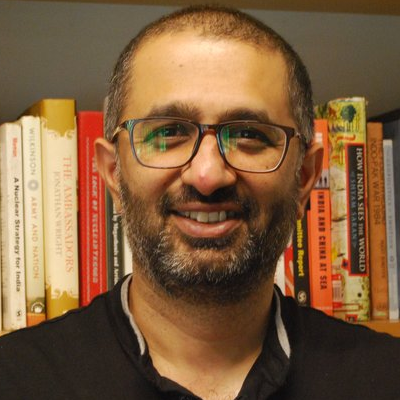
Nitin Pai
Co-Founder and Director
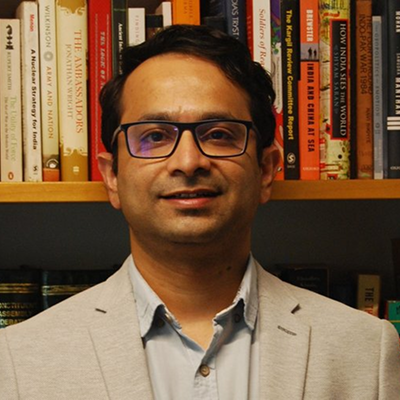
Pranay Kotasthane
Deputy Director and Chairs HTG Programme
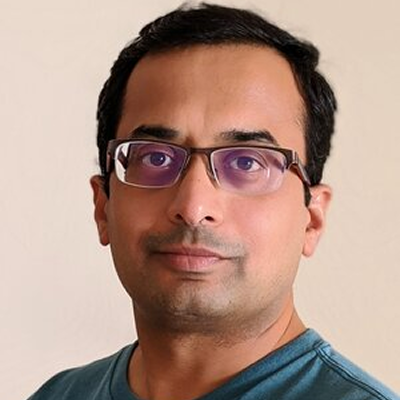
Mihir Mahajan
Adjunct Fellow at the Takshashila Institution
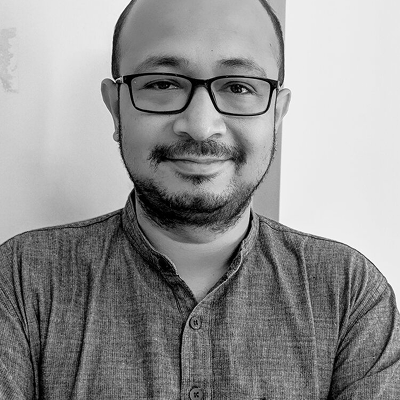
Ashish Kulkarni
Economic Reasoning in Public Policy

Bharath Reddy
Associate Fellow with the High-Tech Geopolitics Programme

Anwesha Sen
Programme Manager, Technology and Policy