India’s Response to the West Asian War
| AUTHOR | Vanshika Saraf |
| DATE | May 15, 2026 |
| DOCUMENT | Takshashila Issue Brief 2026-17 |
| VERSION | Version 1.0, May 2026 |
| CATEGORIES | Indian Foreign Policy Geostrategy |
Executive Summary
The outbreak of hostilities in West Asia, triggered by coordinated US (Operation Epic Fury) and Israeli (Operation Lion’s Roar) strikes on Iran, confronted India with one of its most acute foreign policy crises since the Russia-Ukraine war. This paper examines India’s response through a three-axis framework: diaspora welfare, energy security, and external engagements. It argues that these three imperatives, far from being complementary, pulled India in structurally contradictory directions.
Diaspora safety required alignment with the Gulf Cooperation Council member states. Energy security required stable relations with Iran for unimpeded passage through the Strait of Hormuz. Extended diplomacy with the US-Israel axis made it challenging to maintain the traditional multi-alignment posture. This paper provides a critical assessment of the choices, constraints, and consequences that defined India’s West Asia policy during the first two months of the conflict.
Introduction
West Asia occupies a uniquely consequential position in India’s foreign policy calculus. The region hosts approximately 9–10 million Indian nationals and generates nearly 38 per cent of India’s total global remittance inflows.1 It supplies over 50 per cent of India’s crude oil imports, accounts for roughly 60 per cent of natural gas imports, and about 90 per cent of LPG imports pass through the Strait of Hormuz. Annual bilateral trade with the GCC region (that includes Bahrain, Kuwait, Oman, Qatar, Saudi Arabia, and the United Arab Emirates) stands at approximately $180 billion. No other theatre presents such a dense convergence of India’s economic, demographic, and strategic interests.
When the United States and Israel launched airstrikes against Iran’s leadership, these interests were immediately and simultaneously imperilled. Iran’s retaliatory strikes (Operation True Promise IV) expanded the theatre of war to Bahrain, Kuwait, Oman, Qatar, Saudi Arabia, and the UAE. The killing of Supreme Leader Ayatollah Ali Khamenei in the initial strikes, a naval blockade of the Strait of Hormuz, and the subsequent disruption of global energy flows catalysed the creation of a systemic regional crisis.
The Indian response, coordinated at the highest levels of the Cabinet Committee on Security, has been a multi-axial effort characterised by three fundamental priorities: the immediate safety of the Indian diaspora, the preservation of energy supply chains and the maintenance of a calibrated diplomatic neutrality while asserting India’s interests in global forums.
Protecting the Indian Diaspora
The Gulf Cooperation Council (GCC) region hosts one of the world’s largest expatriate communities of any single nationality. This Indian population is not only a source of significant cultural and political influence but also an economic lifeline, contributing over $40 billion in remittances annually. Their presence spans the full spectrum from construction labour and service-sector workers to white-collar professionals, students, and entrepreneurs.
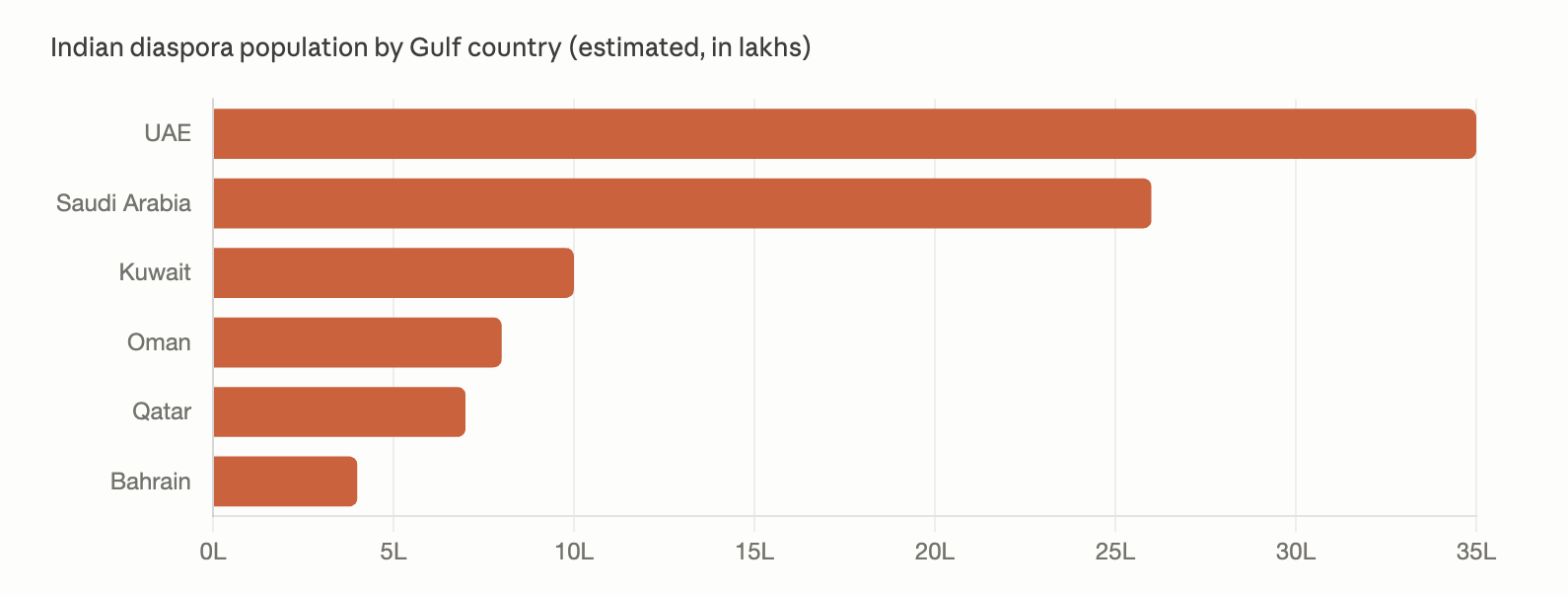
Figure 1: Indian Diaspora Population, Source: MEA2
Immediately after the first strikes, the Cabinet Committee on Security (CCS), chaired by Prime Minister Narendra Modi, convened on 1 March 2026, to review the situation and directed all relevant ministries to initiate evacuation measures. The MEA activated a 24/7 Special Control Room to coordinate logistics. In the first week of March, over 52,000 Indians were evacuated from the Gulf using Indian and foreign commercial carriers. IndiGo operated 10 special relief flights from Saudi Arabia, and SpiceJet ran additional flights from the UAE.
By the time External Affairs Minister Jaishankar addressed Parliament on 9 March, approximately 67,000 Indian nationals had returned home, with the Ministry of Civil Aviation reporting 51 inbound flights on 7 March, 49 on 8 March, and 50 planned for 9 March. Despite these efforts, widespread airspace closures over the UAE, Qatar, and Kuwait left approximately 12,000 Indians temporarily stranded.
Table 1: List of Advisories Issued since domestic unrest in Iran
| Issuing Dates | Advisory/Directive Issued by MEA and Indian Missions |
| January 5, 2026 | Initial caution against non-essential travel to Iran |
| January 14, 2026 | Advisory urging Indians in Iran to leave via commercial flights 3 |
| February 23, 2026 | Reiterated strong advisory for departure from Iran |
| February 28, 2026 | Formal expression of concern; missions put on 24x7 alert 4 |
| March 1, 2026 | Cabinet Committee on Security (CCS) meets to prioritise diaspora safety 5 |
| March 3, 2026 | Detailed update with emergency helplines and instructions for stranded transit passengers |
| March 12, 2026 | Confirmation of safe passage negotiations and relocation of students from Tehran 6 |
| April 7, 2026 | “Shelter in Place” directive for those remaining in Iran due to active combat 7 |
| April 23, 2026 | Warning against all travel to Iran despite the limited flight resumption |
The January advisory was in response to the nationwide protests in Iran that broke out in late December 2025. Iran faced record-breaking inflation and a severe devaluation of the Rial. This led to demonstrations over the cost of living in major cities, including Tehran, Mashhad, and Isfahan. A second trigger was President Trump’s public warning issued a day prior, that Iran would be “hit very hard” if the Iranian government used lethal force against the protesters. The advisory specifically urged Indians to “stay away from protest sites,” reflecting a lesson learned from past disruptions where Indian nationals were stranded during civil unrest.
While major airports in Iran, such as Mehrabad and Imam Khomeini International, were largely shuttered due to the air war, the MEA facilitated extraction through neighbouring lands. In Iran specifically, the Indian Embassy in Tehran facilitated the movement of 2,361 nationals across land borders into Armenia and Azerbaijan, providing visa assistance and logistical coordination to allow them to take commercial flights from Baku and Yerevan.8
The expansion of Iranian missile and drone strikes on Saudi, Emirati, and Omani territory placed the Indian population in harm’s way. On 13 March 2026, two Indian nationals were killed and others injured during a drone strike in Sohar, Oman, the conflict’s first confirmed Indian casualties.9 The scale of the operation grew dramatically over the following weeks. By 8 April, when the MEA welcomed the announcement of a ceasefire, some 7.88 lakh (788,000) passengers had returned to India since the start of the conflict, including 1,864 Indians evacuated from Iran. By 20 April, as the two-week ceasefire window neared its expiry, that figure had risen to over 11.3 lakh (1.13 million) passengers.10
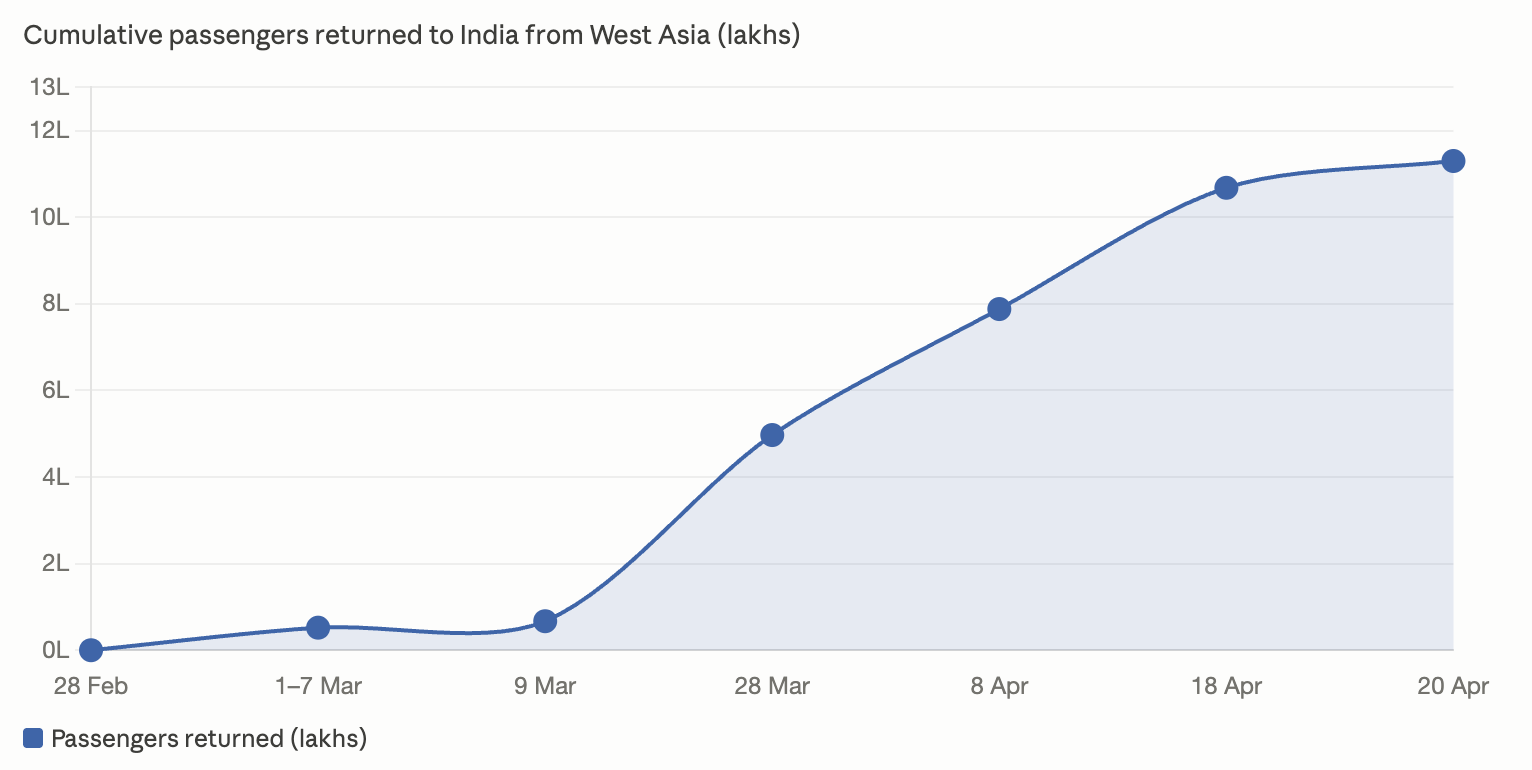
Figure 2: Number of Indian Passengers Returned to India
Evacuation of Marine Personnel
A critical subset of the diaspora involves the thousands of Indian seafarers serving on international merchant vessels. With Indian nationals constituting a significant percentage of the global maritime workforce, the targeting of commercial shipping in the Strait of Hormuz by the Islamic Revolutionary Guard Corps (IRGC) threatened Indian lives. Tragic incidents on March 1, 2026, resulted in the deaths of two Indian mariners on the tanker Skylight and another missing on the MKD VYOM after drone and projectile attacks.11
In response, the Directorate General of Shipping in Mumbai established a Quick Response Team on March 2 to manage the safety of 611 seafarers stranded on 22 Indian-flagged vessels. The Indian Navy’s role was expanded from mere presence to active guidance, instructing vessels to avoid Larak Island and providing precise, real-time navigation to bypass minefields and hostile coastal batteries. India also permitted the Iranian vessel IRIS LAVAN to dock at Kochi on March 4 for humanitarian reasons, a gesture that helped maintain a diplomatic channel with Tehran during the peak of hostilities.12
The backdrop to this assistance was the sinking of the Iranian frigate, IRIS Dena, by a U.S. submarine on the same day. The sinking occurred in international waters approximately 19 nautical miles off the coast of Galle, Sri Lanka. Upon receiving a distress call via MRCC Colombo, India diverted INS Tarangini, which was operating in the vicinity, and deployed INS Ikshak from the coast of Kerala to assist in the search for survivors. Although there was no official Indian condemnation of the incident, the repatriation of the fallen sailors’ remains through Kochi helped maintain a functional bilateral channel with Iran.13
Securing Energy Supplies
India’s energy exposure to West Asia is among the highest of any major economy. The region supplies over half of India’s crude oil imports, more than half of natural gas imports (with Qatar alone providing roughly 40 per cent of India’s LNG), and nearly all of LPG imports passing through the strait. India now imports crude oil from around 40 countries, and about 70% of crude imports are coming through routes outside the Strait of Hormuz, compared with around 55% earlier.14
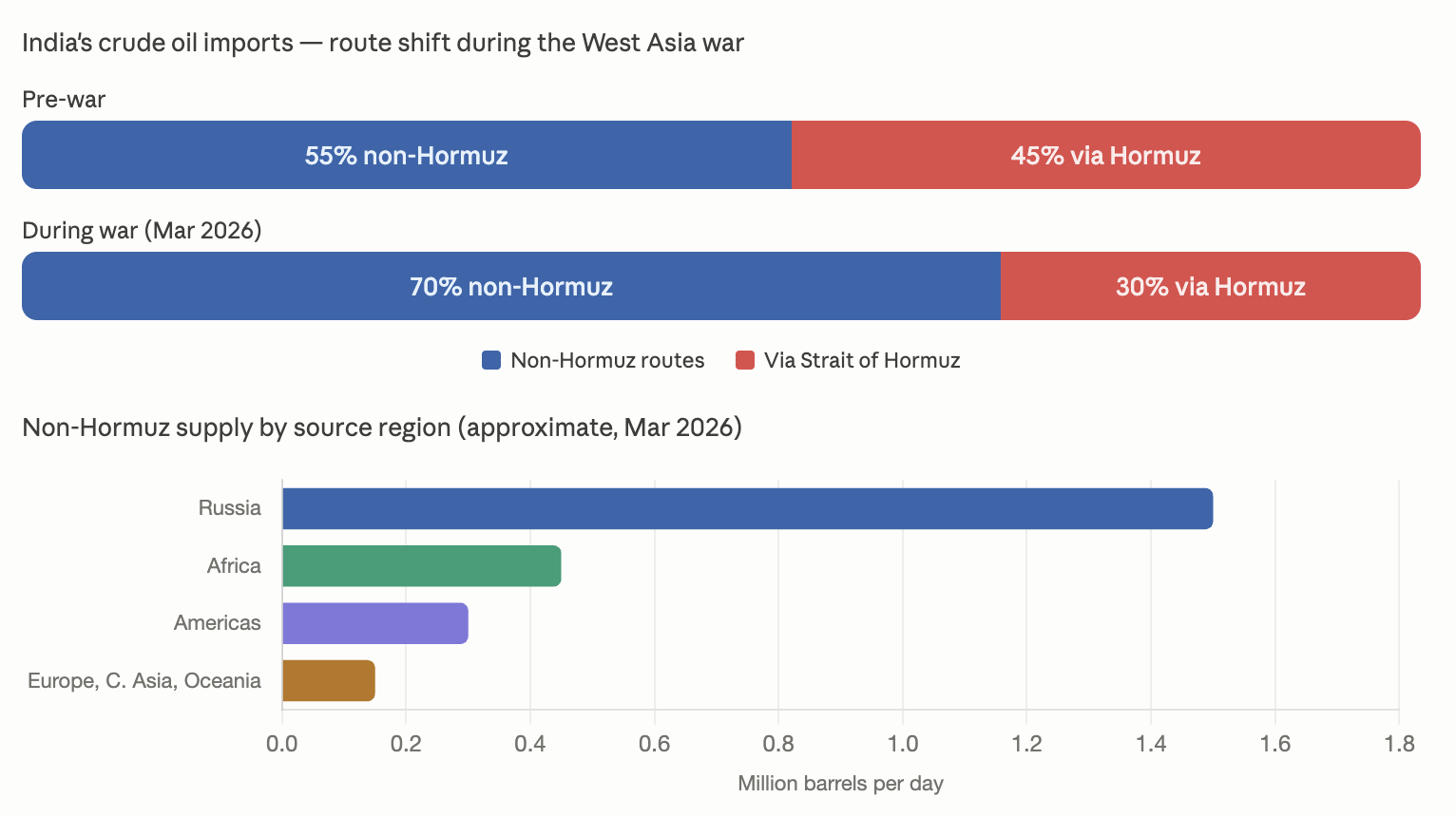
Figure 3: Route Shift during the war
The shift from 55% to 70% non-Hormuz is driven by three factors: the US waiver enabling Russian crude purchases, African supply rising to a 4-year high, and the near-total collapse of Hormuz-transiting flows. The country diversification is a structural gain built over two decades of policy. Gulf crude reaches India in about 7 days. Russian crude takes 2–3 weeks. African and American crude takes 25–40 days. Diversification buys resilience but adds cost and latency. The 70% figure is partly a crisis response, not a durable shift.
African partners include Angola, Nigeria, Algeria, Libya, Egypt, Gabon, Ghana, Congo, Equatorial Guinea, and Cameroon. The Americas include Brazil, Colombia, Guyana, Mexico, the United States and Canada. Others include Norway, Australia, and Kazakhstan.
The domestic energy impact was most acutely felt in the LPG market. The partial naval blockade has triggered shortages of commercial LPG cylinders, affecting restaurants, hotels, and households across major cities. The government responded by reducing excise duties on petrol and diesel to absorb part of the upstream price surge. The RBI’s response has been to deploy forex reserves to stabilise the rupee, extend export credit timelines, ease liquidity conditions, and provide targeted support to export-oriented sectors.
The closure of the Strait of Hormuz and continued insecurity in the Red Sea corridor forced Indian exporters to reroute shipments via the Cape of Good Hope, adding 12–15 days in transit time and significantly higher freight costs. Goods exports fell 7.44 per cent year-on-year in March 2026 — from $42.05 billion in March 2025 to $38.92 billion. Over 400,000 tonnes of Basmati rice, 70–75 per cent of which is destined for West Asian markets, were reported stuck at Indian ports.
While total crude imports fell by 15 percent, refiners made large-scale spot purchases from Russia, West Africa, and Latin America to fill the gap left by the Gulf blockade. Domestically, the Ministry of Petroleum and Natural Gas (MoPNG) issued the “Natural Gas and Petroleum Products Distribution Order, 2026,” which prioritised 100 percent supply to households and the transport sector while regulating commercial LPG and industrial gas usage to 70 percent of pre-crisis levels.15
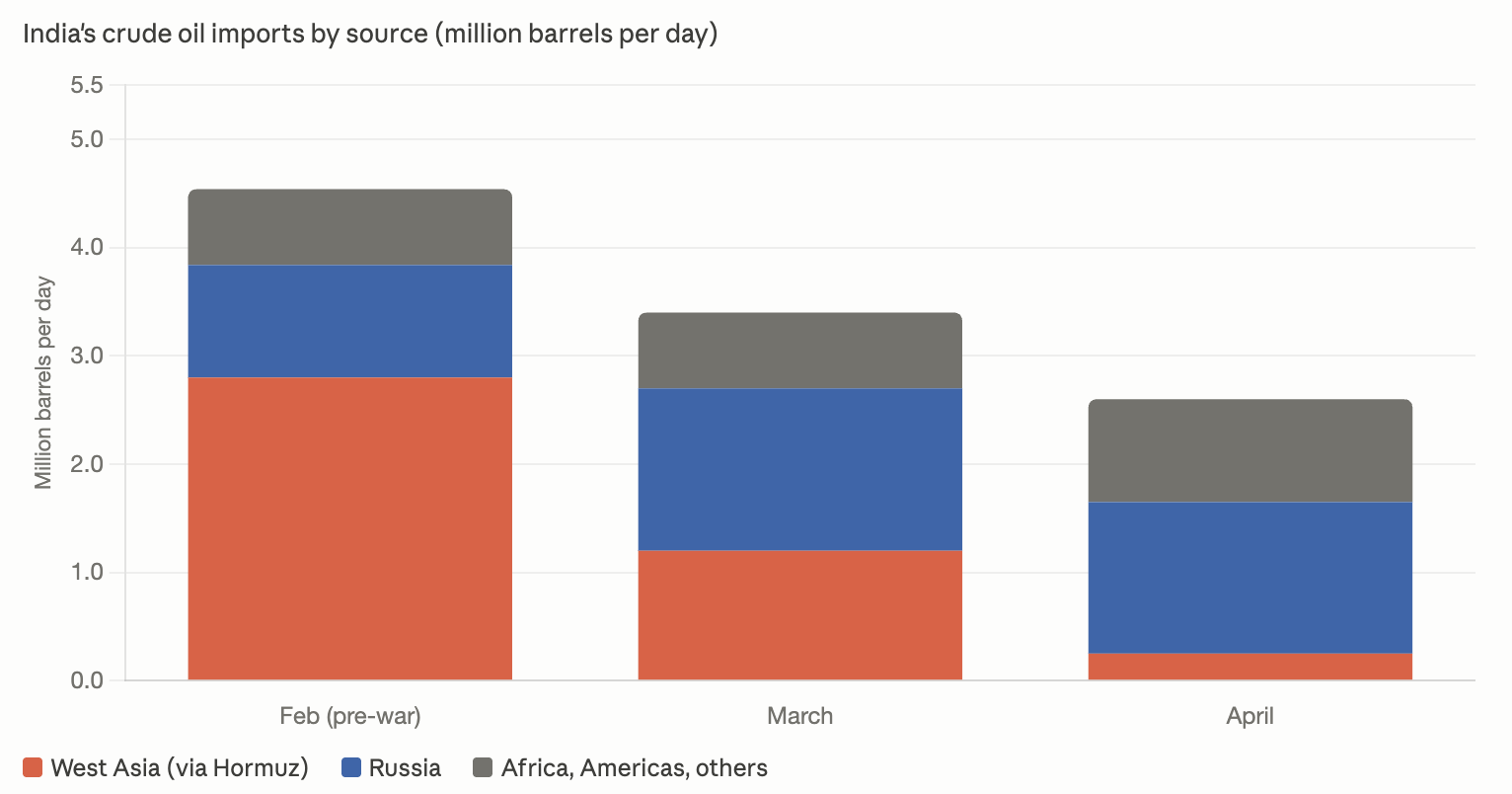
Figure 4: India’s Crude Oil Imports
On 19 March 2026, the Commerce Ministry launched the RELIEF (Response to Export Logistics and Insurance in Emergency Freight) package, a targeted intervention to support Indian exporters facing freight rate escalations, rising insurance premiums, and war-related export risks. The crisis has given impetus to a strategic energy diversification aimed at reducing heavy reliance on Middle Eastern crude by proactively increasing imports from Angola and Colombia.
The Indian Navy responded to the crisis with the launch of “Operation Urja Suraksha” (Energy Protection) towards the end of March.16 More than five frontline warships, including destroyers and frigates, were deployed to the Gulf of Oman to provide a security umbrella for Indian tankers exiting the Strait. By broadcasting specific identification signals, these vessels were able to secure safe passage through Iranian-controlled waters based on diplomatic assurances obtained by the MEA from Tehran.
The Ministry of Finance, in its April 2026 Monthly Economic Review, identified a convergence of four macro shocks: war, oil, rupee, and rains.17 The interaction between high global energy prices and a depreciating rupee amplified imported inflation. The Brent crude price, which averaged $113 per barrel in March, surged toward $120 as the blockade persisted, forcing a shift in India’s procurement and distribution strategies.
The Reserve Bank of India has estimated that a 10 per cent sustained rise in oil prices pushes retail inflation up by approximately 30 basis points and drags GDP growth down by 15 basis points. Headline inflation, contained at approximately 3 per cent as of early 2026, was projected to rise to 4-4.5 per cent in a prolonged conflict scenario, with estimates suggesting a 70–150 basis-point increase driven by fuel cost pass-through to transportation, agricultural inputs, and industrial production.18 The IMF cut the global growth forecast for 2026 to 3.1 per cent, citing the conflict as a key driver.19
India’s Diplomatic Engagements
The first official statement issued by the MEA on the day of the strikes was characteristically measured: “India is deeply concerned at the recent developments in Iran and the Gulf region. We urge all sides to exercise restraint, avoid escalation, and prioritise the safety of civilians. Dialogue and diplomacy should be pursued to de-escalate tensions and address underlying issues”. A follow-up statement on 3 March reiterated these positions. Notably, neither statement named Iran, the United States, or Israel. This deliberate ambiguity, condemning “developments” without attributing responsibility, was consistent with India’s established practice of issue-based responses that avoid explicit alignment with any party.
Examples of this practice include India’s response to the Russia-Ukraine war and the Nagorno-Karabakh conflict. In early 2022, the MEA and India’s Permanent Representative to the UN consistently used phrases like “deep concern at the worsening situation” and called for an “immediate cessation of violence.” India’s primary statements did not use the word “invasion” or name Russia as the aggressor.20 Following the 2023 conflict in Nagorno-Karabakh, India’s official response called for “the parties to pursue long-term peace and security through dialogue and diplomacy” and expressed concern over the humanitarian situation. India did not condemn Azerbaijan for the military offensive or the subsequent displacement of ethnic Armenians, despite India being a major defence supplier to Armenia.21
On 9 March, External Affairs Minister Jaishankar delivered suo motu statements in both houses of Parliament. Addressing the Rajya Sabha, he outlined three guiding principles: first, India supports peace, restraint, and a return to dialogue and diplomacy; second, the safety and welfare of the Indian community in the region remain the government’s foremost priority; and third, India’s national interests, including energy security and trade flows, will remain paramount.22
On 11 March, the UN Security Council adopted Resolution 2817, led by Bahrain on behalf of the GCC and Jordan. The resolution condemned “in the strongest terms” Iran’s attacks on its regional neighbours, demanded their immediate cessation, and called on Tehran to halt its threats and support for proxy groups. It passed 13–0 with abstentions by China and Russia. India was among 135 co-sponsors, the largest number ever for a UNSC resolution.23
However, the Indian representative at the UN, Ambassador Harish Parvathaneni, was careful to frame India’s position around the principles of international law. India’s interventions focused on the “deplorable” targeting of commercial shipping and the violation of navigational freedoms.
Table 2: India’s External Engagements
| Country | Date | Actor | Engagement |
| Iran | |||
| 28 February | EAM Jaishankar | Phone call with FM Abbas Araghchi (first). Discussed the evolving situation | |
| 5 March | EAM Jaishankar | Phone call with FM Araghchi (second). Bilateral relations, Gulf situation. | |
| Foreign Secretary Vikrim Misri | Visited the Iranian Embassy in New Delhi, signed the condolence book for Khamenei. | ||
| M.A. Naqvi (BJP) | Visited the Iranian Embassy. Expressed sympathy, called for peace. | ||
| 10-12th March | EAM Jaishankar | Phone calls with FM Araghchi. Covered bilateral ties, BRICS cooperation, maritime security, and energy interests. | |
| 24 March | EAM Jaishankar | In-person meeting with Ambassador Mohammad Fathali in New Delhi. | |
| 19 April | Ministry of External Affairs | Summoned the Iranian envoy after the IRGC fired on two Indian tankers near Hormuz. | |
| Israel | |||
| 25–26 Feb | PM Modi | State visit. PM addressed the Knesset (first Indian PM to do so). Declared India “stands with Israel firmly.” Signed AI, cybersecurity, and UPI-fast payment linkage agreements. Referenced IMEC and I2U2 frameworks.24 | |
| 19 Mar | EAM Jaishankar | Phone call with FM Gideon Saar. Exchanged views on conflict and its repercussions. | |
| United States | |||
| 24 March | PM Modi | Phone call with President Donald Trump. Discussed evolving security situation and importance of keeping Strait of Hormuz open.25 | |
| 14 April | PM Modi | Phone call with President Donald Trump. Discussed evolving security situation and bilateral cooperation in various sectors.26 | |
| United Arab Emirates | |||
| 2 March | PM Modi | Phone call with President Sheikh Mohamed bin Zayed Al Nahyan. Condemned attacks on UAE sovereignty. | |
| 19 March | EAM Jaishankar | Met Minister of State Reem Al Hashimy. Thanked the UAE government for the care of the Indian community. | |
| Saudi Arabia | |||
| 2 March | PM Modi | Phone call with Crown Prince Mohammed bin Salman. Condemned strikes, called for peace and stability. | |
| 11 April | Piyush Goyal (Union Minister of Commerce and Industry) | Virtual talks with Trade Minister Majid bin Abdullah Al Qasabi. Trade relations, energy supply cooperation, India-GCC FTA negotiations.27 | |
| 19 April | NSA Ajit Doval | One-day visit to Riyadh. Met Energy Minister Prince Abdulaziz bin Salman, FM Prince Faisal bin Farhan, NSA Dr Musaed Al-Aiban. Covered the “four key pillars” of the India-Saudi relationship. | |
| Qatar | |||
| 9-10 April | Hardeep Singh Puri (Minister of Petroleum and Natural Gas of India) | Visit to Doha. Met Energy Minister Saad Sherida Al-Kaabi. Discussions on LNG supply stability and energy cooperation.28 | |
| Bahrain | |||
| 2 March | PM Modi | Phone call with King Hamad bin Isa Al Khalifa. Condemned attacks on Gulf states. | |
| Oman | |||
| 19 March | PM Modi | Phone call with Sultan Haitham bin Tariq. Regional stability, Indian community safety. | |
| Kuwait | |||
| 19 March | PM Modi | Phone call with the Kuwait leadership. Coordination on evacuations and airspace access. | |
| Jordan | |||
| 19 March | PM Modi | Phone call with King Abdullah II. De-escalation, civilian safety. | |
| France | |||
| 19 March | PM Modi | Phone call with President Emmanuel Macron. Urgent need for de-escalation. Joint coordination for peace and stability. | |
| Malaysia | |||
| 19 March | PM Modi | Phone call with PM Anwar Ibrahim. Reaffirmed shared commitment to de-escalation and restoration of peace through dialogue.29 |
What explains India’s position?
Prime Minister Narendra Modi launched an unprecedented flurry of diplomacy, engaging with over eight regional leaders within a 48-hour window, between March 1st and 3rd, 2026.30 These conversations, which included leaders from Israel, Iran, the UAE, Saudi Arabia, Qatar, Oman, Kuwait, and Jordan, achieved two primary objectives:
- India secured personal assurances from Gulf monarchs for the safety of millions of Indian workers. The Prime Minister specifically thanked the Emir of Qatar and the President of the UAE for the “care and support” extended to the Indian community during active combat.
- Bilateral calls to Tehran, including three conversations between External Affairs Minister S. Jaishankar and his Iranian counterpart, achieved a functional shipping corridor. Iran agreed to allow ships carrying oil for India to pass through the Strait, provided they followed specific coastal routes and identification protocols. India’s official statements repeatedly called for “restraint,” “de-escalation,” “dialogue,” and “respect for sovereignty and territorial integrity.” On the surface, this resembled India’s standard diplomatic vocabulary. However, the choice of language reflected deeper strategic compulsions.
First, India avoided directly criticising Israeli and American strikes on Iranian territory because of its expanding strategic and technological partnerships with Israel and its broader geopolitical convergence with the United States. Prime Minister Modi’s visit to Israel in February 2026 was an expression of this alignment, during which the relationship was formally upgraded to a “Special Strategic Partnership for Peace, Innovation, and Prosperity”.31
Second, India had a delayed reaction to the targeted killing of Supreme Leader Ayatollah Ali Khamenei on February 28. While other nations issued immediate formal condolences, New Delhi waited five days. Moreover, when the condolence was finally offered on March 5, it was delivered by Foreign Secretary Vikram Misri rather than by the EAM or the PM. This was a downgrade in protocol compared to the mourning for President Raisi in 2024.32 Apart from the desire to avoid upsetting the US-Israeli alliance during active hostilities, another reason for this reaction might have been the memory of Khamenei’s past critical remarks regarding Kashmir.33
India’s Use of International Law
While India regularly invokes sovereignty and territorial integrity at international forums, it has increasingly avoided legalistic confrontations when major strategic partners are involved. A case in point was India’s decision to co-sponsor UNSC Resolution 2817, which omitted any reference to the initial US-Israeli strikes that precipitated the crisis. Similarly, New Delhi avoided direct public confrontation with the United States over the sinking of the Iranian warship IRIS Dena. Instead, it permitted Iranian vessels to dock at Indian ports on humanitarian grounds. This allowed India to reassure Tehran without openly rupturing ties with Washington.
But New Delhi’s recent responses have to be understood in the context of its earlier stance. In June 2025, when Israel first struck Iran’s nuclear facilities, the Shanghai Cooperation Organisation (SCO) issued a statement strongly condemning the Israeli strikes as a “gross violation of international law and the United Nations Charter” and an infringement on Iran’s sovereignty. India distanced itself from this statement entirely, with the MEA clarifying that India did not participate in the discussions that led to its issuance.34 At the same time, India was the only country in the subcontinent and the only member of both BRICS and the SCO to abstain on the United Nations General Assembly’s latest Gaza ceasefire resolution around the same time.35
Two weeks after distancing from the SCO, India joined a BRICS statement (under Brazilian presidency) that called the strikes on Iran a “violation of international law and the Charter of the United Nations”, the strongest language India had been associated with in the conflict.36 Crucially, India holds the BRICS chairmanship in 2026 and did not issue a BRICS statement following the US-Israeli strikes in February 2026. Thus, the organisation itself, under Indian leadership, has not directly commented on the campaign, even as individual BRICS members issued their own denunciations.37 These instances showcase that India has only selectively engaged with multilateral criticism.
Finally, an important factor complicating India’s response was Pakistan’s emergence as a peacemaker. Iran’s Ambassador to India, Mohammad Fathali, publicly stated that India was well-positioned to play a constructive role in easing the ongoing crisis, given its strong relations with all sides of the conflict.38 Yet India’s diplomatic footprint in the mediation track remained marginal relative to Pakistan’s. This appears to have been a deliberate choice by New Delhi to avoid being drawn into direct mediation between the warring sides, preferring instead to preserve diplomatic access to all actors while focusing on citizen protection, energy security, and maritime stability.
Conclusion
The war in West Asia has exposed both the reach and the limits of strategic autonomy as a guiding principle. India’s response was operationally competent and economically reactive (fiscal measures were deployed to cushion energy vulnerabilities), but diplomatically constrained.
Three structural lessons emerge. First, India’s energy dependence on a single volatile region poses a systemic risk that cannot be managed through crisis response alone; the diversification agenda requires sustained investment. Second, while the diaspora is a source of enormous economic benefit, it simultaneously functions as a constraint on diplomatic independence, anchoring India’s behaviour to the preferences of host states. Third, the pursuit of deeper strategic partnerships with both Israel and the United States does not come without cost; it narrows the space for engagement with other regional actors, such as Iran, precisely at the moments when that space is most needed. For a rising power, the conflict offers a sobering demonstration that the rules of multi-alignment become considerably harder to apply during a high-stakes crisis.
Footnotes
Ministry of External Affairs, Government of India, “Question No. 982: Indian Migrant Workers in Gulf Countries,” Lok Sabha, answered December 5, 2025, Link↩︎
Ministry of External Affairs, Government of India, “Population of Overseas Indians,” PDF, Link↩︎
Ministry of External Affairs, Government of India, “Advisory for Indian Nationals Regarding Travel to Iran,” January 14, 2026, Link↩︎
Ministry of External Affairs, Government of India, “Statement on the Evolving Situation in West Asia,” February 28, 2026,Link↩︎
Press Information Bureau, Government of India, “Press Release,” Cabinet, March 1, 2026, Link↩︎
Ministry of External Affairs, Government of India, “Transcript of Weekly Media Briefing by the Official Spokesperson (March 12, 2026),” March 12, 2026, Link↩︎
Ministry of External Affairs, Government of India, “Advisory,” April 7, 2026, Link↩︎
News On AIR, “MEA Says 2,361 Indian Citizens Safely Returned from Iran to India since West Asia Conflict,” April 17, 2026, Link↩︎
The Hindu, “West Asia Conflict: Two Indians Killed in Attack in Oman’s Sohar,” March 13, 2026,Link↩︎
The Economic Times “Over 11.6 Lakh Indians Return from West Asia amid Conflict; 12 Seafarers Rescued from Iraq,” The Economic Times, April 22, 2026, Link↩︎
Surendra Singh, “First Indian Casualty in West Asia Conflict: Mariner on Board Oil Tanker Killed in Projectile Attack,” The Times of India, March 3, 2026, Link↩︎
Ministry of External Affairs, Government of India, “Suo Motu Statement by EAM Dr. S. Jaishankar in Lok Sabha,” March 9, 2026, Link↩︎
Krishna N. Das, Saurabh Sharma, and Uditha Jayasinghe, “Iran Plper centane Leaves India with Sailors, Bodies as Indian Ships Win Hormuz Reprieve,” Reuters, March 13, 2026, Link↩︎
Press Information Bureau, Government of India, “Inter-Ministerial Briefing Held on Recent Developments in West Asia,” Ministry of Petroleum & Natural Gas, March 11, 2026, Link↩︎
Press Information Bureau, Government of India, “Inter-Ministerial Briefing on Recent Developments in West Asia,” Ministry of Petroleum & Natural Gas, April 8, 2026, Link↩︎
Saurabh Trivedi, “Indian Navy Launches Operation Urja Suraksha to Secure Energy Lifelines through Strait of Hormuz,” The Hindu, March 27, 2026,Link↩︎
Economic Division, Department of Economic Affairs, Ministry of Finance, Government of India, Monthly Economic Review: March 2026, March 2026, Link↩︎
The Hindu, “Elevated Crude Prices to Increase Imported Inflation, Widen CAD: Malhotra,” April 8, 2026,Link↩︎
International Monetary Fund, “Press Briefing Transcript: World Economic Outlook, Spring Meetings 2026,” April 14, 2026,Link↩︎
Ministry of External Affairs, Government of India, “Question No. 230: India’s Role during Russia-Ukraine War,” Rajya Sabha, answered July 21, 2022, Link↩︎
Shubhajit Roy, “Nagorno-Karabakh Conflict: History, India’s Response,” The Indian Express, October 7, 2023, Link↩︎
Ministry of External Affairs, Government of India, “Suo Motu Statement by EAM Dr. S. Jaishankar in Lok Sabha,” March 9, 2026,Link↩︎
The Hindu, “India Co-Sponsors Resolution Passed by UNSC Condemning Iran Attacks on Gulf,” March 11, 2026,Link↩︎
Ministry of External Affairs, Government of India, “Prime Minister Meets with Prime Minister of Israel,” February 26, 2026, Link↩︎
Prime Minister’s Office, Government of India, “PM Receives Telephonic Call from US President on West Asia Situation,” March 24, 2026, Link↩︎
Prime Minister’s Office, Government of India, “PM Receives Call from US President Donald Trump, Reviews Bilateral Cooperation and Discusses West Asia and Strait of Hormuz,” April 14, 2026, Link↩︎
Press Information Bureau, Government of India, “Union Minister of Commerce and Industry Shri Piyush Goyal Holds Virtual Call with H.E. Dr. Majid bin Abdullah Al Qassabi,” Ministry of Commerce & Industry, April 11, 2026, Link↩︎
Press Information Bureau, Government of India, “Visit of Shri Hardeep Singh Puri, Hon’ble Minister of Petroleum and Natural Gas to Doha, Qatar, 9–10 April 2026,” Ministry of Petroleum & Natural Gas, April 10, 2026, Link↩︎
Prime Minister’s Office, Government of India, “PM Speaks with Prime Minister of Malaysia,” March 19, 2026, Link↩︎
The Economic Times. “PM Modi Speaks to Leaders of 8 West Asian Countries over 48 Hours.” March 4, 2026.Link↩︎
Ministry of External Affairs, Government of India, “List of Outcomes: Visit of Prime Minister to Israel (February 25–26, 2026),” February 26, 2026, Link↩︎
Ministry of External Affairs, Government of India, “India Declares One-Day National Mourning on the Tragic Demise of the President and Foreign Minister of Iran,” May 20, 2024, Link↩︎
Atlantic Council, “Iran Issues Rare Criticism of India over Kashmir,” IranSource, August 30, 2019, Link↩︎
Ministry of External Affairs, Government of India, “Statement on the Shanghai Cooperation Organization (SCO),” June 15, 2025, Link↩︎
Suhasini Haidar, “India Abstains on Gaza Ceasefire Resolution in UNGA, Just Six Months after Voting for a Similar Resolution,” The Hindu, December 13, 2024, Link↩︎
Keshav Padmanabhan, “India Part of BRICS Statement Calling Military Strikes in Iran a ‘Violation of International Law’,” ThePrint, June 26, 2025, Link↩︎
Shola Lawal, “Is BRICS Bloc Divided over US-Israel Attacks on Iran?” Al Jazeera, March 6, 2026, Link↩︎
ANI, “Iranian Envoy Hails India’s Call for Restraint, Says New Delhi Can Play ‘Highly Effective Role’,” The Hindu BusinessLine, April 6, 2026, Link↩︎