The Making of a New China-Japan Confrontation
| AUTHOR | Vanshika Saraf |
| DATE | July 9, 2026 |
| DOCUMENT | Takshashila Issue Brief 2026-19 |
| VERSION | Version 1.0, May 2026 |
| CATEGORIES | Geostrategy Indo-Pacific |
Introduction
The relationship between China and Japan—the world’s second and fourth-largest economies—has long been characterised by deep economic interdependence, layered over historical grievances and competing security interests. For decades, both countries managed this tension through a pragmatic framework. Trade and investment grew even as territorial disputes simmered, and periodic crises were contained through diplomatic mechanisms that prioritised stability over resolution. That framework is now collapsing.
What began in November 2025 as a diplomatic row over Japanese Prime Minister Sanae Takaichi’s remarks about Taiwan has metastasised into the most serious bilateral crisis since diplomatic normalisation in 1972.1 The escalation has been comprehensive, spanning military signalling, economic coercion, and institutional mobilisation across both governments. And unlike previous episodes, there appears to be no clear pathway to managed de-escalation.
Moreover, the China-Japan confrontation intersects with some of the most consequential geopolitical issues of the decade: the tensions of Taiwan, the declining credibility of the US’s extended deterrence, the damaged resilience of supply chains, and the questionable viability of middle-power strategies that seek to balance China. A sustained crisis between Beijing and Tokyo can have global reverberations. This is owing to the fact that Japan is one of the world’s largest defence spenders, a treaty ally of the US and a technological powerhouse with critical nodes in global supply chains.
In this light, this brief examines the drivers, responses, and implications of the recent tensions between the two countries. It begins by discussing the context and the trigger that initiated the current crisis, and maps the escalation trajectory from November 2025 through May 2026. In doing so, it examines the military and security dimensions, the economic weaponisation tools deployed, and the diplomatic and multilateral dynamics involved. Finally, it assesses the implications for the broader regional and global orders.
Escalation Trajectory
The political frost between the two nations was evident from the outset of the administration of newly elected Japanese Prime Minister Sanae Takaichi in October 2025. In a departure from established diplomatic protocol, Chinese President Xi Jinping withheld a congratulatory message on the day Takaichi assumed office.2 Although a brief bilateral engagement was arranged on October 31, 2025, on the sidelines of the APEC South Korea summit, the meeting failed to establish a baseline of mutual trust.3 The tentative diplomatic progress made was immediately thwarted when Takaichi held formal discussions with Taiwan’s former Vice Premier, Lin Hsin-i, on the sidelines of the same summit—drawing swift protests from Beijing.4
The definitive precipitative event occurred on November 7, 2025. During a House Budget Committee session, opposition lawmaker Katsuya Okada pressed Prime Minister Sanae Takaichi on whether a Chinese maritime blockade of Taiwan would truly imperil Japan—arguing that shipping could simply detour around the Bashi Channel (between the Philippines and Taiwan). Upon further pressing, Takaichi responded that “If battleships are used and a naval blockade involves the use of force, I believe that would, by any measure, constitute a situation that could be deemed a threat to Japan’s survival.”5 The term “survival-threatening situation” is a specific legal formulation under Japan’s Legislation for Peace and Security that could permit the deployment of Japan’s Self-Defence Forces in collective self-defence.6
China demanded immediate retraction, arguing that the remarks violated the political basis of the 1972 China-Japan Joint Statement.7 Takaichi refused to back down, maintaining that her comments were consistent with existing Japanese government positions.8 What followed was an action-reaction spiral across the military, economic and diplomatic domains.
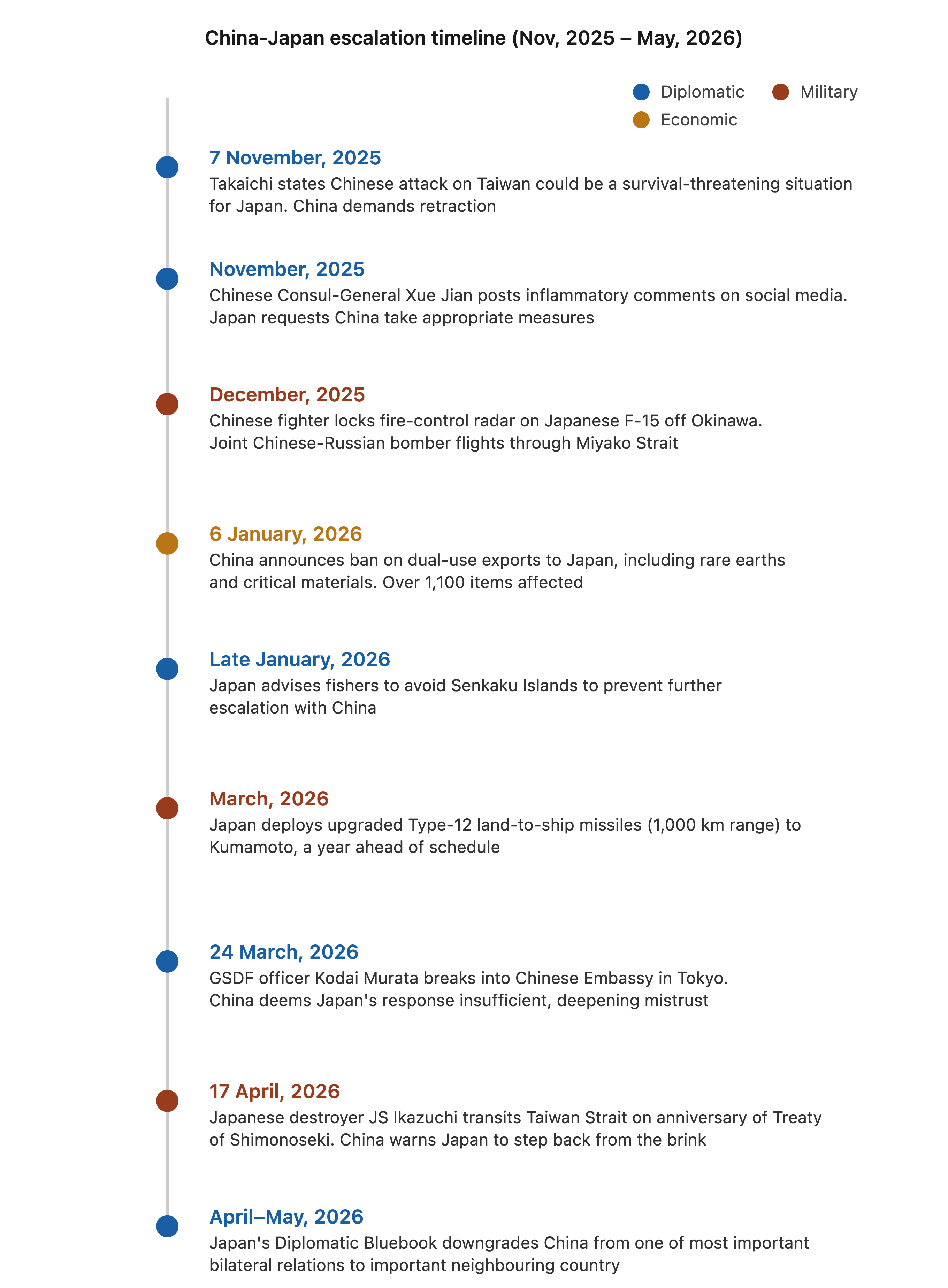
Figure 1: Escalation Timeline | Created by author
Military and Security Dimensions
The political crisis has translated to tactical posturing in the air and maritime corridors of the East China Sea and the Western Pacific. Conventional military brinkmanship peaked in December 2025, when China deployed over 100 naval and coast guard vessels across East Asian waters.9 This massive operational surge was designed to simulate a comprehensive blockade of Taiwan and intercept external support. Concurrently, the People’s Liberation Army (PLA)’s Eastern Theatre Command executed the Justice Mission—a large-scale military exercise—on December 29-30, 2025, deploying long-range artillery with a 280 km operational range to fire live ammunition into maritime zones overlapping Taiwan’s contiguous zone.10 This live-fire exercise directly disrupted commercial air traffic and civilian transit corridors throughout the region. Operational tension was acute in the airspace and waters surrounding Okinawa. Some noteworthy incidents preceding and succeeding the exercise, and shedding light on an escalatory ladder of military brinkmanship, include:
- Radar Lock-On Incident: In early December 2025, Chinese fighter jets locked their target-acquisition radars onto Japan Air Self-Defense Force (JASDF) aircraft over international waters near Okinawa. The manoeuvre, which the US and Japan categorised as a dangerous provocation, was met on December 11 with a joint show of force in which US nuclear-capable B-52 bombers flew alongside Japanese fighter jets over the Sea of Japan to deter coordinated Sino-Russian strategic patrols.11
- JASDF Intercepts: The JASDF’s Air Defence Command recorded over 300 scrambled interceptions of Chinese military aircraft throughout 2025—a high operational tempo that has persisted into the first half of 2026.12
- Miyako Strait Patrols: In December 2025, a Chinese naval frigate sailed through the Miyako Strait.13 The People’s Liberation Army Navy (PLAN) continuously transits warships through the Miyako Strait, a critical access point within Japan’s EEZ, to demonstrate anti-access and area-denial capabilities.
- Senkaku/Diaoyu Island Standoffs: The Chinese Coast Guard maintained a continuous presence within the contiguous zone of the disputed Senkaku/Diaoyu Islands, remaining on station for more than 60 days between January and March 2026.14 Standoffs occurred in December 2025, when China and Japan traded conflicting operational reports regarding the interception of fishing vessels within the disputed territorial seas.15
Alongside conventional naval assets, Beijing deployed massive, highly coordinated maritime militia formations in the East China Sea.16 Composed of state-subsidised commercial fishing vessels whose crews are conscripted and trained in military operations, these formations operate in the ambiguous legal boundary between commercial and state security to limit Japanese patrol capabilities.
Japan’s Defence Transformation
Japan has simultaneously also been accelerating its military transformation. In late 2025, Tokyo approved a record defence budget of approximately JPY 9.04 trillion (approximately USD 58 billion), representing a 3.8 per cent year-on-year increase.17 This brought Japan on track to meet its target of defence spending accounting for 2 per cent of the GDP two years ahead of schedule, initially slated for fiscal year 2027.
It has also accelerated the deployment of standoff missile systems, which include Tomahawk Cruise Missiles and Joint Strike Missiles (JSM) integrated into F-35A fighters. Further, Japan has allocated over JPY 160 billion (approximately USD 1 billion) for the joint next-generation fighter programme with the United Kingdom and Italy.18 These systems are designed to counter PLAN warships in the East China Sea, and to establish a baseline counterattack capability.
Further, on January 15, 2026, Japan signed a major defence pact with the Philippines, allowing reciprocal exchanges of fuel, ammunition, and logistical supplies during joint training. This agreement was paired with a USD 6 million security assistance package to build naval support facilities for Philippine patrol boats.19 This integration was taken a step further in February, when Japan’s Maritime Self-Defence Force joined the US Navy and the Philippine Coast Guard in a Multilateral Maritime Cooperative Activity in the South China Sea—practising replenishment-at-sea and joint communication protocols within the Philippine EEZ.20
On 17 April, 2026, the Japanese destroyer JS Ikazuchi transited the Taiwan Strait, notably on the anniversary of the Treaty of Shimonoseki. Beijing’s response was far harsher than it had been to a similar transit ten months earlier. The Ministry of Foreign Affairs, the Ministry of National Defence, and the PLA’s Eastern Theatre Command all issued condemnations and warnings to Japan. The Eastern Theatre Command launched combat readiness patrols in the East China Sea and dispatched warships near Okinawa.21 It is evident that Japan’s defence transformation is unsettling for China because it views Japan as retracing historical pathways of regional expansionism. Tokyo’s investment in self-defence capabilities is only likely to enhance the vicious cycle of skirmishes with Beijing.
The Treaty of Shimonoseki, signed on 17 April, 1895, ended the First Sino-Japanese War. Under the treaty, China recognised Korea’s independence and ceded Taiwan, the Penghu Islands and the Liaodong Peninsula to Japan. The treaty is an unpleasant marker of China’s century of humiliation, when foreign powers forced territorial concessions on a weakened Qing state.
Economic Weaponisation
On January 6, 2026, China’s Ministry of Commerce (MOFCOM) issued Announcement No. 1, establishing export controls on all dual-use technologies and materials destined for Japan.22 This measure prohibits the export of any items from China if the end user or end use involves the Japanese military, supports Tokyo’s military objectives, or is determined to enhance Japan’s military capabilities. Grounded in China’s 2020 Export Control Law, the 2024 Regulations on Export Control of Dual-Use Items, and the Anti-Foreign Sanctions Law, these restrictions introduced a broad, end-use-focused standard that went beyond traditional defence items to target basic commercial components.
On February 24, 2026, MOFCOM expanded these restrictions by issuing two landmark regulatory decrees targeting 40 Japanese entities23:
- Announcement No. 11 (The Control List): It placed 20 Japanese entities directly involved in national security, maritime shipbuilding, and aerospace into China’s Export Control List. This listing imposes a complete supply prohibition on any Chinese-origin dual-use items. Crucially, the decree prohibits non-Chinese companies and individuals outside China from transferring Chinese-origin dual-use items to these listed entities, thereby holding global supply chains legally liable.24
- Announcement No. 12 (The Watch List): It placed another 20 Japanese entities on a specialised Watch List. Under this watch list, general export licences are revoked. Exporters must submit detailed risk assessments and provide formal written commitments that the items will not contribute to enhancing Japan’s military capabilities.25
The 20 Japanese organisations subjected to the absolute embargo under Announcement No. 11 represent the core of Japan’s defence, maritime, and aerospace industrial base. The scope covers minerals, electronics and sensors, aerospace components, and maritime engineering software. Japan strongly protested the move. In Tokyo, Chief Cabinet Secretary Minoru Kihara denounced China’s dual-use export controls as absolutely unacceptable.26 Further, in response, Japan launched a series of industrial countermeasures:
- Deep-Sea Rare-Earth Extraction: In January, a specialised Japanese research and mining vessel departed to conduct the world’s first operational attempt to extract rare-earth-rich sludge from a depth of six kilometres, aiming to establish an independent domestic supply of critical minerals.27
- Semiconductor Subsidisation and Rapidus Investment: To insulate the domestic high-tech sector, the government and private sector committed a total of JPY 267 billion (approximately USD 1.65 billion) to Rapidus Corporation.28 This funding includes JPY 100 billion (approximately USD 620 million) from the Government of Japan through the Information-technology Promotion Agency (IPA) and JPY 167 billion (approximately USD 1.03 billion) in private equity from 32 major corporations, establishing semiconductor fabrication as a critical interest that Japan cannot afford to fail.
- Domestic Safeguards: The Ministry of Economy, Trade and Industry (METI) designated March 2026 as Price Negotiation Promotion Month. It also enforced strict price-adjustment regulations under the Act on the Optimisation of Transactions for Small and Medium-sized Entrusted Business Operators.29 This measure was designed to prevent larger prime contractors from unilaterally passing the rising costs of Chinese raw materials down to vulnerable domestic suppliers.
To compound this economic pressure, Beijing initiated an anti-dumping investigation into Japanese imports of dichlorosilane—a high-purity chemical precursor essential for semiconductor fabrication.30 Beyond rare earths, China has respectively imposed and expanded restrictions on Japanese seafood imports and Chinese tourists travelling to Japan.31 These measures collectively signal Beijing’s willingness to leverage the full breadth of economic interdependence as a political tool.
Diplomatic and Multilateral Dynamics
Beijing’s counter-strategy has also mobilised its diplomatic corps and state media apparatus to project the crisis into international fora, and impose costs on Japanese civil and corporate entities. On November 13, 2025, Chinese Deputy Foreign Minister Sun Weidong summoned the Japanese Ambassador to China, Kenji Kanasugi, to deliver a sharp rebuke.32 Kanasugi defended Takaichi’s statements as part of domestic policy deliberations. He also issued a formal counter-protest against hostile online statements by Xue Jian, the Chinese Consul General in Osaka. Xue had published highly escalatory remarks on the social media platform X, stating that “the filthy head that recklessly sticks itself in must be cut off without a moment’s hesitation,”33 a direct threat targeting the Japanese leadership. Tokyo requested that Beijing address these escalatory remarks. China refused, demanding a full retraction of Takaichi’s Diet testimony.
China further took the unusual step of internationalising the bilateral dispute at the United Nations. On November 21, 2025, Chinese UN Ambassador Fu Cong delivered a formal letter to UN Secretary-General António Guterres for distribution to all the member states.34 The communication warned that any military intervention by Japan in a Taiwan conflict would constitute an act of aggression, triggering China’s inherent right to exercise military self-defence under international law. Fu called upon the international community to remain vigilant against what he described as Tokyo’s ambitions to expand its military footprint and revive historical militarism.
This diplomatic campaign leveraged historical grievances tied to the 80th anniversaries of both the end of the Second World War and the restoration of Taiwan’s sovereignty to China. Through Chinese Foreign Ministry spokesperson Mao Ning, Beijing also argued that Takaichi’s defence declarations directly challenged the post-war international order.35 To enforce its diplomatic demands, China instituted a policy of systematic institutional exclusion—referred to by some as doghouse diplomacy.36 This pressure was designed to isolate Japan from an array of commercial, cultural, and administrative channels:
- Commercial Delegation Deferral: In January 2026, a high-profile corporate delegation led by Keidanren (the Japanese Business Federation) and the Japan-China Economic Association was forced to postpone its annual visit to Beijing. This cancellation represented the first interruption of this annual trade delegation visit in 13 years, owing to political tensions, illustrating the collapse of the traditional separation between business and politics.37
- Forum Boycotts: At both the China Development Forum and the Boao Forum for Asia in late March 2026, organisers’ lists revealed a complete absence of executive representation from major Japanese corporations like Hitachi and Mizuho Financial Group, which had historically maintained highly visible roles.38 Bilateral business dialogue sessions between retired diplomats from both nations were also summarily cancelled.
- Cultural Snubs and Tourism Sanctions: The Beijing International Film Festival in April 2026 quietly omitted the “Japan Film Week,” an annual fixture running alongside the event since the normalisation of cultural relations.39 This was paired with state-directed travel advisories and a pause in academic exchanges, which triggered a 45 per cent y-o-y drop in Chinese inbound tourism to Japan in December 2025, and a 61 per cent decline in January 2026.40
- Panda Diplomacy: Beijing accelerated the return of giant panda twins Xiao Xiao and Lei Lei from Tokyo’s Ueno Zoo on January 27, 2026, repatriating them a month prior to the expiration of their agreed lease terms.41 This is the first time, in over fifty years, that Japan is without a giant panda.
These cultural and administrative channels were further strained by a security incident in Tokyo. In late March 2026, an active-duty officer of the Japan Self-Defence Forces was arrested for unauthorised entry onto the grounds of the Chinese Embassy in Tokyo.42 The Chinese Ministry of National Defence labelled the incident extremely egregious, demanding a comprehensive investigation and leveraging the incident to support its narrative of resurgent Japanese militarism.43
Japan’s Response
On April 10, 2026, the Japanese Ministry of Foreign Affairs released its 2026 Diplomatic Bluebook. In a major shift in diplomatic taxonomy, Tokyo downgraded its description of relations with China from “one of the most important bilateral relations” in the 2025 edition to simply “an important neighbour”.44 The document cited China’s coercive actions, unilateral maritime manoeuvres, and economic security threats as the primary drivers of the adjustment.
Following the Bluebook’s publication, Takaichi utilised the 93rd regular Liberal Democratic Party (LDP) national convention on April 12, 2026, to announce an accelerated timeline for constitutional revision,45 which aims to formally recognise the JSDF and dismantle the post-war exclusive defence constraints. The 2027 deadline for that coincides with China’s own modernisation milestones for the People’s Liberation Army (PLA), setting the stage for highly militarised regional dynamics in the coming months.46
Comparison with Past Episodes
While the contemporary developments have ushered in a new normal in Beijing-Tokyo ties and triggered a wide array of retaliatory measures, tensions between the two neighbours are not without recent precedent. The crises between China and Japan in 2010 and 2012 altered the status quo and locked the two neighbours into a cycle of deep strategic mistrust that continues to reflect in the bilateral relationship to this day.
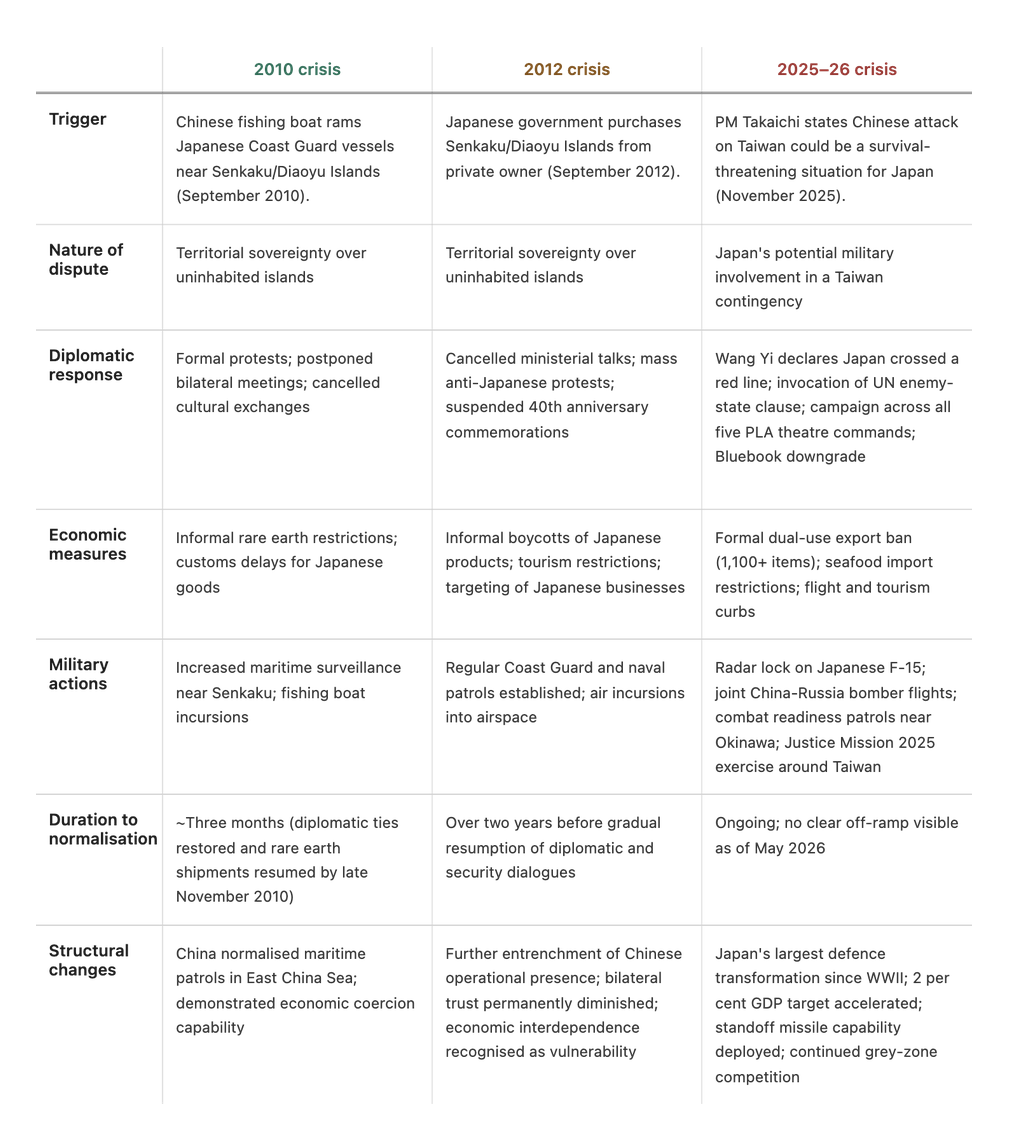 Table 1: Comparative Escalation Episodes | Created by Author
It is evident that the current crisis is qualitatively different from past crises. The Senkaku disputes in 2010 and 2012 were about sovereignty over uninhabited islands, and about mistrust manifesting from historically frayed relations. The current crisis is about whether Japan would militarily intervene in a Taiwan contingency—a question that strikes at the core of China’s most sensitive security concern—in addition to contestations over territory, history, militarisation, and economic weaponisation.
As of May-June 2026, no credible off-ramp is visible. The conditions that enabled de-escalation after the 2010 and 2012 crises—shared interest in economic normalisation, domestic political incentives to restore ties, and a bilateral diplomatic channel capable of managing friction—are either absent or severely degraded.
Takaichi has staked her political credibility on the Taiwan remarks and shows no willingness to retract them. A walkback would be read domestically as capitulation to Chinese coercion. Xi—for his part—is also constrained, albeit differently. Having invoked the UN enemy-state47 clause and deploying sweeping export controls, any concession to Tokyo would be seen as a weakness on Taiwan—an issue where Chinese leaders have zero tolerance for perceived retreat.
The UN enemy-state clause refers to a specific set of provisions embedded within Articles 53, 77, and 107 of the United Nations Charter. They were drafted in 1945 at the conclusion of the Second World War as a legal safety mechanism for the victorious Allied powers to prevent a resurgence of military aggression from the defeated Axis powers. Essentially, they provided a legal carveout allowing regional security bodies to enforce actions against these specific enemy states without needing UN approval. Although the UN has formally recognised these provisions as obsolete, they are occasionally invoked by China and Russia to warn former Axis powers against perceived revanchism, militarisation, or aggressive foreign policies.
Both leaders are now locked into positions where the political cost of de-escalation exceeds the cost of continued confrontation. The US no longer serves as a straightforward moderating actor; rather, it is constrained by its own conflicting interests. The Trump administration is simultaneously pressuring Japan to spend more on defence, while cautioning it against provoking China. At the same time, it is not offering either a clear deterrence guarantee that would reassure Tokyo, nor a diplomatic framework that would provide Beijing a means to back down.
Role of the United States
The US has played an ambiguous role during this period of tensions between Tokyo and Beijing. On 24 November, 2025, President Trump held back-to-back phone calls with Xi Jinping and Takaichi.48 In a post on Truth Social, Trump described the call with Xi as “very good” and noted discussions on Ukraine, fentanyl, and agricultural purchases, without mentioning Japan or Taiwan.49 Trump subsequently advised Takaichi not to escalate tensions, or provoke China, on the question of Taiwan’s sovereignty.50 At the same time, the US has continued joint military signalling with Tokyo, as the 2026 US National Defence Strategy calls for building a denial defence along the First Island Chain—explicitly framing allied contributions as vital to deterring China.51
China has long sought to reduce American military and political influence in the Indo-Pacific. Beijing views US forces in the region and the web of bilateral alliances that Washington maintains as instruments of containment, designed to curb China’s rise. One of Beijing’s objectives, therefore, is to create conditions in which the US either voluntarily withdraws from its posture of primacy or is deterred from intervening in regional contingencies, particularly over Taiwan.52
The Trump administration’s second term has partially delivered on this aspiration, though not by Chinese design. The 2026 US National Defence Strategy explicitly states that European allies can no longer depend on the US to deter Russia, and must take ownership of their own defence. With regards to the Indo-Pacific, the language is more nuanced, but the signal is that the US will enable and incentivise allied contributions— with the expectation that Japan, Australia, India, and South Korea will invest heavily in their own militaries.
This may definitely be perceived as progress in Beijing. But the paradox here is that every step toward US retrenchment accelerates autonomous allied military capabilities—another dynamic China dislikes. And this retreat, rather than creating a more permissive environment for Chinese influence, triggers an arms race among regional powers who are individually smaller than China, but can be collectively formidable.
From a purely operational standpoint, dealing with the US is a known variable for China. The US and China are near-peer competitors that are continuously exploring guardrails. There is usually a willingness to come to the table at moments of peak confrontation. For example, during the Woodside summit between Biden and Xi in 2023, the two leaders welcomed the resumption of high-level military-to-military communication, as well as the US-China Defence Policy Coordination Talks and the US-China Military Maritime Consultative Agreement meetings.53 This came in the aftermath of the suspected Chinese surveillance balloon entering US airspace in early 2023. Then, in 2024, during another Biden-Xi meeting in Lima, the two Presidents declared that they had jointly brought China-US dialogue and cooperation back on track, with more than 20 communication mechanisms having been restarted or established.54
Washington also acts as a central manager for its allies, often urging them to de-escalate during tense moments to avoid dragging America into an unwanted war. If the US steps away, this changes. Instead of managing a predictable standoff with Washington, Beijing would have to navigate a highly volatile, multi-polar landscape. It would have to deal with multiple independent actors, all operating on survival instincts and hyper-nationalism.
For example, Takaichi’s remarks about Taiwan may have been a symptom of the country’s reduced faith in unconditional US protection. This was perhaps most visible when the previous Prime Minister Shigeru Ishiba pushed for the creation of an ‘Asian NATO’ and a rebalancing of the US-Japan Security Treaty. China’s response of sweeping export controls and military intimidation was meant to deter further Japanese assertiveness but has instead accelerated Japan’s defence buildup, deepened its lateral partnerships, and permanently shifted its diplomatic language. The crisis has made Japan more independent of the US security umbrella, not less. It has also made Japan a more attractive security partner for others in the region—from the Philippines to India to Canada—creating exactly the kind of distributed deterrence network that is harder for China to counter than a single bilateral alliance with Washington.
Conclusion
A few conclusions can be drawn from the contemporary China-Japan hostilities. First, both sides are preparing for a sustained confrontation. Japan’s defence budget trajectory, missile deployments, and diplomatic repositioning all point to a long-term strategic commitment rather than reactive posturing. China, similarly, has left ample room for further escalation. Beijing’s options include extended unilateral sanctions on Japanese defence companies, further trade disruptions, and expanded military exercises in Japan’s EEZ.
Second, the diplomatic space for de-escalation has narrowed. Unlike previous crises, where both sides had incentives to manage friction and return to cooperation, the current dynamics are viciously self-reinforcing. Each side increasingly reads the other’s moves through worst-case assumptions, which in turn drives further hedging. Given Japan is a US treaty ally, the threshold for open military conflict remains exceptionally high. Beijing is well aware that any conventional attack risks triggering a catastrophic superpower confrontation. However, China operates with a much lower threshold for grey-zone coercion. Beijing wagers it can aggressively squeeze Tokyo in the East China Sea by keeping its maritime coercion just below the threshold that would force an American military intervention.
The most likely near-term trajectory is not open conflict but prolonged confrontation below the threshold of war: more naval patrols, more military drills, tighter economic restrictions, and increasingly adversarial rhetoric. The danger of this equilibrium is that it normalises escalation, while steadily eroding the diplomatic and institutional buffers that have historically prevented miscalculation from spiralling into crisis. For the stability of the Indo-Pacific region, what has to be grappled with is whether the emerging architecture of deterrence and hedging can manage the new reality without catastrophic breakdowns of guardrails.
Footnotes
Ministry of Foreign Affairs of Japan. “Joint Communique of the Government of Japan and the Government of the People’s Republic of China.” September 29, 1972. Link↩︎
Dominguez, Gabriel, and Gabriele Ninivaggi. “Takaichi and Xi Reaffirm Pledge in First Meet to Pursue ‘Mutually Beneficial’ Ties.” The Japan Times, October 31, 2025. Link↩︎
Prime Minister’s Office of Japan. “Japan-China Summit Meeting (Summary).” October 31, 2025. Link↩︎
“China Hits Out at Japan’s Sanae Takaichi for Meeting Taiwan’s Officials.” The Straits Times, November 2, 2025. Link↩︎
Gabriele Ninivaggi, “Takaichi’s Taiwan Tumult: A Closer Look at the Japanese Leader’s Contentious Remarks,” The Japan Times, December 3, 2025, Link↩︎
Japan, Act on the Peace and Independence of Japan and Maintenance of the Security of the Nation and the People in Armed Attack Situations, etc., and Survival-Threatening Situations, Act No. 79 of June 13, 2003, amended through Act No. 36 of 2021, Japanese Law Translation, Ministry of Justice, Link.↩︎
Government of Japan and Government of the People’s Republic of China. “Joint Communiqué of the Government of Japan and the Government of the People’s Republic of China.” September 29, 1972. United Nations Peacemaker. Link.↩︎
Kawashima, Shin. “Japanese Academic: What Sanae Takaichi Meant by ‘A Survival-Threatening Situation.’” ThinkChina, November 17, 2025. Link↩︎
Lin, Bonny, Brian Hart, Leon Li, and Truly Tinsley. “Tracking China’s Increased Military Activities in the Indo-Pacific in 2025.” ChinaPower Project, Center for Strategic and International Studies, February 5, 2026. Link↩︎
Duchâtel, Mathieu. “Japan-Taiwan: China’s Mobilization of the ‘Antifascist’ Narrative.” Institut Montaigne, January 7, 2026. Link↩︎
Parulekar, Saee. “China in the Indo-Pacific: December 2025.” Council on Foreign Relations, April 8, 2026. Link↩︎
Japan Ministry of Defense, Joint Staff. “Annual Report on JASDF Fighters Scramble (FY2025).” Press release, April 22, 2026. Link↩︎
Japan Ministry of Defense, Joint Staff. “Chinese and Russian Aircraft Activity around Japan.” Press release, December 11, 2025. Link↩︎
“China Coast Guard Presence near Japan-Controlled Islands Reaches Record High in 2025.” Indo-Pacific Defense Forum, January 15, 2026. Link↩︎
Lee, Beul-chan. “Chinese Coast Guard Expels Japanese Vessel Near Disputed Senkaku.” The Chosun Daily, December 2, 2025. Link↩︎
“Beijing’s Maritime Militia Rehearsing Blockade Tactics, Analysts Say.” Indo-Pacific Defense Forum, May 6, 2026. Link↩︎
International Trade Administration. “Japan Defense Industry.” Trade.gov, January 30, 2026. Link↩︎
Yamaguchi, Mari. “Japan’s Cabinet OKs Record Defense Spending.” Indo-Pacific Defense Forum, January 2026. Link↩︎
Rocamora, Joyce Ann L. “PH, Japan Ink Defense Logistics Deal, 2 Others.” Philippine News Agency, January 15, 2026. Link↩︎
U.S. Navy. “Japan, Philippine and U.S. Forces Conduct Multilateral Maritime Cooperative Activity in South China Sea.” March 2026. Link↩︎
China Military Online. “Chinese Military Slams Japanese Warship’s Transit through Taiwan Strait.” Ministry of National Defense of the People’s Republic of China, April 17, 2026. Link↩︎
Ministry of Commerce of the People’s Republic of China. “Announcement No. 1 of 2026: Announcement on Strengthening Export Controls on Dual-Use Items to Japan.” January 6, 2026. Link↩︎
Ministry of Commerce of the People’s Republic of China. “MOFCOM Spokesperson’s Remarks on Export Control Measures Targeting Japan.” February 24, 2026. Link↩︎
Ministry of Commerce of the People’s Republic of China. “商务部公告2026年第11号:公布将20家日本实体列入出口管制管控名单” [MOFCOM Announcement No. 11 of 2026: Announcement on Listing 20 Japanese Entities on the Export Control List]. February 24, 2026. Link↩︎
Ministry of Commerce of the People’s Republic of China. “商务部公告2026年第12号:公布将20家日本实体列入关注名单” [MOFCOM Announcement No. 12 of 2026: Announcement on Listing 20 Japanese Entities on the Watch List]. February 24, 2026. Link↩︎
Sugiyama, Satoshi, and Kantaro Komiya. “Japan Condemns China’s Dual-Use Export Ban as Rare Earth Curbs Loom.” Reuters, January 7, 2026. Link↩︎
Bloomberg News. “Japan Steps Up Deep-Sea Mining Plan to Cut Rare-Earth Dependence.” Bloomberg, February 2, 2026. Link↩︎
Ministry of Economy, Trade and Industry of Japan. “Press Conference by Minister Akazawa (Excerpt).” February 27, 2026. Link↩︎
Ibid.↩︎
Ministry of Commerce of the People’s Republic of China. “MOFCOM Spokesperson’s Remarks on Initiating an Anti-Dumping Investigation against Imported Dichlorosilane Originating from Japan.” 2026. Link↩︎
Kaneko, Kaori, Tamiyuki Kihara, and Eduardo Baptista. “Japanese Seafood Caught Up in Escalating Diplomatic Dispute with China.” Reuters, November 19, 2025. Updated November 20, 2025. Link↩︎
Cai, Vanessa. “Beijing Summons Japanese Ambassador in Latest Protest over PM Takaichi’s Taiwan Comments.” South China Morning Post, November 14, 2025. Link↩︎
“Japan Protests Chinese Envoy’s Beheading Post Tied to Takaichi.” The Asahi Shimbun, November 10, 2025. Link↩︎
Xinhua. “China Sends Letter to UN Chief Expressing Position on Japanese PM’s Erroneous Remarks.” The State Council of the People’s Republic of China, November 22, 2025. Link↩︎
Ministry of Foreign Affairs of the People’s Republic of China. “Foreign Ministry Spokesperson Mao Ning’s Regular Press Conference on November 19, 2025.” November 19, 2025. Link↩︎
“China Knows How to Punish Countries That Offend It.” The Economist, December 8, 2025. Link↩︎
Bloomberg. “Japan CEOs Halt Annual Trip to China for First Time in 13 Years.” The Japan Times, December 31, 2025. Link↩︎
“88 Global CEOs Gather in Beijing for Development Forum.” The Chosun Daily, March 22, 2026. Link↩︎
Kim, Jung-wook. “Beijing Film Festival Suspends Japan Film Week Amid Diplomatic Chill.” Seoul Economic Daily, March 17, 2026. Link↩︎
Matsuyama, Kanoko. “Chinese Tourist Decline Fuels First Drop in Visitors to Japan since Pandemic.” The Japan Times, February 19, 2026. Link↩︎
Jiji. “Last Two Pandas in Japan Leave for China.” The Japan Times, January 27, 2026. Link↩︎
Semans, Himari. “Japan Calls GSDF Officer’s Break-In at Chinese Embassy ‘Deeply Regrettable.’” The Japan Times, March 25, 2026. Link↩︎
China Military Online. “Intrusion into Chinese Embassy by JSDF Member Shows Grave Reality of Far-Right Infiltration: Defense Spokesperson.” Ministry of National Defense of the People’s Republic of China, March 26, 2026. Link↩︎
Murakami, Sakura. “Japan Lowers View of China Relations amid Tension over Taiwan.” The Japan Times, April 10, 2026. Link↩︎
Jiji. “Takaichi Seeks One-Year Timeline for Constitutional Amendment Proposal.” The Japan Times, April 13, 2026. Link↩︎
BBC News 中文. “日本外交蓝皮书将中国‘降级’,高市早苗又提‘修宪’时程:中日关系何去何从?” April 17, 2026. Link↩︎
Qingjiang Kong, “UN Enemy States Clauses: A Reminder of Japan’s Right-Wing Forces,” CGTN, November 16, 2025, Link↩︎
Green, Nigel. “Trump’s Xi and Takaichi Calls Ring Market Alarm Bells.” Asia Times, November 25, 2025. Link↩︎
Swanson, Ana, Alan Rappeport, and Edward Wong. “Xi Presses Trump on Taiwan as They Agree to Meet in China in April.” The New York Times, November 24, 2025. Link.↩︎
Tamiyuki Kihara, Yukiko Toyoda, and Tim Kelly, “Trump Urged Japan’s Takaichi Not to Aggravate China Dispute, Sources Say,” Reuters, November 27, 2025, Link↩︎
Clapp, Sebastian, with Darius Engel. “The United States’ 2026 National Defence Strategy.” European Parliamentary Research Service. European Parliament, April 2026. Link↩︎
Rush Doshi, “The Long Game: China’s Grand Strategy to Displace American Order,” Brookings Institution, August 2, 2021, Link.↩︎
U.S. Mission China, “Readout of President Joe Biden’s Meeting with President Xi Jinping of the People’s Republic of China,” November 17, 2023, Link.↩︎
Ministry of Foreign Affairs of the People’s Republic of China, “President Xi Jinping Meets with U.S. President Joe Biden in Lima,” November 17, 2024, Link.↩︎