Takshashila Institution
Connecting good people, to good ideas and good networks.

US 2026 Mid-term Election Observer
The US mid-terms and what they mean for India.
Explore the trackerRecent publications
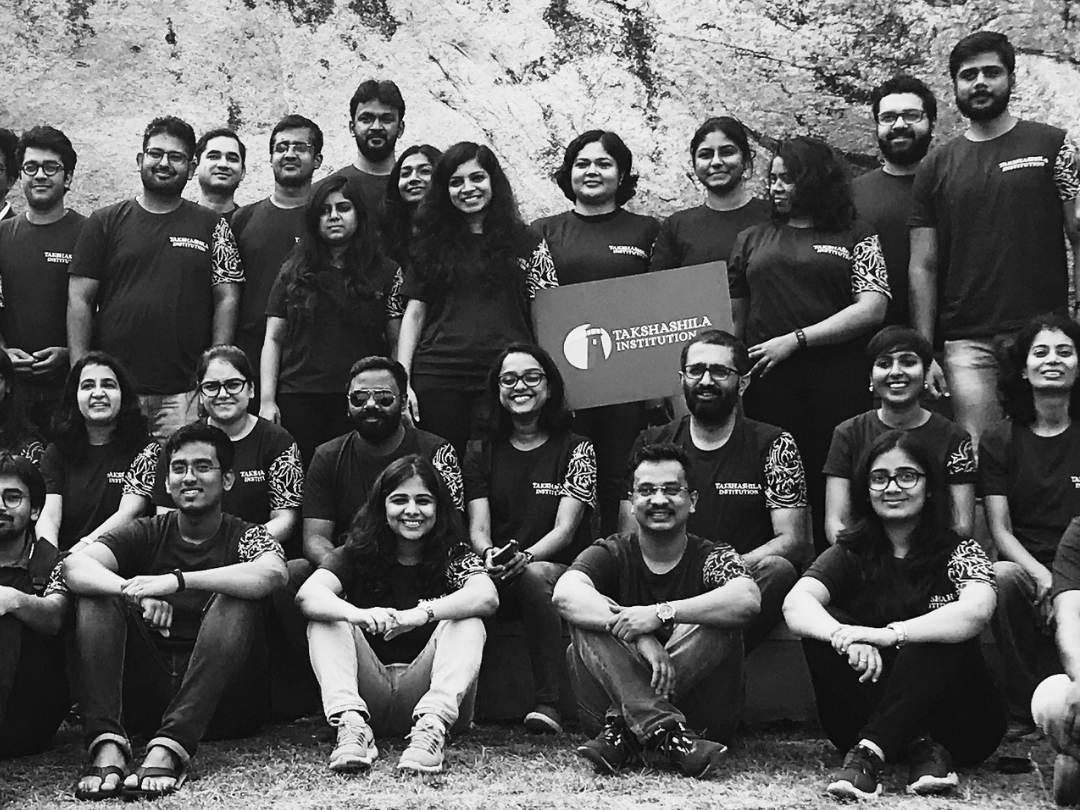
The Takshashila Institution is an independent centre for research and education in public policy. It is a non-partisan, non-profit organisation that advocates the values of freedom, openness, tolerance, pluralism and responsible citizenship. It seeks to transform India through better public policies, bridging the governance gap by developing better public servants, civil society leaders, professionals and informed citizens.
Takshashila creates change by connecting good people, to good ideas and good networks. It produces independent policy research in a number of areas of governance, it grooms civic leaders through its online education programmes and engages in public discourse through its publications and digital media.
Learn more about us →What we do
Policy Research
We conduct policy research in international relations, defence, national security, and technology. Our objective is to influence and shape policy while working in the public domain.
Research areas →Policy School
Our public policy programmes prepare students to navigate complex policy challenges — building core knowledge in policy evaluation, economic reasoning, communication and public persuasion.
Browse programmes →Fellowships
The fellowship programmes at Takshashila build high-quality scholarship and knowledge networks in India across various domains of public policy and governance.
View fellowships →Recent convenings
The 45th GCPP Academic Conference: The Changing World Order
The two-day Academic Conference for Takshashila’s 45th GCPP cohort explored the theme The Changing World Order, examining how shifts in global power, trade and technology are reshaping India’s policy choices. The conference featured four tracks: Geopolitics, Geoeconomics, Emerging Technology and Domestic Reforms.
Read more →Bioeconomy Roundtable | Bridging the Funding and Skills Gap
The Takshashila Institution hosted a closed-door Bioeconomy Roundtable discussion at its office, focusing on critical roadblocks in capital and talent within the bioeconomy ecosystem. The roundtable brought together venture capitalists, biotechnology startup founders, industry experts, and professionals from regulatory affairs & public policy teams to address these roadblocks.
Read more →Special Invited Talk | GEOAI and Geospatial Intelligence
Dr. Y. Nithiyanandam delivered a special invited talk for an MHA organisation on GEOAI and geospatial intelligence, exploring the applications of geospatial technologies and intelligence in understanding and analysing spatial information.
Read more →Public Policy Workshop at the National Academy of Customs, Indirect Taxes and Narcotics (NACIN), Palasamudram
The Takshashila Institution conducted a three-day public policy workshop for 80+ trainees of the Indian Revenue Services (Customs and Indirect Taxes) at the National Academy of Customs, Indirect Taxes and Narcotics (NACIN), Palasamudram, from September 7–9, 2026.
Read more →From the blog
The Fifth Plenum Before a New 'New Era' Anushka Saxena
26 OCT 2026Don't Linearly Extrapolate China's Tech Rise Pranay Kotasthane
20 OCT 2026Whose Job Is It? Pranay Kotasthane
20 OCT 2026How to Think About Samaaj, Sarkaar, and Bazaar Pranay Kotasthane
20 OCT 2026Tunnel Boring Machines Are the Lithography Machines of Construction Pranay Kotasthane
20 OCT 2026Why India Must Upgrade its Biosurveillance Strategy Aditi Palo
18 OCT 2026China's AI Export Order: What It Does and What It Means for India Bharath Reddy
18 OCT 2026India-EU FTA and its Steel Challenges Anisree Suresh
12 OCT 2026AI and the Future of Wet Labs in India Aditi Palo
12 OCT 2026Starlink's benefits to India should outweigh the risks Ashwin Prasad Rao
12 OCT 2026In the news
US midterm polls: What they mean for Trump, India and Manipur's Neighbourhood
US midterm polls: What they mean for Trump, China and Ladakh
American voter’s long wait: How 2026 midterms put Trump’s mandate to the test...
US Midterms - Republicans Face Growing Blue Wave
A Jolt For Trump? How The US May Be Staring At A 'Blue' Wave
China’s AI export order is a switch, not a wall
Stay in the loop
Newsletters. In your inbox.
Weekly digests of original research, commentary and curated reads from across the institution.
Explore all newsletters →Podcasts. Daily conversation.
Daily conversations on the topics shaping the country – technology, geopolitics, defence and economics.
Explore all podcasts →