Daily Brief – July 03, 2026
The ‘Islamabad Memorandum’ is digitally signed by Trump and Pezeshkian on June 17–18, with Pakistan’s PM Sharif co-signing as mediator. Implementation talks convene at Bürgenstock on June 19. Brent crude falls to $77/bbl. The US lifts its naval blockade; Iran suspends operations across all fronts. Wang Yi calls it the ‘dawn of peace’ — critics are more cautious. The MoU faces sharp domestic opposition in the US from the pro-Israel lobby and both parties.
Authors
The United States and Iran signed a 14-point Memorandum of Agreement, leading to the temporary lifting of US sanctions on Iran, and the toll-free reopening of the Strait of Hormuz. However, the diplomatic situation remains fragile. Iran briefly re-closed the Strait in response to alleged Israeli ceasefire violations before negotiations resumed. A 60 day window exists, during which the US and Iran will focus on resolving the nuclear issue.
Impact on India
Foreign Policy & Neighbourhood
India hosted the 16th BRICS National Security Advisers’ Meeting in New Delhi. NSA Ajit Doval delivered a national security assessment of the newly signed US-Iran Islamabad Memorandum. India welcomed the MoU, highlighting the toll-free reopening of the Strait of Hormuz as an essential victory for global stability. India is maintaining a posture of cautious optimism, warning that while the immediate unblocking will relieve severe domestic shortages in fertilizers and chemicals, the underlying geopolitical friction remains highly volatile.
Economy
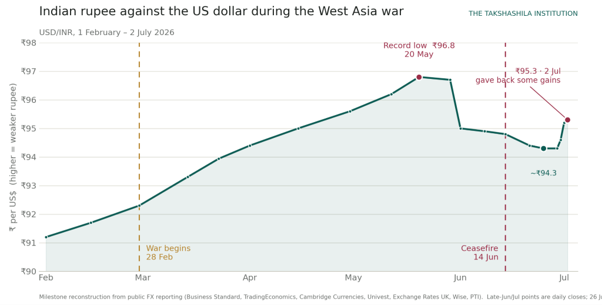 Image 1: Indian rupee against the US dollar (February 1st to July 2nd). (Source: US Dollar/Indian Rupee FX Spot Rate by CNBC, created using Claude).
Following the 14-point Memorandum of Agreement between the US and Iran, the Brent crude collapsed from its USD 104 high, which led to the rupee firming back toward Rs 94 per US dollar. However, on July 2nd, the rupee came back under pressure due to dollar demand from foreign banks, oil companies and foreign investor outflows from equities.
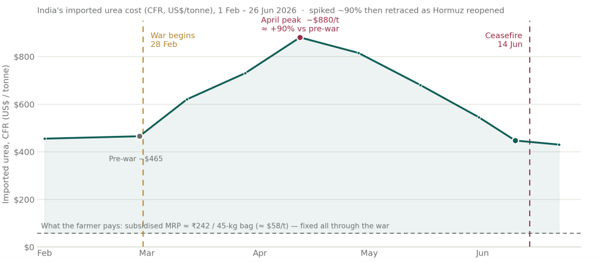
Image 2: India’s imported Urea cost (Source: Trade Economics Commodity Data, graph created by Claude)
India’s imported urea cost spiked around 90 per cent in April after the Strait of Hormuz closed. However, as the ceasefire talks had begun, the price started retracing to pre-war prices.
Key Actors
China
This week, Beijing was occupied with BRICS, and playing the role of peace-propagator at the High-Level Representatives Meeting. In Delhi, Wang Yi urged attendees to engage in regional security cooperation. At home, Chinese foreign ministry spokesperson Guo Jiankun informed audiences that, for Beijing, the priority at the meeting is to call for upholding international rules, respecting national sovereignty, establishing “a new security concept,” and understanding new forms of warfare. Each of these, coupled with Beiing’s reiterating elation toward the signing of the US-Iran MoU, signal China’s distress with the economic implications of the war in West Asia, and its willingness to shape the new regional security order that will emerge when the dust settles.
Iran:
FM Araghchi confirmed that oil and petroleum export sanctions have been waived, some frozen assets released, and a major reconstruction and development plan launched. President Pezeshkian held firm on uranium enrichment, stating that ‘we will never back down from the right to enrich uranium’. This is a position Tehran has echoed in the past and has now made non-negotiable. Iran also agreed to invite IAEA inspectors back into the country, which the US has framed as “the first step in permanently ending a nuclear weapons programme.”
United States:
Developments this week between the United States and Iran have focused on fragile diplomacy mixed with continuous military friction following the recent signing of their interim framework agreement. While the U.S. moved forward with easing pressure by lifting its naval blockade, Iran briefly re-closed the strategic Strait of Hormuz over alleged Israeli ceasefire violations before negotiations resumed. Ongoing high-level talks have shown encouraging progress, yielding economic relief for Tehran via U.S. Treasury sanctions waivers on oil exports and a deal to unfreeze Iranian assets in Qatar. However, deep-seated issues remain unresolved as both nations hold doggedly on their respective nuclear positions, and regional dynamics are further complicated by continuous clashes involving Iran-backed proxies.
Global Systems
- Energy / Supply Chains
Brent Crude prices continued to remain below $75 in the last week.
Brent Crude Prices (26th June-3rd July)
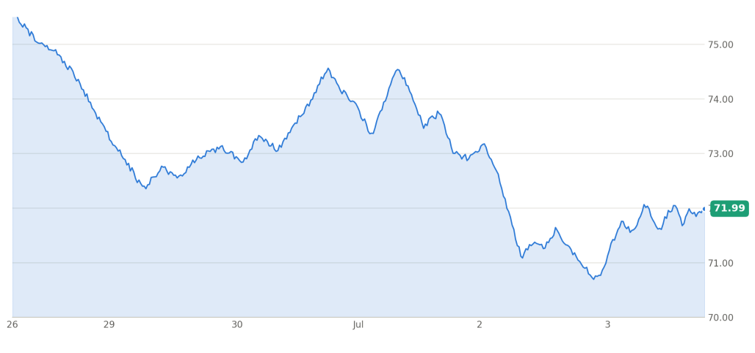 Image 3: Brent Crude Prices Source: CNBC, recreated using Claude
As India continues its efforts to secure energy supplies, Oil Minister Hardeep Puri met with his Iranian counterpart Mohsen Paknejad in New Delhi to explore further cooperation in the energy sector. This comes after the US temporarily lifted oil sanctions against Iran, owing to progress in talks.
- Strait of Hormuz
Hormuz has become, in the past week, the main focus of the war. Iran leverages the strait to coerce, trading tanker attacks for US retaliation, even attacking bases in Kuwait and Bahrain to make clear it controls the waterway, not Washington or Oman. The swift cessation and relocation of talks to Qatar show mutual restraint, but with control and tolls still undecided, escalation is only one incident away.
This bulletin is prepared by the Takshashila West Asia Desk. For queries, contact research@takshashila.org.in.