China, Meta, Manus, and the New Shape of High-Tech Geopolitics
| AUTHOR | Bharath Reddy |
| DATE | April 29, 2026 |
| CATEGORIES | Artificial Intelligence High Tech Geopolitics |
On Monday, China’s National Development and Reform Commission ordered Meta to unwind its $2 billion acquisition of Manus, an AI agent startup. The company was founded in Beijing in 2022, relocated its headquarters and core team to Singapore in 2025, and was bought by Meta in December.
A Tit-For-Tat High Tech Geopolitics Toolkit
According to FT reporting, Chinese regulators ran the Manus transaction through the NDRC, the commerce ministry, and the antitrust watchdog simultaneously, drawing on foreign-investment rules, export-control authority, and competition law. In March, two Manus co-founders were banned from leaving China while the review was in progress. Beijing branded the acquisition a “conspiratorial” attempt to hollow out the country’s tech base.
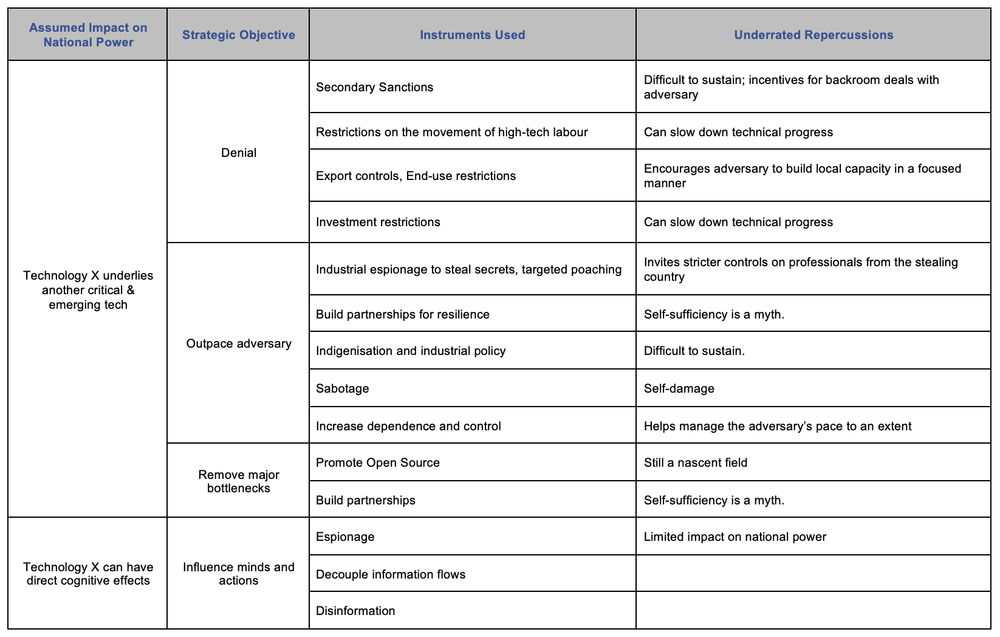
The US has been doing some of this for years with the export controls on advanced semiconductors, restrictions on Chinese investments, and forcing TikTok to split the US app from its global business under a new majority US-owned ownership structure. Instruments of investment policy, trade policy, competition policy and national security have become fungible as instruments of technology geopolitics.
Pranay’s paper on High-Technology Geopolitics in the Post-Pandemic World anticipated this and offers an interesting framework for thinking about it.
Interests of Companies Diverge from the Interests of the State
The interests of private companies often diverge from the interests of the State. Manus pursued an acquisition by an American buyer, but Beijing does not want to see the country’s talent base hollowed out; Nvidia would like to sell advanced Chinese Chips to Chinese consumers, but the US government prefers that it not.
The Manus order targets a route used by Chinese-origin tech startups for pursuing foreign venture capital. Moving the headquarters to Singapore as a neutral location did not help either. Other companies, such as Moonshot, Stepfun and ByteDance, have also been informed to refuse US-origin capital unless explicitly approved. It follows Beijing’s decision to restrict “red chips” — a type of Chinese company incorporated overseas but with assets and businesses in China — from seeking initial public offerings in Hong Kong.
What to Watch
- Is this an escalation deliberately timed a few weeks prior to the Trump-Xi summit as a signal that Beijing has cards that it is willing to play?
- Meta owns some of the most widely used platforms in Facebook, Instagram and WhatsApp. Manus was expected to transform users’ interactions with these apps. This move is likely to be a setback in competing against rivals in AI.
- The exit-ban restrictions on the Manus founders could impact technical talent flows. If Beijing is willing to impose movement restrictions on founders, Chinese-origin senior researchers currently in US labs will start factoring that risk into their relocation decisions.
- Beijing’s strategic-asset list has expanded from chips and models to agents. By treating the AI agent layer as requiring this level of scrutiny, Beijing has expanded the scope of what it considers strategic.